
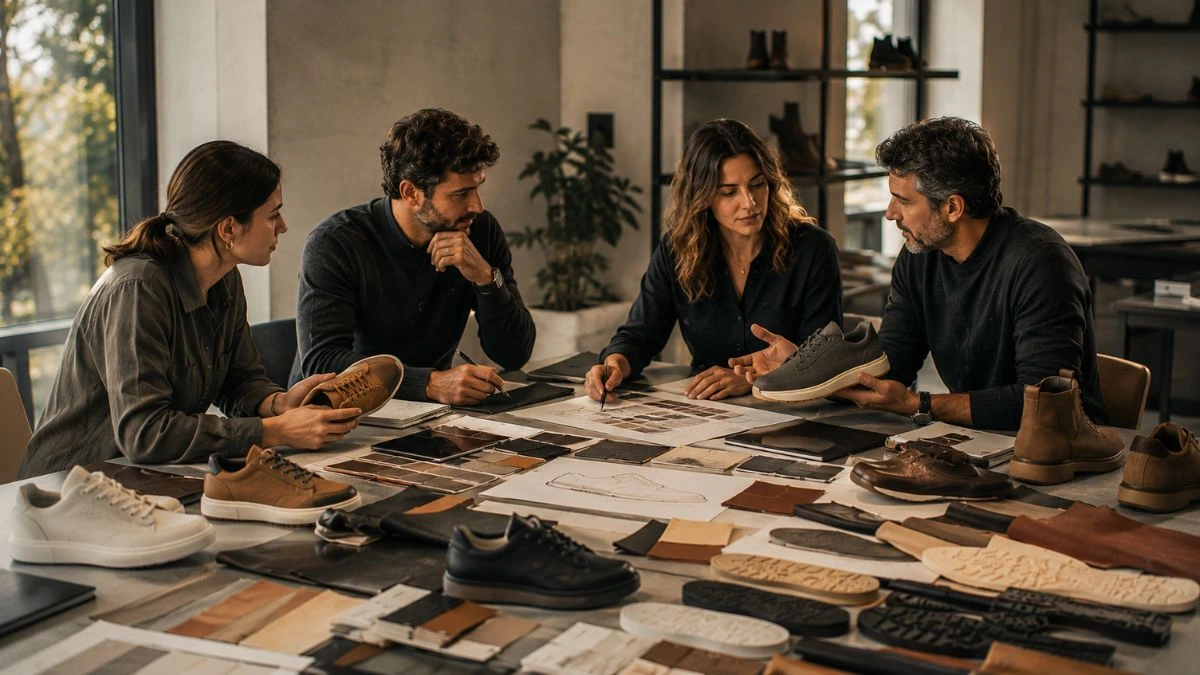
Building a successful footwear collection is not necessarily about launching more models, more colourways or more categories. In many cases, the strongest collections are the ones built with greater focus, clearer positioning and better production planning.
Many footwear brands, especially during early growth stages, feel pressure to expand collections quickly in order to appear more competitive or complete. However, increasing the number of models often creates unnecessary complexity across sourcing, development, production and inventory management.
Today, many successful brands are moving towards more strategic footwear collection planning, focusing on fewer but stronger products with clearer commercial purpose and better manufacturing efficiency.
For footwear manufacturers, collection complexity directly impacts development timelines, sourcing coordination, production organisation and consistency throughout manufacturing.
This article explores how brands can build more efficient and commercially focused footwear collections without compromising creativity, identity or product quality.
Quick strategy insight for brands
Strong footwear collections are rarely built by adding as many models as possible. In most cases, collections become stronger when brands focus on product clarity, commercial consistency and production efficiency.
Reducing unnecessary complexity can help brands:
- Improve development efficiency
- Reduce sourcing challenges
- Simplify production planning
- Strengthen collection identity
- Improve inventory management
- Create more focused commercial positioning
Well-structured footwear collection planning allows brands to build collections that are easier to produce, easier to communicate and often more commercially effective.
Table of contents
- Why more models are not always better
- Common collection planning mistakes brands make
- How collection complexity affects footwear production
- How to build stronger footwear collections
- Why product focus improves commercial performance
- Why fewer footwear models often perform better commercially
- Production and sourcing advantages of focused collections
- Balancing creativity and manufacturing efficiency
- Why European manufacturers support collection flexibility
- Final thoughts
- FAQs
Why more models are not always better
Many brands assume that larger collections automatically create stronger market presence. In reality, excessively large collections often dilute product identity and create operational inefficiencies.
In footwear development, every additional model increases complexity across:
- Material sourcing
- Sample development
- Production planning
- Supplier coordination
- Inventory forecasting
- Quality control
Adding multiple variations with small visual differences may also create confusion for buyers and retailers.
Strong collections are often built around:
- Clear product direction
- Consistent design language
- Well-defined target positioning
- Commercially relevant models
- Efficient production structures
Instead of expanding collections excessively, many successful brands focus on refining fewer models with stronger commercial potential.
Common collection planning mistakes brands make
One of the most common mistakes during footwear collection planning is introducing too many variables at the same time.
This often includes:
- Too many outsole variations
- Excessive colourways
- Multiple unrelated categories
- Too many material combinations
- Complex sizing structures
- Overlapping product positioning
For growing brands, this complexity can quickly affect development efficiency and manufacturing consistency.
Another frequent mistake is designing collections without considering production feasibility early enough in the process.
For example:
- custom outsole developments may increase sourcing lead times;
- too many unique materials can complicate supplier coordination;
- excessive sample revisions may extend development timelines;
- small quantities spread across many SKUs may reduce production efficiency.
Understanding how footwear MOQ requirements influence sourcing and production planning can help brands organise collections more strategically from the beginning.
How collection complexity affects footwear production
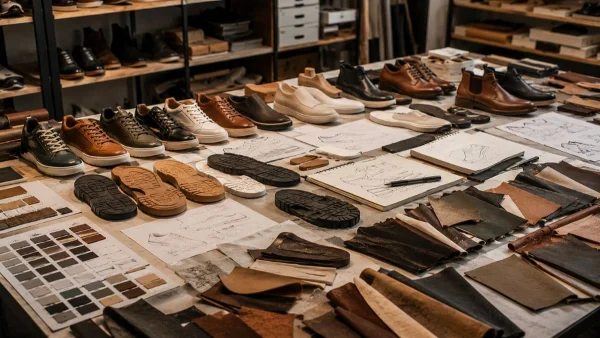
Collection complexity affects much more than design organisation. It also has direct impact on manufacturing operations.
Every additional variation influences:
- material sourcing coordination;
- sample approvals;
- production sequencing;
- quality control procedures;
- production lead times;
- warehouse management.
In many cases, brands underestimate how product complexity can slow down development and production workflows.
For manufacturers, collections with too many variations may require:
- more material suppliers;
- additional prototype revisions;
- more production adjustments;
- more complex quality control processes;
- additional production coordination.
This is one reason why efficient footwear production planning becomes increasingly important as collections grow.
Brands can also better understand timeline implications in our guide to footwear production lead times.
How to build stronger footwear collections
Strong footwear collections usually begin with clear strategic decisions before development starts.
Brands should first define:
- core target audience;
- commercial positioning;
- price range;
- key product categories;
- main commercial objectives.
Instead of trying to cover every possible market segment, stronger collections often focus on:
- a more cohesive product identity;
- clearer visual consistency;
- better material coordination;
- stronger hero products;
- more efficient production structures.
Many premium footwear brands intentionally reduce unnecessary product overlap in order to strengthen collection clarity and improve sell-through potential.
During development, brands should also evaluate whether each model genuinely adds value to the collection or simply increases operational complexity.
Why product focus improves commercial performance
Focused collections are often easier for customers, buyers and retailers to understand.
When collections become too large or inconsistent, brands may struggle with:
- unclear product positioning;
- internal competition between models;
- weaker collection identity;
- inventory fragmentation;
- slower sales performance.
Stronger collections tend to prioritise:
- best-selling product categories;
- commercially proven constructions;
- consistent visual direction;
- balanced product assortment.
This does not mean creativity should disappear. Instead, creativity often becomes more effective when applied with stronger strategic focus.
Many brands discover that fewer but better-developed products create:
- stronger storytelling;
- better product recognition;
- clearer brand positioning;
- more efficient collection communication.
Why fewer footwear models often perform better commercially
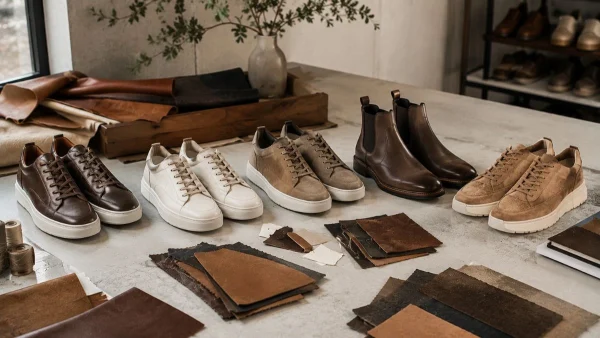
Many brands assume that offering more models automatically increases sales opportunities. However, excessively large collections often create operational inefficiencies and weaken commercial focus.
In practice, collections with fewer but stronger models often perform better because they allow brands to:
- focus development resources on higher-potential products;
- improve collection consistency;
- reduce unnecessary SKU complexity;
- simplify inventory management;
- improve sourcing coordination;
- strengthen product storytelling;
- increase sell-through potential.
Large assortments with overlapping products may confuse buyers and dilute brand positioning, especially when multiple models compete for the same customer segment.
More focused collections also tend to improve operational performance by reducing material fragmentation, simplifying manufacturing workflows and improving forecasting accuracy.
For many premium footwear brands, strategic product reduction is not a limitation. It is often a way to create stronger commercial identity, clearer product direction and more sustainable long-term growth.
Production and sourcing advantages of focused collections
Focused collections can significantly improve manufacturing efficiency.
Reducing unnecessary variations may simplify:
- material sourcing;
- supplier coordination;
- production scheduling;
- sample management;
- inventory planning.
For example, using fewer outsole variations or material families often helps manufacturers optimise production organisation more efficiently.
Brands that coordinate materials strategically may also reduce sourcing risks and improve consistency throughout production.
Understanding how materials influence development complexity is also important during collection planning, particularly when selecting components for premium footwear, as explored in our guide to footwear material selection.
Focused collections may also improve:
- development speed;
- production flexibility;
- quality consistency;
- communication between teams;
- commercial forecasting accuracy.
Balancing creativity and manufacturing efficiency
One of the biggest challenges in footwear collection strategy is balancing creative direction with manufacturing feasibility.
Highly creative collections are important for differentiation, but excessive complexity can create operational difficulties that affect timelines, costs and consistency.
Strong brands often succeed because they combine:
- creative identity;
- commercial understanding;
- technical feasibility;
- efficient production planning.
During development, collaboration between brands and manufacturers becomes especially important.
Experienced manufacturing partners can help brands:
- identify unnecessary complexity;
- simplify sourcing structures;
- improve material coordination;
- optimise development workflows;
- maintain product consistency.
At LG Shoes, we support brands throughout different stages of product development and manufacturing, from collection planning to material selection, prototyping and different footwear construction methods.
Why European manufacturers support collection flexibility
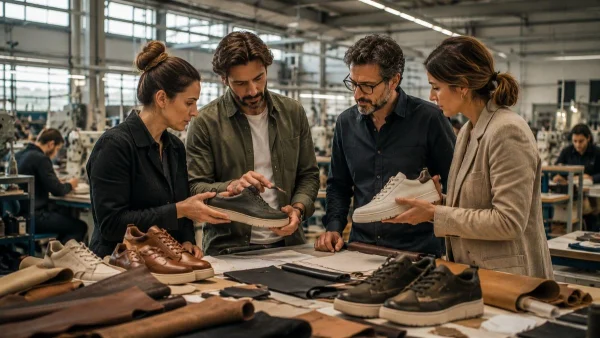
Many brands choose European footwear manufacturers because closer collaboration often improves development efficiency and collection coordination.
Portugal has become one of the leading footwear manufacturing countries in Europe due to its combination of technical expertise, flexibility and strong manufacturing tradition.
Compared with longer-distance sourcing structures, European manufacturing may offer:
- closer communication;
- faster development feedback;
- greater production flexibility;
- better quality supervision;
- more responsive product development.
This flexibility becomes especially valuable when brands are refining collections, adjusting product assortments or simplifying production structures.
Industry reports from organisations such as McKinsey continue highlighting how strategic assortment planning and operational efficiency are becoming increasingly important across the fashion industry.
Final thoughts
Successful footwear collection planning is not about creating the largest possible assortment. In many cases, stronger collections are built through greater focus, better coordination and more strategic product selection.
Reducing unnecessary complexity can help brands:
- improve manufacturing efficiency;
- reduce sourcing challenges;
- strengthen collection identity;
- improve commercial consistency;
- optimise development workflows.
Whether launching a new brand or refining an existing collection, building fewer but stronger models often creates more sustainable long-term growth from both commercial and operational perspectives.
If you are preparing a footwear collection and would like to discuss development and manufacturing possibilities in Europe, feel free to contact our team.
FAQs
Why do some footwear brands reduce the number of models in their collections?
Many brands reduce collection size to improve product focus, simplify manufacturing, reduce sourcing complexity and strengthen commercial consistency.
How does collection complexity affect footwear manufacturing?
Complex collections often require more materials, more suppliers, additional sample revisions and more complicated production coordination, which may affect timelines and manufacturing efficiency.
What are the benefits of focused footwear collections?
Focused collections can improve brand identity, simplify sourcing, improve production planning and create clearer commercial positioning.
Why is footwear collection planning important?
Strong footwear collection planning helps brands organise development more efficiently, reduce unnecessary complexity and improve both commercial and operational performance.
How can manufacturers support footwear collection development?
Experienced manufacturers can help brands optimise sourcing, improve production feasibility, simplify development processes and maintain product consistency throughout manufacturing.
Why do many brands choose footwear manufacturers in Portugal?
Portugal is recognised for footwear manufacturing expertise, flexibility, quality standards and strong collaboration between brands and manufacturers.


 English

