
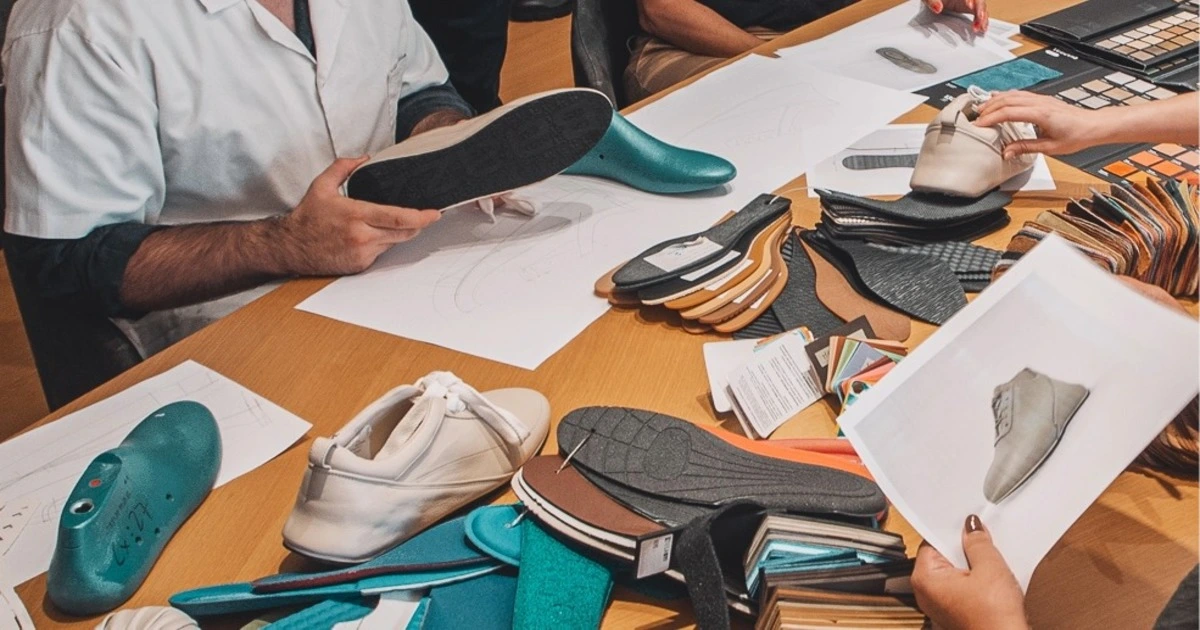
Footwear material decisions directly shape cost, performance, quality, timelines, and the technical feasibility of every product. Making these decisions too late creates development bottlenecks, inconsistent samples, and preventable production risks.
In footwear manufacturing, materials must be aligned early with the construction method, prototype sequence, supplier availability, and brand positioning.
This article explains when each material decision should be made, why early alignment matters, and how manufacturers like LG Shoes support structured, risk-reducing material development for private label footwear brands.
Introduction: Why timing matters in footwear material decisions
Material selection is one of the most critical decisions in footwear product development, directly influencing performance, quality, cost, comfort, and the technical feasibility of every model. Structured footwear material decisions are essential to avoid rework and delays, yet many brands make these choices too late, creating development bottlenecks, inconsistent prototypes, delayed sample timelines, and avoidable production risks.
In footwear development, materials must be defined in alignment with the chosen construction method, the prototype sequence, supplier availability, and the intended market positioning. When these elements are not coordinated early, the process becomes reactive, sample iterations increase, and the overall supply chain becomes less predictable.
At LG Shoes, material decisions are treated as a strategic foundation of early development. This ensures technical feasibility from the first sketch to industrial production, while reducing risk and supporting clearer communication between brands, suppliers, and manufacturing teams.
This article explains when footwear material decisions should happen, why timing has such a strong impact on product outcomes, and how an experienced manufacturer supports structured and efficient material development for private label footwear brands. Effective footwear material decisions are therefore a core requirement for predictable timelines and reliable development outcomes.
Table of Contents
- What role do materials play in footwear development?
- Which material decisions must be made at the start of the project?
- Which materials are defined during mid-stage development?
- Which materials can be decided later without risk?
- What happens when materials are chosen too late?
- How manufacturers like LG Shoes support structured material development
- Why Portugal benefits material-driven development processes
- FAQs
- Editorial note
1. What role do materials play in footwear development?
Materials are one of the most influential variables in footwear development, shaping the product’s cost, durability, comfort, performance, and manufacturability. Every decision made during development, from upper materials to linings, reinforcements, foams, and outsoles, determines what is technically feasible for sampling, prototyping, and mass production.
When footwear material decisions are made proactively, brands gain greater control over cost structures, prototype accuracy, and long-term production consistency.
In footwear manufacturing, materials are not selected in isolation. They must align with the chosen construction method, performance expectations, cost targets, and the brand’s positioning. For example, cupsole sneakers, cemented dress shoes, and strobel-constructed trainers each demand different material behaviors across flexibility, bonding strength, and long-term durability.
Early material alignment also supports accurate timelines. When materials are defined too late, prototype batches become inconsistent, suppliers cannot reserve stock, and factories face unexpected development bottlenecks. Conversely, defining key materials early allows brands to control risk, optimize costs, and maintain reliable production calendars.
For private label brands, material planning is essential to ensure repeatability across production runs, especially when working with multiple SKUs or fast seasonal calendars. Effective footwear material decisions also help brands maintain consistency across collections, reducing sampling errors and improving long-term production reliability.
2. Which material decisions must be made at the start of the project?

Some material decisions must be defined at the very beginning of footwear development because they directly influence the shoe’s structure, construction method, fit, and production feasibility. These early choices determine how the product will be engineered and what limitations, or possibilities, exist throughout the process.
1. Upper material (leather, synthetic, textile, engineered mesh)
The upper material determines flexibility, durability, breathability, bonding methods, and visual direction. It also dictates which reinforcements and liners are compatible. Factories must validate thickness, stretch behavior, fiber stability, and suitability for the chosen construction method. Making accurate footwear material decisions at this stage prevents rework and ensures alignment with the construction method.
2. Construction method (Montado, Strobel, Blake, Mocassin, San Crispino, Sacchetto, Waterproof)
Although technically not a “material,” this decision must be made early because it defines which materials are structurally viable. Each construction method requires different levels of flexibility, bonding behavior, reinforcement needs, and upper stability, directly influencing material sourcing, pattern engineering, and prototyping.
For example, Strobel construction requires soft and flexible uppers that allow natural foot movement, while Blake demands more structural rigidity and leather types that can withstand internal stitching. Mocassin construction depends on highly pliable leathers with excellent hand-feel and stitchability, whereas San Crispino and Sacchetto require premium materials that fold, mold, and perform without excessive reinforcement.
Methods such as Montado or Waterproof construction introduce additional technical constraints, particularly related to adhesion, moisture control, and material compatibility, which must be defined early to avoid prototype inconsistencies or late-stage redesigns.
3. Lining materials (microfiber, mesh, leather)
Lining choices impact comfort, moisture management, durability, and even fit. Selecting them early allows the manufacturer to define compatible adhesives, internal components, and performance expectations.
4. Key reinforcements (toe-puffs, heel counters, stabilizers)
These hidden components ensure structure and long-term shape retention. Early identification prevents sampling inconsistencies and supports correct material molding during prototyping.
5. Outsole type (rubber, EVA, injected unit, leather outsole)
Outsoles affect weight, rigidity, flexibility, cost, and durability. Because outsoles often require molds or pre-ordered units, late decisions can cause major delays in the development schedule.
Defining these materials early allows factories to begin validating performance, estimating costs, and preparing sourcing timelines. It also helps ensure that prototypes reflect the intended final product, avoiding unnecessary rounds of corrections.
3. Which materials are defined during mid-stage development?
Mid-stage development is where material decisions become more refined. At this point, the core structure of the shoe is already defined, allowing brands and manufacturers to focus on components that affect comfort, durability, aesthetics, and production efficiency. These decisions still require timely alignment, but unlike early-stage choices, they offer some flexibility for adjustment.
1. Secondary upper components (collars, tongues, trims)
These parts influence comfort and visual identity. Material thickness, foam density, and stitch compatibility must be tested during fitting rounds to ensure consistency across sizes.
2. Foams and padding
Elements such as ankle padding, tongue foam, and strobel boards affect cushioning and fit. Manufacturers assess compression, rebound, and durability to ensure long-term comfort. If chosen too late, these materials can change the internal volume of the shoe, causing size-grade issues.
3. Insole materials (PU foam, EVA, latex, memory foam)
Insoles impact comfort, step-in feel, moisture absorption, and price positioning. Mid-stage selection allows factories to validate hardness, density, and long-term deformation under load.
For material validation, many brands rely on internationally recognized testing guidelines such as those published by ASTM International, which help standardize thickness, abrasion, adhesion, and durability requirements across footwear components.
4. Adhesives and bonding systems
Different materials require different bonding strategies: heat-activated adhesives, water-based glues, or specialty primers. Selecting them at mid-stage allows for compatibility testing with the upper and outsole.
5. Hardware components (eyelets, hooks, zippers, elastic parts)
These affect functionality and aesthetics. Lead time, durability tests, corrosion resistance, and color stability must be coordinated with sample timelines.
6. Outsole color and finish
Once the outsole type has been chosen, this stage is ideal for locking in surface texture, hardness, and color. Since outsole production may involve minimum order quantities, mid-stage decisions help avoid waste and delays.
Mid-stage materials are essential for refining comfort, performance, and aesthetics while ensuring the product can move into final prototyping without disruption. Proper alignment at this stage helps guarantee that final samples reflect the intended market positioning and technical performance of the shoe.
4. Which materials can be decided later without risk?
While many footwear materials must be defined early or mid-stage to prevent delays and inconsistencies, there are certain elements that can safely be finalized later in the development cycle. These typically do not affect core construction, fit, or performance, and therefore offer more flexibility for design adjustments or brand-driven preferences.
1. Branding elements (logos, embossed details, labels)
These components rarely impact structural performance. Decisions on logo placement, label color, woven tag design, and heat-stamp finishes can be made once the upper pattern is confirmed. Lead time is usually short, and samples can be updated without altering construction.
2. Decorative stitching colors
Thread selection becomes a visual choice rather than a structural one at this stage, provided stitch specifications remain unchanged. Late-stage confirmation allows alignment with color palettes, seasonal moods, or updated brand guidelines.
3. Lace colors and lace types
Once the eyelet spacing and length are fixed, laces can be chosen nearer to production. Lace suppliers often keep a wide stock of standard colors and constructions, making this a low-risk decision.
4. Internal textile colors (liners, sockliner topcloth)
If the material type was chosen earlier, color selection can be finalized later. This allows brands to refine seasonal palettes while ensuring comfort and performance remain unchanged.
5. Packaging materials (boxes, tissue paper, inserts)
These elements sit outside technical footwear development, making them safe to confirm shortly before production. They also provide room for sustainability considerations, such as recycled cardboard or reduced-ink printing, without affecting shoe manufacturing timelines.
6. Minor outsole aesthetic adjustments
If the outsole mold and material are already defined, late-stage choices like surface finishes or accent colors can be updated with minimal risk. This is especially common in lifestyle or casual footwear collections.
Late-stage decisions should only involve components that do not influence fit, structural durability, bonding systems, or production lead times. When used correctly, this flexibility allows brands to refine aesthetics without compromising manufacturing stability – a key advantage in responsive or trend-driven footwear categories.
5. What happens when materials are chosen too late?
Late material decisions are one of the main causes of delays, cost overruns, and inconsistent product quality in footwear development. Because materials directly influence construction feasibility, fit, durability, and production timelines, postponing these choices creates a chain reaction of avoidable problems.
1. Prototype inconsistencies and repeated sampling
When key materials (upper, lining, outsole, reinforcements) are not defined early enough, each sample may behave differently. This leads to multiple rounds of corrections, longer approval cycles, and increased development costs, especially for brands working across multiple SKUs.
2. Misaligned construction methods
Different materials require different bonding systems, reinforcements, stitching specifications, and molding behaviors. If materials change too late, the chosen construction method may no longer perform correctly, resulting in structural issues or manufacturing constraints.
3. Supply chain disruptions
Late decisions often force factories to work with limited supplier availability. Lead times for specialized materials, such as custom leathers, technical meshes, or certified sustainable components, may exceed the project timeline, causing production delays or last-minute substitutions.
4. Cost deviations and margin impact
Material pricing varies significantly based on specification, origin, and finishing. Defining materials too late can lead to unexpected cost increases that affect the brand’s final margin, especially when the product has already been positioned in line sheets or retail planning.
5. Quality inconsistencies during mass production
When materials are not tested early in prototypes, potential risks, such as color migration, crease behavior, hydrolysis resistance, or abrasion performance, may only surface during mass production. This increases the likelihood of defects, returns, or reputational damage for the brand.
6. Compression of factory timelines
Factories rely on structured development calendars. Late decisions compress those timelines, causing bottlenecks in cutting, stitching, lasting, and quality control. This can affect not only one project but the factory’s entire production schedule.
Ultimately, late material decisions limit a brand’s ability to control quality, cost, and time, three pillars of reliable footwear development. Late footwear material decisions increase uncertainty and reduce a brand’s ability to control timelines and final quality. For private label brands, where alignment with manufacturing partners is essential, late decisions create avoidable risks and reduce scalability for future collections.
6. How manufacturers like LG Shoes support structured material development
A well-managed footwear development process depends not only on timely material decisions but also on the technical partnership between brands and manufacturers. Experienced factories bring structure, feasibility analysis, and risk prevention to material workflows, elements that brands cannot achieve through design alone.
Manufacturers like LG Shoes play a central role by integrating material decisions into every stage of development in a controlled, traceable, and highly collaborative way.
Technical validation early in development
Before a project moves forward, manufacturers verify whether the proposed materials are compatible with:
- the chosen construction method (cemented, Strobel, San Crispino, mocassin, etc.)
- pattern engineering and upper design
- reinforcement needs (toe-puff, counter, interlinings)
- expected flexibility, durability, and performance
- supplier availability and minimums
This early validation prevents late-stage incompatibilities such as unusable materials, excessive thickness, poor bonding, or lack of stability.
Integrated prototyping and sample consistency
Because material decisions influence fit, silhouette, and manufacturing feasibility, LG Shoes ensures that prototypes reflect final material selections. This includes:
- coordinating deliveries with suppliers
- ensuring consistent batches across prototype rounds
- testing behaviour during stitching, lasting, and assembly
- verifying edge quality, absorption, stretching, and finishing
Structured prototyping avoids issues such as sample inconsistency, colour mismatch, deformation, or unexpected material failure.
Supplier management and technical sourcing
Manufacturers maintain long-term relationships with material suppliers, which allows them to:
- recommend reliable leather, textile, and component sources
- check certification, compliance, and traceability
- negotiate realistic lead times and minimum orders
- anticipate risks such as supplier delays or discontinued materials
This supplier oversight is crucial for private label brands that depend on tight schedules and predictable sampling.
Risk prevention and production-ready alignment
Late material changes can disrupt cutting, stitching, lasting, production scheduling, and packaging. LG Shoes mitigates these risks through:
- material testing before production
- performance verification during pilot runs
- confirming colourfastness, bonding, and shrinkage
- aligning all departments (cutting, stitching, lasting, QC, logistics)
This ensures that the final material package is fully validated and production-ready.
A development approach built on transparency and communication
What differentiates manufacturers like LG Shoes is their emphasis on clear documentation, shared timelines, and ongoing communication with brands. This includes:
- material tracking sheets
- sample round feedback with technical notes
- feasibility alerts for unsuitable materials
- structured approval procedures before moving to production
For private label brands, this reduces uncertainty and provides a reliable decision framework, which is crucial when managing multiple SKUs, tight deadlines, or seasonal collections.
7. Why Portugal benefits material-driven development processes
Portugal has become one of the most reliable regions for footwear manufacturing thanks to its structured industrial ecosystem, proximity to material suppliers, and emphasis on technical development. These characteristics make the country particularly well suited for projects where material decisions must be aligned early and managed carefully throughout the development process.
Close proximity to European suppliers
Many of the key suppliers for leather, textiles, components, and chemical materials operate within Portugal or nearby European regions. This geographic advantage allows for:
- shorter lead times for sourcing and prototyping
- faster adjustments when materials need replacement
- more reliable communication between factories and suppliers
- consistent batch control for sampling and production
This minimizes delays, reduces risk, and supports more predictable development timelines for brands.
A manufacturing culture built on technical precision
Portuguese factories are known for their strong understanding of materials, construction methods, and engineering constraints. This technical background allows development teams to identify feasibility issues early and advise brands on alternative materials that achieve similar design or performance goals.
Instead of simply following instructions, manufacturers collaborate with brands to ensure that materials support:
- structural integrity
- comfort and fit
- durability
- production efficiency
This knowledge-driven approach reduces late-stage changes and improves final product consistency.
Flexibility and agility in development workflows
Portugal excels at small to medium batch production, making it ideal for brands that require agile development cycles and frequent sample adjustments. This flexibility supports:
- faster prototype iterations
- shorter waiting times between material approvals
- more responsive communication with development teams
- real-time material testing inside the factory
Brands benefit from transparent, collaborative workflows that support informed material decisions without slowing down the development process.
European compliance and traceability standards
Footwear manufacturing in Portugal operates under rigorous European regulations regarding chemical management, sustainability, and product safety. This ensures that material decisions are not only technically correct but also legally compliant.
- REACH compliance
- traceability documentation
- supplier certification verification
- environmental responsibility
This regulatory alignment reduces the risk of supply chain issues for brands selling in global markets.
A development ecosystem that supports private label brands
Portugal’s footwear industry is structured to collaborate closely with private label footwear brands. Manufacturers regularly work on multi-style collections with tight deadlines, variable material packages, and complex technical requirements.
This makes Portugal particularly strong at managing:
- multi-material projects
- hybrid construction methods
- collections with many SKUs
- short season development cycles
When material decisions need to be made efficiently, these capabilities create a smoother development journey from concept to production.
The advantage of working with LG Shoes
LG Shoes amplifies the strengths of the Portuguese footwear industry by combining technical expertise, a structured development methodology, and transparent communication. The company is well positioned to support brands in making early, informed material decisions that reduce risk, improve consistency, and accelerate development.
8. FAQs
When should the main materials be chosen during footwear development?
Core materials such as upper materials, lining options, and sole constructions should be defined at the very beginning of the project. These choices directly affect design feasibility, prototype accuracy, cost structures, and production timelines.
Why is it risky to choose materials late in the process?
Late material decisions often lead to sample inconsistencies, misaligned fit results, supplier delays, and structural changes that affect final product performance. Early alignment reduces avoidable risks and accelerates development.
Which materials can be decided later without affecting production?
Elements such as branding details, small trims, and non-structural embellishments typically have more flexibility because they do not influence the shoe’s engineering or prototype accuracy.
How do manufacturers support brands during material selection?
Experienced manufacturers guide brands by validating feasibility, assessing risks, recommending alternatives, and aligning material options with construction methods, sustainability goals, and price positioning.
Does Portugal offer advantages for material-driven development?
Yes, Portugal benefits from proximity to European suppliers, strong technical expertise, agile development structures, and high standards of material traceability and regulatory compliance. These conditions make the country ideal for structured material decision-making.
How does early material alignment help private label brands?
It ensures consistency, reduces development time, improves sample reliability, and minimizes production risks. Private label brands especially benefit from predictable workflows and clearly defined material packages.
9. Editorial note
Footwear materials influence every stage of footwear development, from the earliest sketches to production handover. When defined late, they create unnecessary friction and prevent brands from reaching expected levels of quality, fit, and cost accuracy. When defined early, they provide structure, stability, and clarity.
For private label footwear brands, working with manufacturers that understand the technical implications of materials is essential. At LG Shoes, material selection is supported through a structured and collaborative development process that connects design intent with engineering feasibility, supplier capabilities, and production efficiency.
In a market where timelines are shorter and expectations are higher, early material alignment is no longer optional. It is a strategic advantage that improves product quality and reduces risk from the first sample to the final pair.
For private label footwear brands, consistent and timely footwear material decisions remain one of the strongest predictors of predictable development outcomes.


 English

