
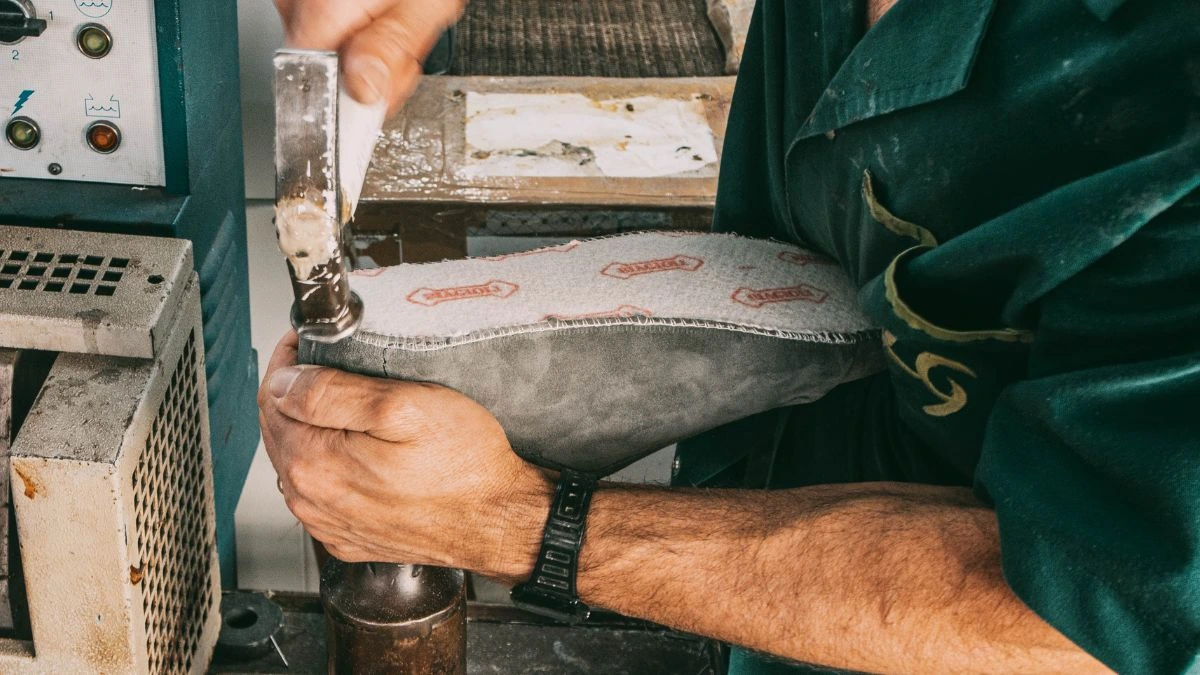
TLDR – footwear material selection explained: Material selection plays a critical role in footwear development, influencing product quality, durability, comfort and manufacturing efficiency. For brands working with European manufacturers, choosing the right materials is a strategic decision that impacts both performance and long-term success.
Why material selection is critical in footwear development
Material selection is one of the most important stages in footwear development. While design often receives the most attention, the materials used define how a product performs, how it looks and how it behaves during production.
For brands working with a European partner, understanding footwear material selection is essential to ensure quality, consistency and efficient production.
For brands working with a Portuguese shoe manufacturer, this stage is not just about aesthetics. It is about aligning quality, functionality and manufacturability.
Poor material choices can lead to production challenges, inconsistencies and quality issues. On the other hand, well-informed decisions support efficient production and a reliable final product.
Table of contents
- Types of materials used in footwear
- How materials impact product quality
- Material selection and manufacturing processes
- Sourcing and supplier networks
- Material decisions during product development
- How brands should approach material selection
- Common mistakes in material selection
- The role of collaboration with manufacturers
- FAQs
Types of materials used in footwear
Footwear production involves a wide range of materials, each with specific properties and performance characteristics.
Common materials include:
- Full-grain and corrected leather
- Suede and nubuck
- Textiles and technical fabrics
- Synthetic alternatives
- Rubber, EVA and PU soles
Each material affects flexibility, durability, comfort and appearance. The right combination depends on the product category and brand positioning.
How materials impact product quality
Material selection has a direct impact on product quality and long-term performance.
Footwear material selection directly influences how products are positioned in the market and how they perform over time.
High-quality leather, for example, offers better durability, breathability and aging characteristics. Lower-grade materials may reduce cost but can compromise consistency and lifespan.
Quality also affects:
- Comfort and fit
- Resistance to wear
- Visual consistency across production
For brands aiming to build a premium positioning, material selection is a defining factor.
Material selection and manufacturing processes
Material choices directly influence how footwear is produced.
Different materials behave differently during cutting, stitching and assembly. Some require specific techniques or machinery, while others allow more flexibility in production.
Construction methods such as Strobel or Blake stitch require different material properties and influence final performance.
Sourcing and supplier networks
Access to reliable material suppliers is a key advantage of working with a European footwear manufacturer.
Portugal has a strong supplier ecosystem, allowing manufacturers to source high-quality materials locally and efficiently.
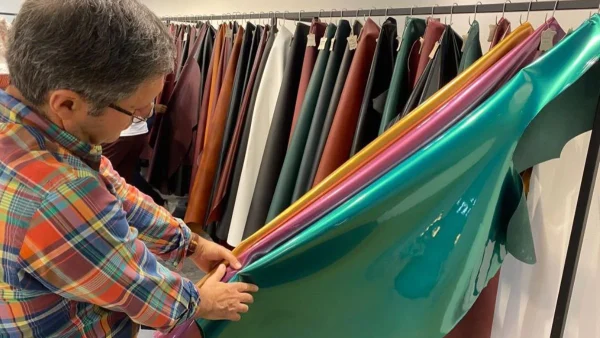
Material sourcing impacts:
- Lead times
- Consistency across batches
- Traceability and compliance
According to the European Parliament, transparency and responsible sourcing are becoming key priorities in European manufacturing.
Material decisions during product development
Material selection is not a one-time decision. It evolves throughout the development process.
During development, footwear material selection is continuously refined to ensure the best balance between performance and manufacturability.
During prototyping, materials are tested and adjusted to ensure performance and manufacturability.
Working closely with a footwear manufacturing partner allows brands to refine material choices based on technical feedback.
This reduces errors, improves efficiency and ensures a smoother transition to production.
How brands should approach material selection
Brands should treat material selection as a strategic process, not just a design choice.
Key recommendations include:
- Align materials with product positioning
- Balance quality and cost expectations
- Involve manufacturers early in the process
- Test materials before final decisions
Ultimately, footwear material selection is not just a technical step, but a strategic decision for brands aiming to build reliable products.
Brands that approach this stage strategically are better positioned to develop consistent and scalable products.
Common mistakes in material selection
Choosing the right materials is not always straightforward. Many brands, especially in early development stages, make decisions that later impact production, quality or costs.
Some of the most common mistakes include:
- Focusing only on cost: Lower-cost materials may seem attractive initially but often lead to quality issues, inconsistencies or higher return rates.
- Ignoring manufacturing constraints: Not all materials behave the same during production. Choosing materials without consulting the manufacturer can create technical challenges.
- Overcomplicating designs: Combining too many materials or finishes can increase complexity and reduce production efficiency.
- Lack of testing: Skipping proper prototyping and testing phases increases the risk of defects and performance issues.
Understanding these challenges helps brands make more informed decisions and avoid costly mistakes during production.
The role of collaboration with manufacturers
Footwear material selection is not a decision that should be made in isolation. The most successful projects are built on strong collaboration between brands and manufacturers.
Working closely with an experienced production partner allows brands to:
- Validate material choices early in the process
- Identify potential production constraints
- Optimise cost and performance balance
- Ensure consistency across production runs
This collaborative approach is particularly important when working with European manufacturers, where quality expectations and technical standards are high.
By involving the manufacturer early, brands gain valuable insights that improve both product quality and production efficiency.
FAQs
Why is material selection important in footwear?
Because it directly affects quality, durability, comfort and manufacturing feasibility.
Do materials affect production costs?
Yes, different materials vary in price, availability and processing requirements.
Can manufacturers help with material selection?
Yes, experienced manufacturers provide technical guidance based on production expertise.
Is leather always the best option?
Not necessarily. The best material depends on the product, market and brand positioning.
How early should materials be selected?
Ideally during the initial development phase, with adjustments made during prototyping.
Conclusion
Material selection is one of the most critical decisions in footwear development. It influences not only product quality, but also manufacturing efficiency and long-term performance.
As a footwear manufacturer in Portugal, LG Shoes supports brands in making informed material decisions that align with both design goals and production realities.


 English

