
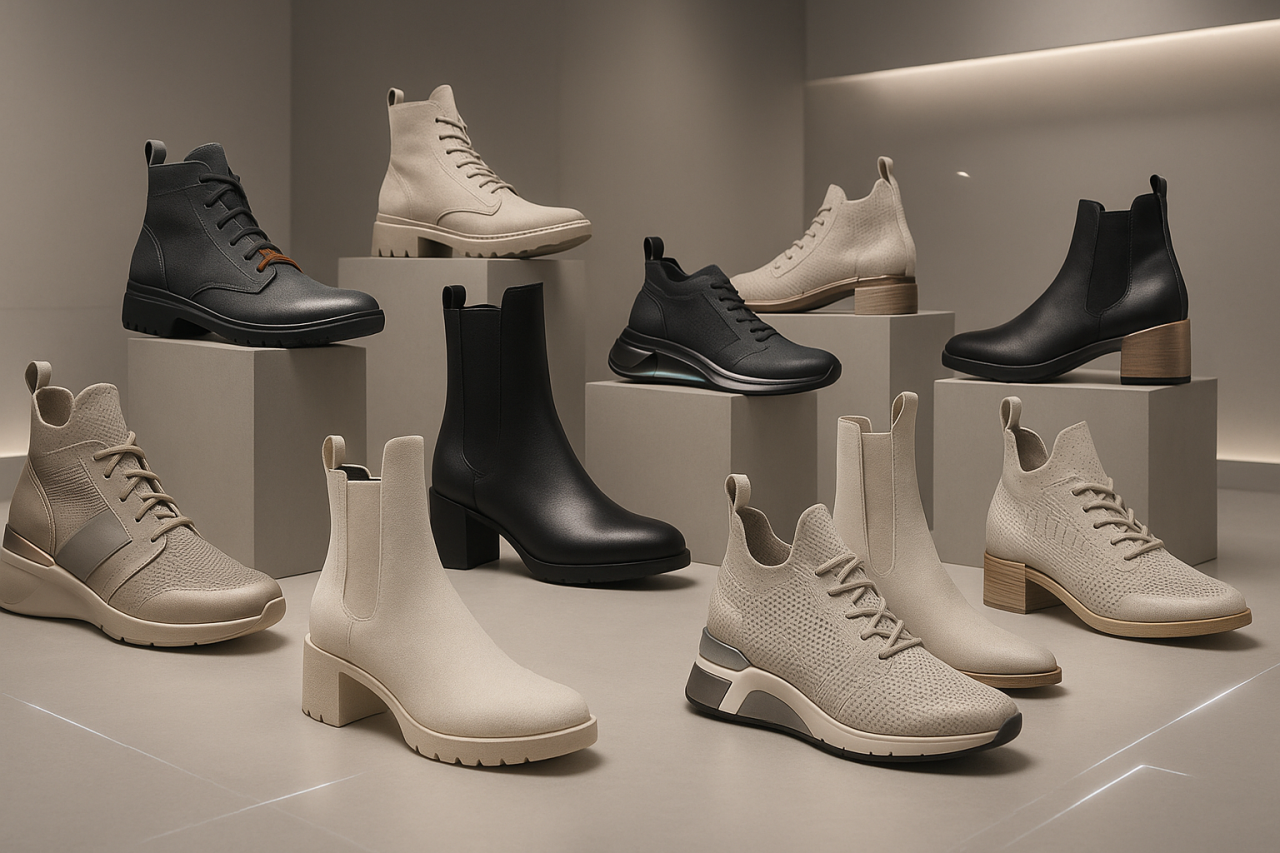
The footwear sector is evolving fast in 2025, driven by sustainability, innovation, and shifting consumer expectations. Whether you are developing casual sneakers, premium collections, or performance lines, understanding how the industry is changing is essential for staying competitive. In this article, we break down the most relevant 2025 trends and explore how brands can leverage Portuguese manufacturing, ethical production, and flexible private label partnerships to accelerate their next collection.
Table of contents
- Why is sustainability no longer optional for 2025 collections?
- How is the shift toward European manufacturing reshaping sourcing strategies?
- What materials are trending for footwear in 2025?
- How is technology influencing footwear development and private label production?
- Why are brands prioritizing flexibility in production partners?
- FAQs about footwear trends for 2025
1. Why is sustainability no longer optional for 2025 collections?
Sustainability is no longer a trend but a defining standard for the global industry. Buyers, especially in Germany and Northern Europe, increasingly require proof of ethical manufacturing, traceability, and environmental responsibility. Sustainability influences everything from materials to energy efficiency, auditing requirements, and supply chain transparency.
For brands, it is no longer enough to “include” sustainable elements. Collections for 2025 must demonstrate consistent environmental commitment, backed by certification, verified suppliers, and documented processes.
LG Shoes supports brands with SMETA certified manufacturing, following internationally recognized guidelines that ensure responsible practices across labour, environment, and business ethics. This gives brands confidence when presenting products to markets demanding compliance and transparency.
Footwear companies looking to expand into Europe or the US increasingly prioritize partners capable of delivering both sustainability and performance, with traceable materials and documented development processes.
2. How is the shift toward European manufacturing reshaping sourcing strategies?
Brands in the US and across Europe are rethinking sourcing models and moving closer to production partners that offer stability, quality, and consistent communication. Over the past years, rising logistics costs and unpredictable lead times have accelerated an industry-wide shift toward European manufacturers, especially Portugal.
This movement is driven by key advantages such as:
- faster and more collaborative development cycles
- reduced supply chain risk
- stricter quality control and compliance
- ethical production aligned with European standards
- flexibility for small and medium batch volumes
For brands looking for a trusted Portuguese footwear manufacturer or a high-quality shoe manufacturer Portugal, this shift offers reliability, transparency, and greater control throughout the production process.
3. What materials are trending for footwear in 2025?
Materials for 2025 reflect a strong balance between environmental responsibility and high performance. Brands are searching for materials that improve comfort, durability, and sustainability, while maintaining modern aesthetics.
Key material trends include:
- Recycled and bio-based components
- LWG-certified leathers
- Lightweight, breathable textiles
- High rebound and low-density foams
- Water-resistant and waterproof membranes
There is also a clear rise in natural-toned palettes, textured materials, and hybrid combinations that merge casual and performance features. LG Shoes continues to expand its library of certified, eco-conscious materials to support brands developing sustainable private label collections in Europe.
4. How is technology influencing footwear development and private label production?
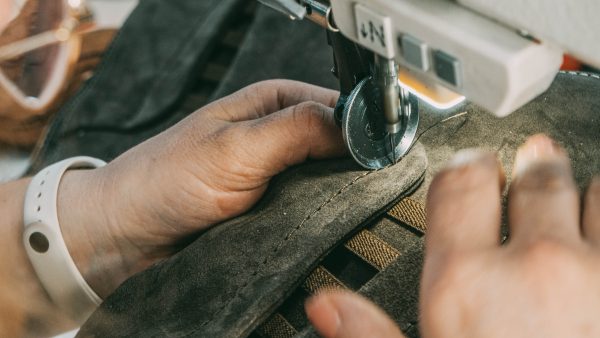
Technology is reshaping every stage of product development. What used to require weeks can now be achieved in days through digital tools and automation.
Key advancements include:
- Digital 3D uppers for faster sample cycles
- AI-assisted pattern adjustments for improved fit
- Automated stitching and injection systems
- More precise quality control through optical scanners
These innovations allow a European footwear manufacturer like LG Shoes to shorten lead times while maintaining consistent, high-end results. They also support brands looking to innovate without compromising quality or production efficiency.
Brands seeking deeper insight into how different production techniques influence comfort, durability, and technical performance can explore our construction methods.
5. Why are brands prioritizing flexibility in production partners?
The market is moving faster than ever. Fashion cycles are shorter, demand is less predictable, and brands must react quickly to emerging trends and changing consumer behaviour. This makes flexibility one of the most valuable features in modern production partnerships.
Brands increasingly look for partners who can deliver:
- Small batch shoe production Europe
- Custom sneaker manufacturer Portugal capabilities
- Ability to scale without compromising quality
- Technical support during development
- Responsive communication and efficient sampling
This level of adaptability is especially important for brands exploring new categories, expanding into European retail, or testing upcoming styles for 2025.
When choosing a Portuguese shoe manufacturer for brands, responsiveness, technical expertise, and production agility are becoming decisive factors.
6. Faqs about footwear trends for 2025
1. Which footwear styles will dominate 2025?
Hybrid sneakers, lightweight outdoor-inspired casual models, comfort-driven everyday shoes, and premium sustainable designs.
2. Are brands moving away from Asian manufacturing?
Not entirely, but many are diversifying and shifting part of their sourcing to Europe for better quality control, lower risk, and stronger ethical standards.
3. What should brands prioritize when choosing an OEM shoes Portugal partner?
Sustainability credentials, prototyping expertise, transparency in communication, and flexibility for private label development.
4. Will sustainable materials increase production costs?
Prices vary, but many eco-friendly materials are now competitively priced. Brands increasingly see them as a strategic long-term investment.
Editorial note
This article was produced by the LG Shoes communication team in collaboration with the product development department, combining decades of expertise in Portuguese footwear manufacturing and private label production.


 English

