
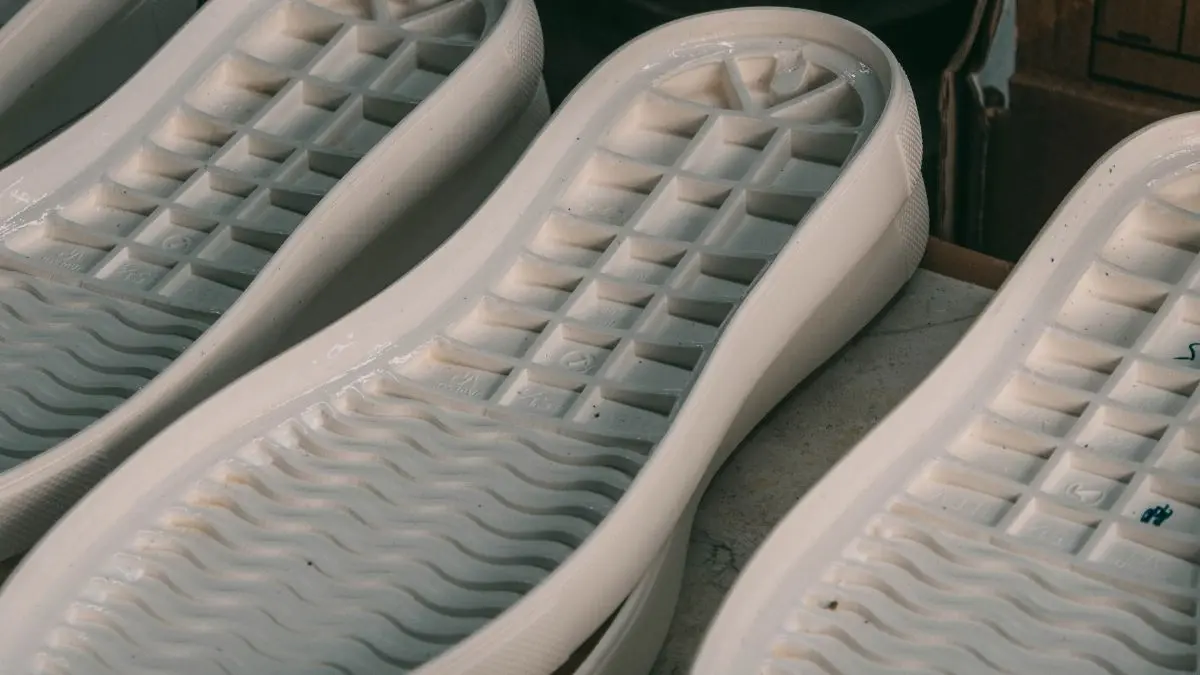
A distinctive sole can give a footwear collection a recognisable profile. However, deciding to invest in custom outsole tooling requires more than an attractive design reference. Brands need to understand what the sole should achieve, how it will work with the shoe and whether the investment fits the collection plan.
An existing outsole may already meet the brief. A custom design may become worth exploring when the required proportions, functional details or visual identity cannot be achieved with available options.
For product managers, designers and sourcing teams, the useful question is therefore practical: what does a custom sole allow this collection to do, and what must be confirmed before committing?
This guide explains how to evaluate that decision, prepare a development brief and review costs, compatibility and validation before moving forward.
TL;DR
Evaluate the product need before committing to a custom sole.
- Identify a clear design or functional requirement.
- Compare suitable existing outsole options first.
- Review the last, upper, construction and size range together.
- Separate tooling investment from component prices.
- Use realistic quantities when evaluating cost per pair.
- Allow time for samples, testing and revisions.
- Clarify access, maintenance and future use in writing.
- Approve the complete shoe before committing to produção.
Índice de Conteúdos
- What is custom outsole tooling?
- When does custom outsole tooling make sense?
- When is an existing outsole a better option?
- What should brands define before requesting a quotation?
- How should brands evaluate the investment?
- What needs to be validated before production?
- What should the tooling agreement clarify?
- Existing outsole or custom sole: comparison table
- People also ask
- Final thoughts
- Perguntas frequentes
What is custom outsole tooling?
Custom outsole tooling refers to the moulds and related production tools developed to manufacture a specified outsole design. The tooling translates an approved shape into repeatable components. Its configuration depends on the material, production process, size coverage and design requirements.
A custom outsole is different from choosing an existing sole in a new colour. It may involve a new profile, tread geometry, sidewall treatment or integrated branding. Some changes to an existing design may also require new tooling or modifications, so the scope should be checked rather than assumed.
Keep three decisions separate: the outsole design, the material specification and the tooling needed to produce it. A drawing may communicate the desired appearance without resolving how the component will be manufactured.
For example, a brand might request a lower sidewall and a more rounded toe profile. Before approving the concept, the development team should establish whether the desired shape fits the last and whether an existing component already provides it. This prevents paying for a new design before defining the actual requirement.
When does custom outsole tooling make sense?
The strongest starting point is a requirement that suitable existing components cannot meet. That requirement should be specific enough to evaluate through drawings, dimensions, samples or agreed performance criteria.
A recognisable collection identity
A brand developing a continuing calçado family may want a consistent sole silhouette across several models. Custom tooling becomes more relevant when that identity has a planned life beyond one launch and the proposed models can genuinely share the same sole platform.
A defined product requirement
A particular profile, tread arrangement or relationship between the upper and sole may be central to the design. Describe what needs to change and why. Avoid treating a visual preference as proof of better comfort, grip or durability.
A credible reuse plan
Consider where the component could be used again: future seasons, additional colourways or related uppers. Reuse can improve the commercial case, but only if compatibility and demand are realistic.
Imagine a premium casual range built around a distinctive sidewall. A custom sole may support that direction if the range has a stable last and a credible continuation plan. For a one-season experimental model, the same investment may be harder to justify.
When is an existing outsole a better option?
An existing outsole deserves serious consideration when it meets the intended use, proportions and construction requirements. It can let a brand focus development resources on the upper, materials, fit and finishing rather than introducing an additional tooling project.
This approach is particularly useful when demand is uncertain, the launch window is tight or the collection is still changing. However, availability does not eliminate development work. The chosen component still needs to be checked against the shoe and confirmed for the required sizes, colours and quantities.
Ask what adjustments are available and which require additional work. Colour options, branding details or finishing choices should never be assumed to be unrestricted. Confirm supply continuity and whether the component is available to other brands.
For example, an emerging label testing two casual styles may find that an available cupsole gives the required profile. Using that component can provide a clearer first production brief while the brand learns which styles are likely to continue.
The objective is to choose a component that supports the product, rather than treating customisation as a measure of quality.
What should brands define before requesting a quotation?
A useful outsole development brief gives the people reviewing it enough information to assess feasibility. Lifestyle references help communicate direction, but they cannot replace technical requirements.
Include the footwear category, intended wearing conditions, target appearance, size range and initial quantity forecast. Add drawings or references showing the sole profile, tread, sidewall and branding positions. Distinguish essential features from details that can change.
- Product context: intended use, target market and collection positioning.
- Compatibility: proposed last, upper concept and construction method.
- Geometry: profile, proportions and critical dimensions where available.
- Material direction: desired weight, flexibility, feel and finish.
- Commercial scope: sizes, colours, quantities and possible repeat orders.
- Validation: sample stages, approval criteria and target launch date.
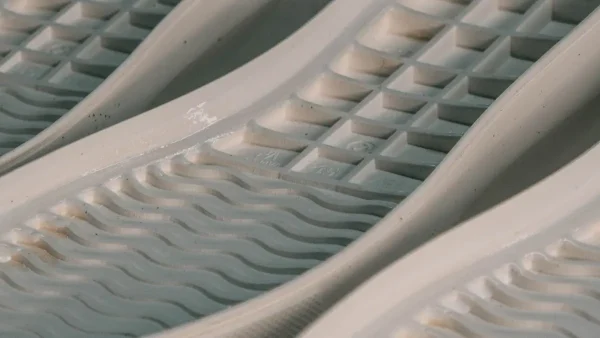
Explain material expectations through the product requirement rather than choosing a material name solely from an image. A reference photograph rarely identifies the exact compound or demonstrates performance.
For context on how technical specifications develop into a footwear sample, explore the journey from sketch to sample. The outsole brief should remain connected to that wider development process.
How should brands evaluate the investment?
Review outsole tooling costs as part of the complete project. A tooling quotation alone does not establish whether the shoe is commercially viable.
Separate the initial tooling charge from design work, sample development, revisions, testing and the recurring component price. Ask which sizes are included and what additional sizes or changes would cost. Confirm whether the quotation covers the complete agreed scope.
An illustrative calculation helps explain the effect of volume. If the initial tooling investment were €6,000 and the brand ordered 3,000 pairs, allocating that investment across those pairs would add €2 per pair. At 1,000 pairs, the allocation would be €6 per pair. These figures are hypothetical, not market prices or a quotation, and exclude other development and production costs.
Prepare a conservative first-order scenario and a separate repeat-order scenario. Avoid making the project viable only by assuming future orders that have no supporting demand.
Also check minimum quantities by size, colour or material where applicable. A total order forecast may look sufficient while the planned breakdown is difficult to supply. Comparing quotations against the same specifications makes differences in scope easier to identify.
What needs to be validated before production?
Approval should establish how the outsole works within the complete shoe. A visually convincing sole sample does not confirm fit, flexibility or attachment performance once combined with the upper.
Start with last and outsole compatibility. Review the toe shape, heel position, perimeter relationship and the space needed for the selected construction. Check the intended size range rather than relying entirely on one development size.
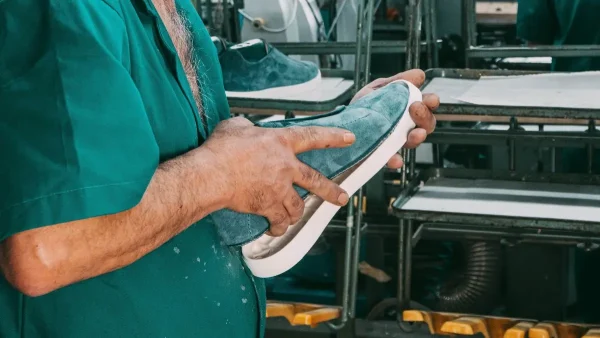
Then assess the material and finished footwear against the intended use. Relevant checks may include flexing, abrasion, slip resistance and attachment performance. The appropriate methods and acceptance criteria should be agreed with a competent testing partner for the product and material involved. Hohenstein’s footwear testing overview lists assessments for outsole properties such as flex resistance, abrasion and slip resistance. These examples do not constitute a universal test plan for every outsole.
Build approval stages into the schedule: design review, component sample, complete shoe sample and final specification confirmation. Record revisions so that the approved reference and production instructions remain aligned.
For instance, a sidewall that looks balanced in a drawing may interfere with the upper when the shoe is developed. Resolving that issue during sampling is preferable to approving appearance alone and discovering the conflict later.
What should the tooling agreement clarify?
Treat the tooling arrangement as a project specification that needs written clarification. Payment, possession, access and exclusivity are separate questions; do not assume that one automatically resolves the others.
Ask who holds the tooling, who may use it and how future orders will be managed. Clarify any agreed exclusivity, the treatment of design files and the process for requesting changes. These are discussion points for the written agreement, rather than universal ownership rules.
- Which designs, sizes and tools are covered?
- What approvals trigger payments or further work?
- Who handles storage, maintenance and repairs?
- How are modifications and replacement tools authorised?
- What happens if the project stops or the component is discontinued?
- What conditions apply to future access or transfer?
For example, a brand planning repeat orders should confirm how long unused tooling will be retained and how its condition will be checked before restarting production. The purpose is to avoid uncertainty when a collection returns, not simply to complete the initial transaction.
Existing outsole or custom sole: comparison table
Compare both routes against the same product brief before deciding.
| Evaluation area | Existing outsole | Custom sole |
|---|---|---|
| Design direction | Works within an available profile and permitted adjustments. | Allows a specified design, subject to manufacturing feasibility. |
| Initial investment | May avoid a new tooling project; confirm adaptation charges. | Requires an agreed tooling and development budget. |
| Development schedule | Still needs availability checks and shoe validation. | Needs time for design approval, tooling, samples and revisions. |
| Compatibility | Must match the intended last and construction. | Must be developed and validated with the complete shoe. |
| Collection continuity | Depends on component availability and supply terms. | Depends on tooling access, condition and repeat-order terms. |
| Distinctiveness | May be shared with other footwear projects. | Can support a specific identity; clarify exclusivity separately. |
| Best starting point | A suitable component meets the brief. | A defined requirement justifies additional investment. |
The table is a decision framework, not a guarantee that either route is faster or cheaper. Availability, complexity and revisions can change the outcome. Request a project-specific comparison before setting the production plan.
People also ask
What is the difference between an outsole and a sole unit?
The outsole is the ground-contact part of the shoe. A sole unit may combine several elements, depending on the design. Clarify which components a quotation covers so that design, tooling and material discussions refer to the same scope.
Does a custom outsole make footwear more comfortable?
Customisation alone does not establish comfort. Fit, materials, flexibility and the complete construction all contribute. A custom design should address a defined need and be assessed in the finished shoe rather than judged from its appearance.
Can different uppers use the same outsole?
Potentially, if their lasts, dimensions and construction requirements are compatible. Sharing a sole across a collection should be confirmed during development. Similar styling does not demonstrate that two models can use the same component successfully.
Is a custom sole always exclusive to one brand?
Exclusivity depends on the agreed terms. Clarify use of the design, tooling and any shared elements before committing. A distinctive appearance or a paid tooling charge should not be treated as sufficient confirmation of exclusive access.
Final thoughts
Investing in a custom outsole is easier to assess when the brief connects product identity with technical and commercial requirements. Define what existing options cannot deliver, review the complete shoe and make the financial case using realistic quantities.
If those elements remain uncertain, continue evaluating available components or refining the brief. If they are clear, a structured development discussion can establish the next approval stages and the information still needed.
The useful outcome is a component that supports the collection and can be supplied consistently, with a clear understanding of its costs and future use.
Preparing your next footwear project? Discuss your development requirements with LG Shoes.
Perguntas frequentes
What documents should I prepare for the first discussion?
Bring design references, available drawings, the proposed last, upper and construction details, size range, quantity forecast and launch target. Mark unresolved specifications clearly so that the discussion can identify what needs to be developed next.
Should I approve all sizes at the same time?
Agree the size-development and approval sequence at the outset. Confirm how dimensions will be checked across the range and which samples are required. Approving one size should not silently become approval of every size.
Can a colour change affect the quotation?
It may affect sampling, material preparation or minimum quantities. Ask which colours are covered, how colour approval works and whether changes introduce additional charges. Keep the approved colour reference connected to the material specification.
How much time should I allow for revisions?
Request a schedule based on the actual design and approval stages. Include time for feedback, revised samples and testing where needed. A target launch date should be discussed before tooling commitment rather than added after development starts.
What should I keep after approving the samples?
Keep the approved drawings, revision history, material and colour specifications, relevant test results and identified reference samples. Record who approved each stage. This creates a shared reference for production and later repeat orders.
When should I review the tooling decision again?
Revisit it when quantities, size coverage, materials, construction or collection plans change. A decision based on a continuing range may need reassessment if the project becomes a limited run or requires a substantially different shoe.


 Portuguese


