
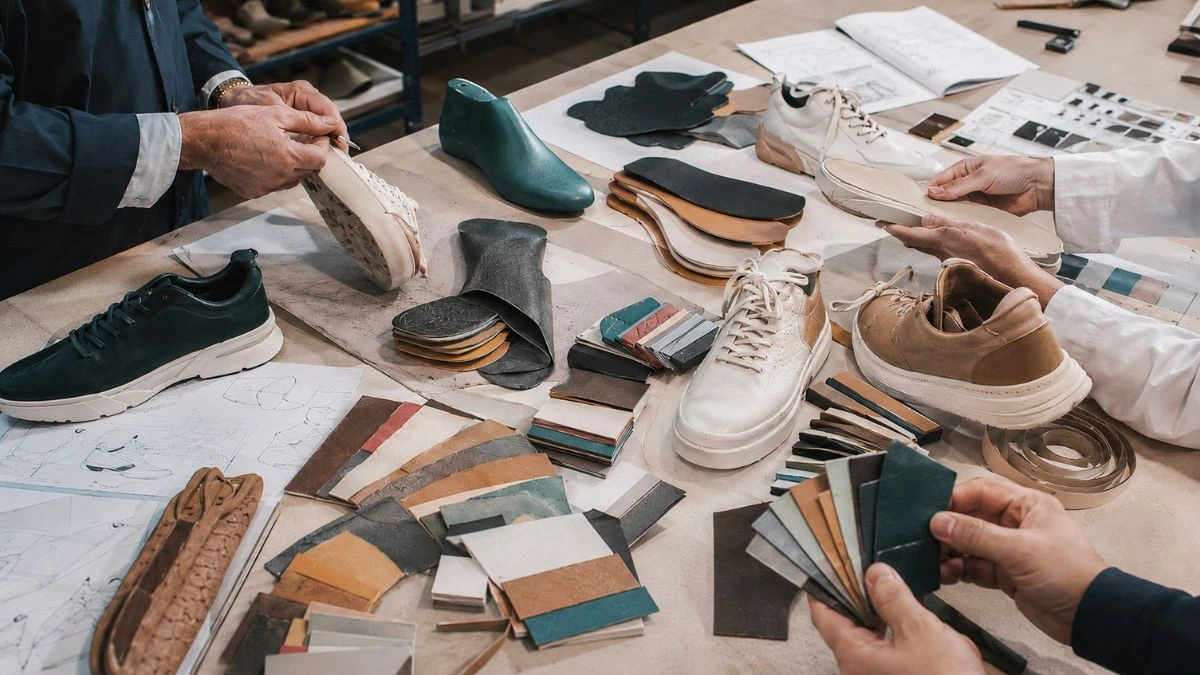
In today’s competitive footwear market, brands need to create products that feel distinctive, relevant and commercially strong. However, creative ideas only become successful collections when they can also be manufactured with consistency, quality and technical precision.
This is why footwear design and development plays such an important role. A shoe may look strong in a sketch, mood board or digital concept, but its success depends on how well design decisions align with materials, construction methods, fit, comfort, cost and produção requirements.
When creativity and manufacturability are not considered together, brands can face delays, repeated sampling, unexpected costs, quality issues and products that do not fully match the original design intention. These risks are especially relevant for brands developing private label calçado, OEM footwear production or premium collections with a European manufacturing partner.
In this article, we explore seven practical ways footwear brands can balance creative ambition with production feasibility, helping them develop products that are original, reliable and ready for market.
TL;DR: How to turn creative footwear ideas into production-ready products
Successful footwear design and development depends on more than creativity. Brands also need to consider materials, construction methods, fit, prototyping, production planning and manufacturing efficiency from the beginning of the development process.
The best results happen when brands and manufacturers work together early, before design decisions become difficult or expensive to change.
To balance creativity and manufacturability, footwear brands should:
- involve manufacturers early in the design process;
- select materials with both aesthetics and production in mind;
- choose the right construction method for the product category;
- prioritise fit, comfort and sizing consistency;
- use prototypes to test and refine ideas;
- avoid unnecessary production complexity;
- maintain clear communication throughout development.
When these elements are aligned, brands can create footwear collections that are distinctive, commercially viable and easier to manufacture consistently.
Índice de Conteúdos
- 1. Involve manufacturers early in the design process
- 2. Design with materials in mind
- 3. Choose the right construction method
- 4. Prioritise fit and comfort from the start
- 5. Use prototyping to validate ideas
- 6. Balance innovation with production efficiency
- 7. Maintain clear communication throughout development
- Final thoughts
- FAQ
1. Involve manufacturers early in the design process
Manufacturing expertise should not enter the project only after the design has been finalised. One of the most effective ways to improve footwear design and development is to involve manufacturing partners from the earliest stages of the process.
When manufacturers participate during concept development, they can help identify technical limitations, production risks and cost implications before they become expensive problems. This collaboration often results in better decisions regarding material selection, footwear construction methods, components and timelines.
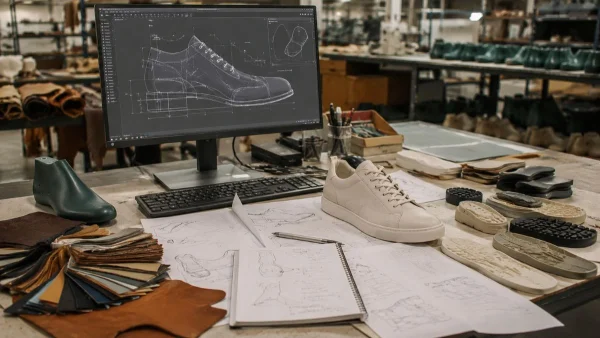
For example, a design that appears simple in a sketch may require specialised machinery, additional development rounds or materials that increase lead times. Early technical feedback helps brands protect the creative direction while making the product more realistic to produce.
Brands that involve manufacturers early typically benefit from:
- faster sample development cycles;
- better cost control;
- more accurate production planning;
- fewer prototype revisions;
- stronger alignment between design and manufacturing teams;
- reduced risk of production delays.
This approach is particularly valuable for brands developing premium footwear manufacturing projects, private label footwear collections or technically demanding product categories. By combining creative vision with manufacturing expertise from the beginning, brands can significantly improve the efficiency and success of their footwear design and development process.
2. Design with materials in mind
Materials influence far more than how a shoe looks. They affect comfort, durability, fit, flexibility, production behaviour and customer perception. For this reason, material selection should be treated as a central part of footwear design and development, not as a final styling decision.
A material may look perfect in a concept board but behave differently during manufacturing. Leather thickness, suede texture, textile flexibility, lining structure and outsole composition can all influence how the product performs during cutting, stitching, lasting, bonding and finishing.
Brands should evaluate materials from both a creative and technical perspective. A premium material must support the desired aesthetic, but it also needs to work with the selected construction method, fit objectives, production requirements and expected use of the final product.
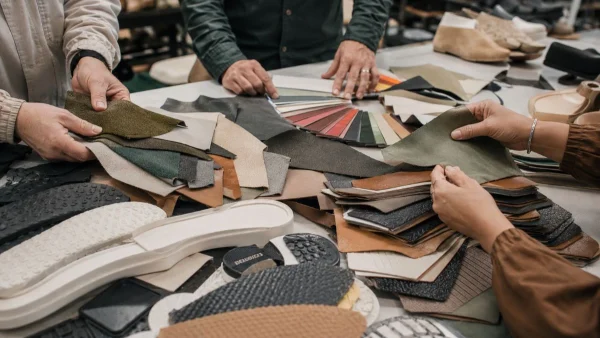
Important material considerations include:
- texture and visual appearance;
- thickness and flexibility;
- durability and resistance;
- compatibility with the selected construction method;
- behaviour during stitching, lasting and finishing;
- availability for production quantities;
- impact on comfort and fit.
For brands developing premium collections, this is especially important. A small material decision can affect the final result, from the way the shoe fits to how it ages over time. Good material decisions help reduce waste, improve consistency and support a stronger final product.
To explore this topic further, read our guide on footwear material selection and how it impacts product quality and manufacturing decisions.
3. Choose the right construction method
The construction method has a direct impact on the final footwear product. It influences flexibility, durability, weight, comfort, appearance and production complexity. Choosing the wrong method can make a design harder to produce, less comfortable or less aligned with the intended market positioning.
This is why understanding footwear construction methods is essential during footwear design and development. A construction method should not be selected only because it is familiar or commonly used. It should match the product category, design intention, comfort requirements and performance expectations.
For example, Strobel construction is often associated with lightweight and flexible footwear, especially sneakers and comfort-driven products. Blake construction is commonly used for elegant footwear with a more refined profile. Waterproof construction supports technical products designed for wet or demanding environments.
Other methods, such as Moccasin construction, Sacchetto construction, San Crispino construction and Montado construction, also offer specific advantages depending on the type of collection being developed.
Brands should ask:
- Does this construction method support the desired silhouette?
- Will it deliver the expected level of comfort?
- Is it suitable for the selected materials?
- Can it be produced consistently across sizes?
- Does it fit the target price and positioning?
- Is it appropriate for the product category?
Selecting the right construction method early helps avoid technical conflicts later in the process. Brands can explore the main options on LG Shoes’ page about footwear construction methods.
4. Prioritise fit and comfort from the start
A strong design may attract attention, but comfort often determines whether a customer returns to a brand. Fit should therefore be considered from the beginning of the footwear design and development process.
Many fit issues are not created during final production. They often begin much earlier, during last development, pattern making, material selection and construction planning. If these elements are not aligned, the final product may feel different from what the brand intended.
Fit and comfort are influenced by:
- last shape and proportions;
- pattern accuracy;
- upper material flexibility;
- lining and insole choices;
- construction method;
- sole structure;
- grading across sizes.
For brands, inconsistent fit can lead to returns, lower customer satisfaction and weaker brand loyalty. This is particularly relevant for footwear sold online, where customers cannot always try the product before purchasing.
A professional development process should include fit checks throughout sampling, not only at the final approval stage. This allows brands and manufacturers to make adjustments before production begins.
For a deeper look at this topic, read our article on footwear fit consistency and why it matters in manufacturing.
5. Use prototyping to validate ideas
No matter how clear a design looks on paper, the real test begins when the first prototype is produced. Shoe prototyping allows brands to evaluate whether a creative idea works as a physical product.
During prototyping, brands can assess proportions, comfort, material behaviour, construction details, finishing quality and overall product feasibility. This stage is essential because it reveals issues that may not be visible in sketches, CAD files or mood boards.
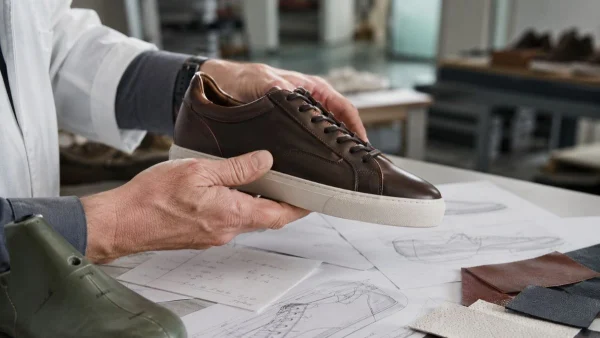
A prototype can help answer practical questions such as:
- Does the shape reflect the original design intention?
- Does the selected material behave correctly?
- Is the shoe comfortable on foot?
- Are the construction details feasible?
- Can the product be manufactured consistently?
- Does the final look match the brand’s positioning?
This stage is also where brands can refine technical details before committing to production. Adjustments to patterns, materials, linings, soles or finishing can significantly improve the final product.
In effective footwear design and development, prototyping is not just a formality. It is a decision-making tool. It reduces risk, improves product quality and supports clearer communication between brands and manufacturers.
Brands that invest time in proper prototyping are often better prepared for production, especially when working on custom shoe manufacturing, private label footwear or premium collections with specific technical requirements.
6. Balance innovation with production efficiency
Innovation is important, but not every creative idea improves the final product. Some details add value, while others increase complexity without improving comfort, performance or customer perception.
For footwear brands, one of the most important parts of footwear design and development is understanding which creative decisions are worth the additional production effort. This requires balancing originality with cost, timelines, quality control and manufacturing consistency.
Production complexity can increase when a design includes:
- too many components;
- unusual material combinations;
- highly complex stitching details;
- difficult assembly sequences;
- rare or hard-to-source materials;
- specialised finishing techniques;
- details that are difficult to repeat across sizes.
This does not mean that brands should avoid creative ideas. It means they should evaluate whether each design choice contributes to the product’s value. A distinctive feature should support the brand story, product performance or customer experience.
When unnecessary complexity is reduced, brands often benefit from more efficient footwear manufacturing, stronger quality control, shorter lead times and improved cost management.
This is closely connected to collection planning. As explained in our article on footwear collection planning, fewer but stronger product decisions can often lead to better commercial outcomes.
7. Maintain clear communication throughout development
Clear communication is one of the most underestimated factors in successful footwear design and development. Even a strong concept can face problems if instructions, approvals or technical details are unclear.
Footwear development involves many interconnected decisions. Design teams, product managers, suppliers, technicians and manufacturers all need to work with the same information. When details are missing or inconsistent, sampling and production can slow down.
Good communication should cover:
- technical packs;
- material references;
- colour specifications;
- size requirements;
- construction details;
- prototype feedback;
- approval timelines;
- production expectations.
A clear product development process helps reduce misunderstandings and supports faster decision-making. It also helps manufacturers provide better technical feedback and more accurate production planning.
For international brands working with a Portuguese fabricante de calçado, structured communication is especially important. It ensures that creative expectations, technical requirements and commercial objectives remain aligned throughout the project.
Na LG Shoes, development support is built around collaboration, technical knowledge and manufacturing experience. This helps brands move from concept to production with greater confidence.
Final thoughts
Creativity and manufacturability should not be treated as opposing forces. The strongest footwear collections are usually those where design ideas are supported by technical knowledge, material expertise and clear production planning.
For brands, the objective is not to reduce creativity. It is to make creativity more effective by ensuring that each design decision can be translated into a reliable, high-quality and commercially viable product.
A structured footwear design and development process helps brands reduce delays, improve product consistency, manage costs and make better decisions before production begins. It also supports stronger collaboration between designers, developers and manufacturers.
By involving manufacturers early, selecting materials strategically, choosing the right construction method, prioritising fit, using prototypes, managing complexity and communicating clearly, brands can create footwear that is both distinctive and manufacturable.
For additional global industry insights, brands can also explore World Footwear, a recognised platform covering footwear industry news, trends and market information.
If your brand is looking for a reliable European partner for footwear design and development, prototyping and manufacturing, LG Shoes can support your next collection from concept to production.
FAQ
What is footwear design and development?
Footwear design and development is the process of transforming a creative footwear concept into a product that can be manufactured and sold. It includes design refinement, material selection, construction planning, prototyping, fit testing, technical adjustments and production preparation. The goal is to create footwear that is visually strong, comfortable, durable and feasible to manufacture.
Why is manufacturability important in footwear development?
Manufacturability is important because a footwear design must be realistic to produce at the required level of quality, cost and consistency. If manufacturability is not considered early, brands may face repeated sampling, delays, higher costs, quality problems or products that do not match the original concept.
How can brands keep creativity while making footwear production-ready?
Brands can keep creativity by involving manufacturers early, validating ideas through prototypes, selecting appropriate materials and choosing suitable construction methods. This allows creative ideas to be refined without losing their originality. The goal is not to simplify everything, but to make sure the design can be manufactured successfully.
When should a footwear manufacturer be involved in the process?
A footwear manufacturer should ideally be involved during the early concept and development stages. Early involvement allows the manufacturer to provide technical input on materials, construction, costs, feasibility and timelines. This can help brands avoid expensive changes later in the process.
How do construction methods affect footwear design?
Construction methods affect the appearance, comfort, flexibility, durability and production complexity of footwear. For example, Strobel construction is often used for lightweight footwear, while Blake construction is commonly chosen for elegant premium shoes. Choosing the right method helps align design goals with manufacturing performance.
Why is prototyping important before footwear production?
Prototyping allows brands to test the physical product before production begins. It helps evaluate fit, comfort, materials, proportions, construction details and finishing. This stage reduces risk and allows technical adjustments before larger quantities are manufactured.
Why work with a Portuguese footwear manufacturer?
A Portuguese footwear manufacturer can offer technical expertise, craftsmanship, flexible development support and European manufacturing quality. For international brands, working with a manufacturer in Portugal can improve communication, product development, quality control and production reliability.


 Portuguese

