
TLDR
Choosing the right footwear manufacturing partner in Europe is about much more than price or production capacity. Brands need to evaluate technical development, communication, quality consistency, flexibility, compliance awareness, and strategic fit. The best partner is one that understands the product, communicates clearly, supports the development process, and can grow with the brand over time.
Why choosing well matters from the start
For brands entering or expanding within European sourcing, choosing the right calçado manufacturing partner in Europe is one of the most important decisions in the entire product lifecycle. It directly influences development speed, communication quality, produção consistency, and long-term commercial reliability.
A strong manufacturing relationship can improve product quality, reduce unnecessary delays, and create a more efficient path from concept to delivery. A weak choice, by contrast, often results in misunderstandings, repeated sampling, quality gaps, and avoidable operational pressure. In footwear, where technical details and timing matter, the wrong partner can quickly become an expensive problem.
This is particularly relevant in Europe, where many brands are not only looking for manufacturing capacity, but also for stronger development support, better communication, and more dependable production standards. The European Commission identifies footwear as a distinct industrial ecosystem linked to competitiveness, innovation, consumer protection, and environmental requirements, which reinforces why partner selection should be treated as a strategic decision rather than a simple sourcing comparison.
Índice de Conteúdos
- Why partner choice matters in European footwear manufacturing
- Look beyond price and production capacity
- Evaluate technical development capabilities
- Assess communication and responsiveness
- Understand quality standards and consistency
- Clarify MOQ, lead times and flexibility
- Check whether the manufacturer fits your brand positioning
- Prioritise transparency and long-term collaboration
- About LG Shoes
- A final checklist before deciding
- Perguntas frequentes
1. Why partner choice matters in European footwear manufacturing
Choosing a footwear manufacturing partner in Europe is not simply about finding a factory that can make a shoe. It is about selecting a company that can support development, understand your product expectations, communicate clearly, and deliver consistently across multiple stages of the process. For brands that value quality, timing, and reputation, the manufacturing partner becomes part of the brand experience itself.
In practice, the first decision often shapes everything that follows. A manufacturer with strong technical knowledge can identify risks early, refine product details, and improve feasibility before problems escalate. A weaker partner may accept the project too quickly, give limited technical feedback, and create issues later in sampling or production. That is why brands should treat the selection phase as a strategic filter, not an administrative step.
European footwear manufacturing is especially well suited to brands that need closer collaboration, shorter communication chains, and better control over development. Portugal, in particular, remains highly export-oriented, with the footwear sector sending the great majority of its production abroad, which reflects both international focus and long-standing integration into global B2B supply chains. APICCAPS notes that the Portuguese footwear industry is strongly export-driven, and its sector materials continue to position Portugal as a quality-oriented manufacturing hub.
2. Look beyond price and production capacity
One of the most common mistakes brands make is choosing a manufacturer mainly because of price. While cost is obviously important, price alone rarely reflects the true quality of a manufacturing partnership. A cheaper quotation can look attractive at first, but if it comes with poor communication, limited development support, weak planning, or inconsistent output, the hidden costs may end up being far greater than the initial savings.
Production capacity should also be interpreted carefully. A factory may be large, busy, and technically active, but that does not automatically mean it is the right fit for your collection. Capacity matters, but capacity without process discipline, attention to detail, or responsiveness is not enough. Brands should look at the broader operating context: how the manufacturer manages development, how it handles approvals, how it responds to changes, and whether it can realistically support the scale and rhythm of the brand.
The strongest selection process for a footwear manufacturing partner in Europe compares manufacturers on total value rather than headline cost. That includes development capability, material sourcing support, communication quality, consistency, flexibility, and long-term reliability. In many cases, the right partner is not the cheapest factory, but the one most likely to protect timelines, reduce friction, and support better business outcomes.
3. Evaluate technical development capabilities
A footwear manufacturing partner should not be assessed only on bulk production. Technical development is often where the real quality of the partnership becomes visible. Brands need to know whether the manufacturer can work from sketches, references, or existing products and translate those inputs into viable prototypes with the right construction, fit, and materials.
This includes capabilities such as pattern making, material evaluation, component selection, construction guidance, fitting adjustments, and prototype refinement. The development phase is where products move from concept to manufacturable reality, and a factory with strong technical support can save time, reduce revisions, and identify issues before they become expensive production mistakes.
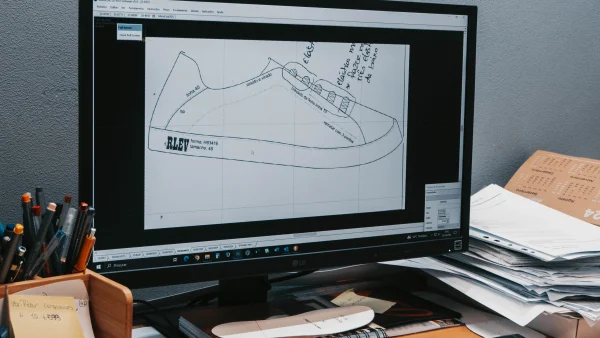
When evaluating a potential partner, brands should ask how development is managed internally, who reviews technical feasibility, how sample feedback is handled, and how many iterations are typically needed before approval. A helpful reference point here is understanding what to expect from a Portuguese shoe manufacturer, especially in terms of communication flow, sampling discipline, and the transition from development to production. A partner with real development strength does not simply execute instructions. It improves the quality of decisions before manufacturing begins.
4. Assess communication and responsiveness
Communication is one of the clearest indicators of whether a manufacturer will become a strong long-term partner. In footwear projects, where so many decisions depend on detail, timing, and approval accuracy, weak communication quickly creates operational friction. Delayed feedback, vague answers, incomplete updates, or scattered approval processes can slow down development and reduce confidence on both sides.
Brands should pay close attention to how a manufacturer communicates from the first interactions. Are responses clear and realistic? Do they explain limitations and alternatives properly? Do they understand the brief and ask relevant questions? A reliable partner should help structure the process, not create more ambiguity around it.
Responsiveness is not only about speed. It is also about precision. The best manufacturing partners communicate in a way that supports decision-making. They make it easier to understand what is approved, what needs adjustment, and what could affect lead times or quality. In practice, that clarity often has more value than simply receiving quick replies.
5. Understand quality standards and consistency
Brands often say they want high quality, but quality can mean different things depending on the target segment, product category, material mix, and retail positioning. That is why choosing the right footwear manufacturing partner in Europe requires more than assuming shared standards. Brands need to understand how quality is defined, reviewed, and maintained by the factory in practice.
This includes finishing precision, stitching consistency, material handling, fitting accuracy, tolerance control, and the ability to reproduce approved samples reliably across production. It also involves asking how the manufacturer handles internal checks, communicates quality issues, and responds when something needs correction. Strong quality systems are not only about inspection. They are about process discipline from the start.
Where relevant, brands should also assess whether the manufacturer understands current European product and compliance expectations. For example, the European Commission highlights restrictions under REACH for certain hazardous substances in clothing, textiles, and footwear, which shows how regulatory awareness forms part of the wider quality and responsibility picture in the European market. A better understanding of the footwear production process also helps brands evaluate how consistency is built from development through final delivery.
6. Clarify MOQ, lead times and flexibility
MOQ and lead times are often discussed too late or too vaguely. Brands may assume that a factory can support the desired quantities and timing without first understanding the production realities behind those numbers. In footwear manufacturing, MOQ depends not only on the factory itself, but also on materials, components, supplier requirements, construction type, and internal workflow.
Lead times are equally sensitive to context. They are affected by sample approvals, raw material availability, seasonal pressure, holiday periods, and the number of changes requested during development. A factory may be capable, but if the product is complex or the approval chain is slow, the timeline may still shift. The right partner will explain these factors clearly instead of offering unrealistic promises simply to secure the project.
Flexibility matters too, especially for brands in early growth stages or brands testing new categories. However, flexibility should be understood as structured adaptability, not unlimited accommodation. A strong partner can often suggest workable options, phased approaches, or material alternatives that support the brand’s goals without destabilising the production process.
7. Check whether the manufacturer fits your brand positioning
Not every good factory is the right factory for every brand. One of the most overlooked aspects of partner selection is strategic fit. A manufacturer may be highly competent, but still not be the right match if its strengths, working methods, product focus, or development style do not align with your positioning.
Brands should evaluate whether the manufacturer is more suited to fashion, premium, casual, technical, leather-driven, or flexible small-to-medium production projects. The type of collections the factory is used to handling can influence communication, sample quality, materials, timelines, and the level of detail expected during development. Choosing a manufacturer that fits your brand profile usually leads to smoother decisions and fewer corrections later.
This is also where reference work, construction familiarity, and product sensibility matter. If your brand needs support in premium casual footwear, private label development, or refined construction methods, the right partner should already understand those expectations. It is often more effective to choose a manufacturer whose capabilities naturally support your product identity than to force a mismatch and manage repeated course corrections.
8. Prioritise transparency and long-term collaboration
The best relationships with a footwear manufacturing partner in Europe are not purely transactional. They are built on transparency, practical problem-solving, and shared goals. A manufacturer that only says yes may appear easy to work with at first, but the stronger partner is usually the one that explains what is realistic, what may create risk, and what should be adjusted before moving forward.
Transparency creates operational trust. It allows brands to plan more realistically, evaluate trade-offs properly, and avoid unnecessary friction. It also supports better decisions around materials, development timing, production windows, and quality expectations. Over time, that transparency becomes one of the most valuable parts of the partnership because it reduces uncertainty and improves planning confidence.
Long-term collaboration matters for another reason: continuity. As the manufacturer becomes more familiar with the brand’s standards, fit expectations, materials, and approval process, development often becomes faster and more efficient. This is one reason many brands eventually choose to work with a trusted footwear manufacturing partner in Europe on a longer-term basis rather than constantly changing suppliers in search of marginal cost differences.
9. About LG Shoes
LG Shoes is a Portuguese fabricante de calçado focused on B2B partnerships with international brands, agents, and buyers. The company works in private label and custom footwear production, combining technical development, flexible manufacturing, and a quality-focused approach aligned with European standards and long-term collaboration. This positioning is consistent with the broader project guidelines used across LG Shoes content, which emphasise Portugal’s manufacturing quality, flexibility, ethical positioning, and partnership mindset.
For brands evaluating potential partners, that combination matters. It means looking beyond simple production capacity and considering how the manufacturer supports development, communicates through complexity, and helps protect product quality over time. Where relevant, brands can also explore the LG Shoes website and connect through its professional channels to understand the company’s positioning in more detail.
10. A final checklist before deciding
Before choosing a footwear manufacturing partner in Europe, brands should step back and assess the relationship from multiple angles. Price matters, but so do development capability, communication structure, quality consistency, MOQ realism, lead-time transparency, and strategic fit. A strong selection process reduces risk before production even begins.
In practical terms, brands should ask whether the manufacturer understands the product clearly, gives realistic feedback, supports technical development, and communicates in a structured way. They should also evaluate whether the factory’s strengths match the brand’s product category, quality level, and growth stage. These questions are often more predictive of success than a single quotation or sample alone.
The right decision is rarely based on one factor. It comes from seeing the full picture. Brands that choose more carefully at the start usually gain better quality, smoother development, and more reliable long-term manufacturing results.
11. Frequently asked questions
What makes a good footwear manufacturing partner in Europe?
A good partner combines technical capability, clear communication, reliable quality, realistic planning, and a genuine ability to support the brand beyond simple order execution. The best partnerships are built on consistency, transparency, and development support.
Should brands choose a footwear manufacturer based mainly on price?
No. Price matters, but choosing mainly on cost can create larger problems later if communication, development support, or quality consistency are weak. Brands should compare total value rather than quotation alone.
Why is technical development important when selecting a manufacturer?
Because development quality affects everything that follows. A manufacturer with strong technical capabilities can refine the product, identify feasibility issues early, and improve the path from concept to production.
How can brands assess whether a manufacturer is the right fit?
Brands should evaluate product focus, communication style, sample quality, development approach, flexibility, and whether the factory’s strengths match the brand’s positioning and operational needs.
The right manufacturing partner supports better long-term growth
Choosing the right footwear manufacturing partner in Europe is not just about starting production. It is about creating the conditions for better development, clearer communication, stronger product quality, and more stable long-term growth. The right partner helps brands make better decisions before problems appear.
For companies that want a more reliable sourcing model, the strongest manufacturing relationships are those built on technical understanding, transparency, and strategic fit. That is where real value tends to emerge over time.
Nota editorial
This article is based on common operational and strategic factors involved in selecting European footwear manufacturing partners for B2B projects. It is intended to help brands make more informed sourcing and development decisions when evaluating the right production partner in Europe.


 Portuguese

