
Footwear pricing in Europe is influenced by far more than the final production quote. For brands comparing factories, suppliers or sourcing options, pricing can sometimes look inconsistent or difficult to interpret. Two footwear proposals may seem similar on the surface, yet reflect very different assumptions about materials, construction, development input, lead times and production complexity.
Na LG Shoes, we see that pricing questions often appear early in conversations with brands. Many want to understand why one model costs more than another, why smaller quantities affect the unit price, or why construction and sourcing decisions can change the commercial viability of a product. These are valid questions, and they deserve practical answers. In calçado, price should never be analysed as an isolated number. It should be understood as the result of multiple technical and strategic decisions.
Quick pricing insight for brands
Footwear pricing in Europe is shaped by a combination of cost drivers, including materials, construction methods, product complexity, development time, quantities, sourcing strategy, labour input, finishing requirements and quality expectations. For brands, the key is not simply to ask what a shoe costs to make, but to understand what is driving that cost and how those decisions affect product value, repeatability and market positioning. A stronger pricing discussion usually leads to stronger product decisions.
Índice de Conteúdos
- What footwear pricing in Europe really reflects
- Footwear pricing in Europe: key cost drivers brands should understand
- How materials influence footwear production costs
- Why construction and product complexity affect price
- How development input and quantities change the cost structure
- The role of sourcing, finishing and quality control
- How brands should compare footwear pricing more accurately
- Conclusão
- Perguntas Frequentes
What footwear pricing in Europe really reflects
When brands analyse shoe manufacturing costs, they often look first at the final unit price. That is understandable, but it is not enough. In most cases, the quoted price reflects a wider product structure that includes technical development, material selection, component sourcing, labour input, construction logic, tooling implications and commercial assumptions around quantity and repeatability.
This is why footwear cost breakdown matters. A product made with premium leather, more demanding upper construction, specialised components and stricter finishing standards will naturally carry a different cost profile from a simpler model designed for easier sourcing and faster produção. Even before production starts, pricing is already being shaped by design decisions.
That is also why pricing conversations should be tied to development conversations. A brand that wants a more refined upper, lighter outsole, lower MOQ, custom finishing or tighter delivery window is not only defining the product. It is also defining the price logic behind the product. Good sourcing decisions start with recognising that relationship.
This broader cost logic is especially relevant in a European manufacturing context, where labour, sourcing, compliance and industrial structure all influence how products are priced. The European Commission textile ecosystem overview offers useful context on the industrial environment in which many footwear businesses operate.
Footwear pricing in Europe: key cost drivers brands should understand
Footwear pricing in Europe is usually built around a group of cost drivers that interact with each other. Brands that understand these variables are in a better position to assess quotations more realistically and avoid comparing proposals that are not truly equivalent.
Materials and components
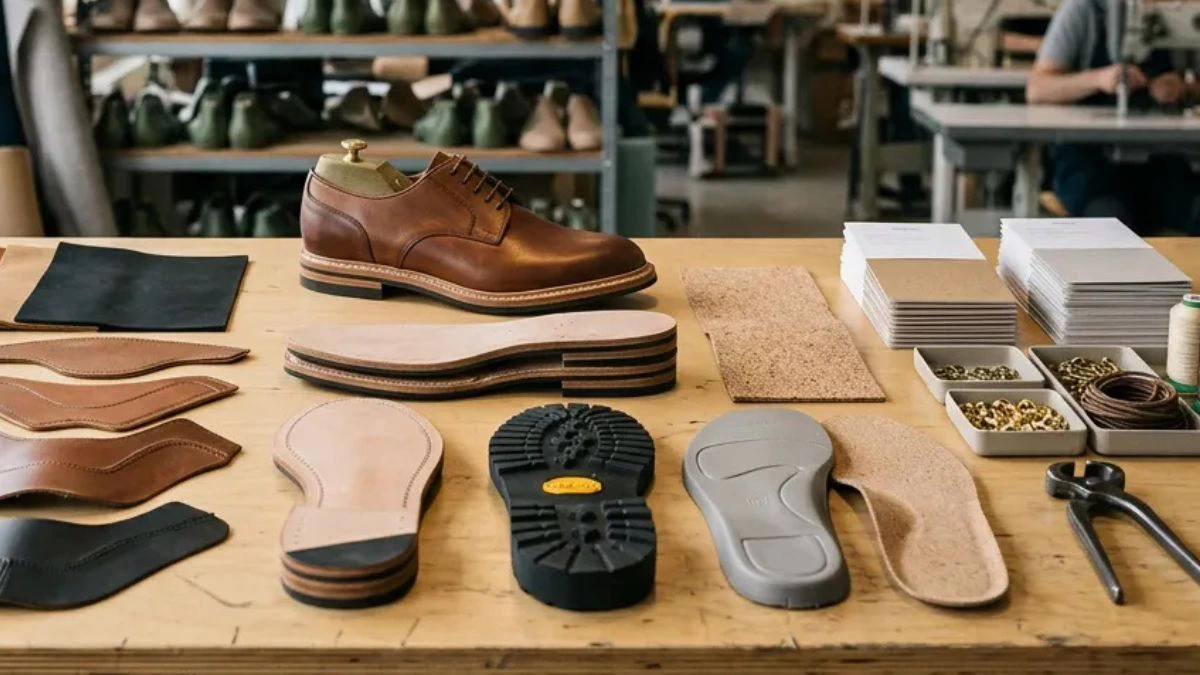
Footwear materials are often one of the most visible pricing drivers. Leather grade, lining quality, outsole composition, insoles, reinforcement materials, laces, hardware and packaging all influence the final cost. Even small differences in material choice can significantly alter the product’s price, performance and market positioning.
Construction methods
Construction methods also matter. Some techniques demand more labour, more precision or more specialised handling than others. Brands exploring different builds can review examples on our Métodos de construção page, where the relationship between product identity and technical execution becomes clearer.
Model complexity
The number of pattern pieces, overlays, stitching operations, material combinations and finishing steps all affect footwear production costs. A visually clean shoe may still be complex to execute, while a simpler-looking model may offer better manufacturing efficiency. Complexity is not only aesthetic. It is operational.
Quantities and production scale
Order volume has a direct effect on shoe production pricing. Smaller runs usually distribute setup time, development effort and sourcing constraints across fewer pairs, which increases the unit cost. Higher volumes often improve cost efficiency, but only when the product is already validated and commercially aligned.
How materials influence footwear production costs
For many brands, material selection is one of the most decisive parts of the cost structure. It affects not only the purchase price of the components themselves, but also product performance, repeatability, supplier availability and finishing consistency.
Premium leather, technical textiles, special finishes or exclusive materials can elevate the product, but they can also create pressure in sourcing, minimum order requirements and lead times. A shoe developed with a material that is difficult to reorder or match consistently may carry a higher practical cost than initially expected.

This is where footwear sourcing costs should be understood in context. The cheapest material is not always the most efficient option if it generates quality variation, delays or fitting issues. In European production, brands often benefit from choosing materials that balance appearance, performance and supply reliability.
Material pricing also depends on waste and yield. Some patterns use material more efficiently than others. A design that looks commercially simple may still generate more waste during cutting, which affects the true cost per pair. That is one reason why design, pattern engineering and sourcing cannot be separated completely.
Why construction and product complexity affect price
Footwear pricing in Europe is strongly shaped by how the shoe is built. Construction is not only a technical decision. It is a cost decision as well.
A product with more demanding assembly, extra upper structure, more stitching operations, refined edge finishing or tighter tolerances will usually require more labour input. In footwear, labour time and handling consistency remain central pricing variables, especially in products positioned around quality and durability.
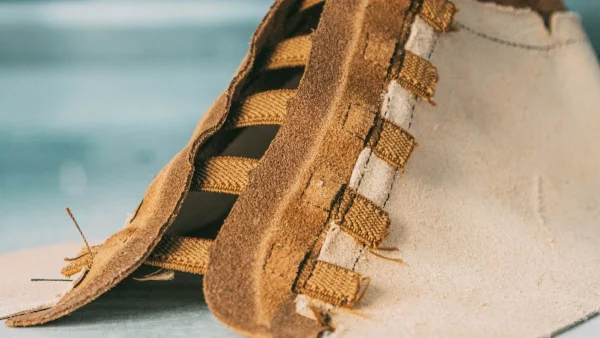
Complexity also increases when brands ask for more custom elements, more colourways, more upper combinations or very specific design details. Each of these decisions may look manageable in isolation, but together they increase operational effort across development, sampling and production.
This is especially relevant in private label footwear projects. Brands may compare two quotations that appear close in style, but if one model has a more complex upper, more difficult lasting conditions or more refined finishing requirements, the real manufacturing effort may be significantly different.
How development input and quantities change the cost structure
Pricing should also account for the work that happens before the production line starts. Footwear development costs are part of the overall value chain, even when they are not always visible in the final per-pair quote.
Development includes technical assessment, pattern work, fitting adjustments, prototyping, sample corrections and communication around manufacturability. Brands that need more support in these areas often benefit from working with partners who can contribute during earlier stages, not only when the order is ready to place.
Quantities then change how those efforts are distributed. A product developed for a limited run will often carry a different cost logic from a product planned for a broader order. This is one reason why brands interested in small batch shoe production in Europe should assess pricing differently from brands planning scale from the outset.
In practice, the price per pair is not only about making one shoe. It is about how the entire project structure is spread across the total quantity. That is why MOQ, development input and expected repeatability all matter when evaluating a proposal.
The role of sourcing, finishing and quality control
Cost drivers in footwear manufacturing also include the less visible stages that directly affect consistency and brand perception. These include sourcing management, finishing quality, inspection standards and production control.
A product may appear competitively priced at quotation stage, but if it depends on unstable materials, inconsistent finishing or weak process control, the real cost can emerge later through delays, rework, product rejection or commercial dissatisfaction. For brands, this is where cheap pricing can become expensive pricing.
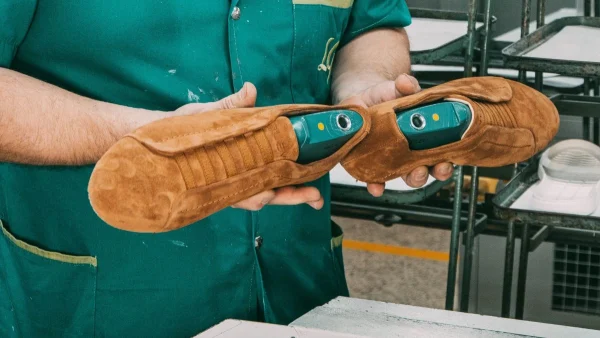
Controlo de qualidade is therefore not separate from price. It is part of the value structure. The same applies to finishing details such as edge paint, stitching precision, upper cleanliness, outsole attachment and packing presentation. These steps affect how the product is perceived in retail and how reliably it can be repeated.
For brands comparing European suppliers, this is also where proximity can matter. Working with a European manufacturing partner may support clearer communication, easier sampling adjustments and more direct visibility over product decisions that affect both cost and consistency.
How brands should compare footwear pricing more accurately
When reviewing quotations, brands should avoid comparing numbers without comparing the product structure behind them. A more useful approach is to ask what is included, what assumptions were made and which variables are affecting the cost profile.
Useful questions include:
- What materials and components are included?
- What construction method is being assumed?
- Does the quotation reflect standard or customised sourcing?
- What quantity and repeatability assumptions were used?
- What level of development support is included?
- What finishing and quality expectations are built into the proposal?
This kind of comparison leads to better sourcing decisions and reduces the risk of selecting a supplier based on incomplete information. It also helps brands assess value, not just price.
For companies exploring European footwear manufacturing, pricing should be evaluated alongside product reliability, communication quality, development input and long-term repeatability. That is usually a more intelligent way to compare proposals than focusing only on the lowest visible number.
Conclusão
Footwear pricing in Europe is shaped by multiple technical and commercial decisions, from materials and construction to quantities, sourcing and development complexity. For brands, the most important step is not simply to ask what a product costs, but to understand what is driving that cost and what it means for consistency, quality and long-term viability.
The strongest pricing conversations happen when brands and manufacturers discuss product structure clearly, compare like with like and align expectations early. In footwear, pricing is rarely just a number. It is a reflection of the product decisions behind it.
If your team is evaluating a new project and wants to understand how materials, development and production logic affect cost, visit the LG Shoes homepage or contact our team to continue the conversation.
Perguntas Frequentes
What affects footwear pricing in Europe the most?
The main pricing drivers usually include materials, construction methods, product complexity, development input, sourcing strategy, order quantities, labour time and finishing standards.
Why can two similar shoes have very different prices?
Because similar-looking models may involve different materials, components, construction methods, labour effort, development requirements or quality standards. Visual similarity does not always mean manufacturing equivalence.
Do smaller orders increase the price per pair?
In most cases, yes. Smaller quantities tend to increase the unit cost because development work, setup effort and sourcing constraints are spread across fewer pairs.
How do materials affect shoe manufacturing costs?
Materials influence the cost through purchase price, availability, supplier minimums, waste, repeatability and finishing behaviour. Better sourcing decisions often improve both product quality and pricing control.
Why should brands look beyond the quote itself?
Because the quote reflects assumptions about materials, construction, quantities, development support and production complexity. Looking beyond the number helps brands compare proposals more accurately and make stronger sourcing decisions.


 Portuguese

