
TLDR
Understanding the footwear production process helps brands evaluate whether a Portuguese shoe manufacturer can support their product development and production needs. From pattern engineering and material cutting to stitching, lasting, sole attachment and quality control, each stage of footwear manufacturing plays a critical role in transforming a design concept into consistent, production-ready footwear.
Introdução
The footwear production process inside a Portuguese shoe manufacturer involves several specialised stages, from pattern engineering and material cutting to stitching, lasting and sole assembly. These steps transform a design concept into production-ready calçado for international brands.
For footwear brands launching new collections, understanding how the calçado produção process works is essential when evaluating a manufacturing partner. A reliable Portuguese shoe manufacturer must be able to transform design concepts into production-ready footwear while maintaining consistent quality, efficiency and technical precision.
Portugal has developed a strong reputation in the global footwear industry thanks to its skilled workforce, specialised suppliers and advanced manufacturing processes. From pattern engineering and material cutting to stitching, lasting and final quality control, each stage of production plays a key role in delivering durable and high-quality footwear for international brands.
Índice de Conteúdos
- Overview of the footwear production process in a Portuguese shoe manufacturer
- Pattern engineering and technical development
- Material cutting and component preparation
- Upper stitching and assembly
- Lasting and structural shoe assembly
- Sole attachment and construction methods
- Finishing and quality control
- Why production structure matters for footwear brands
- Perguntas frequentes
- About LG Shoes
- Nota editorial
1. Overview of the footwear production process in a Portuguese shoe manufacturer
A técnica footwear production process in a Portuguese shoe manufacturer typically follows several specialised stages:
- Pattern engineering – technical patterns are developed based on the shoe design.
- Material cutting – leather and other materials are cut according to the pattern specifications.
- Upper stitching – different upper components are stitched together to form the shoe upper.
- Lasting – the upper is shaped over a last to create the final shoe form.
- Sole attachment – the outsole is attached using construction methods such as Blake, Strobel, Montado, San Crispino, Mocassin, Sacchetto or Waterproof.
- Finishing and quality control – each pair is inspected to ensure durability, comfort and consistent quality.
According to the World Footwear Yearbook, Europe remains one of the most technologically advanced regions for footwear manufacturing, combining specialised craftsmanship with advanced production technology.
These stages form the core of the footwear production process in most Portuguese shoe manufacturers working with international footwear brands.
2. Pattern engineering and technical development
Before production begins, manufacturers translate design concepts into technical specifications through pattern engineering.
This stage is essential because it determines how the shoe will be constructed and assembled during production.
Key tasks during technical development include:
- analysing the tech pack provided by the brand
- creating digital or manual shoe patterns
- defining component structure and seam placement
- selecting suitable materials and reinforcements
- adapting designs to the chosen construction method
Pattern engineers must ensure that each component of the shoe can be manufactured efficiently while maintaining the intended design and fit.
Many brands review manufacturing expertise in construction techniques before development begins. For example, LG Shoes explains several footwear construction methods used in modern footwear production.
Understanding these techniques helps brands align product design with manufacturing feasibility.
3. Material cutting and component preparation
Once patterns are finalised, production moves into the material cutting stage.
During the footwear production process, materials such as leather, linings and reinforcements are carefully prepared before entering the stitching stage.
This stage of the footwear production process involves preparing shoe components before they are stitched together to form the upper.
Typical activities include:
- leather and textile cutting using mechanical or digital cutting machines
- component marking and identification
- reinforcement preparation
- lining preparation
- pre-assembly preparation of shoe parts
Material cutting requires precision because inconsistencies at this stage can affect stitching alignment and final product quality.
Portuguese manufacturers often work with a strong network of material suppliers and component producers, which helps ensure reliable sourcing and consistent quality across production batches.
4. Upper stitching and assembly
After components are prepared, the footwear production process continues with upper stitching, where the visible part of the shoe begins to take shape.
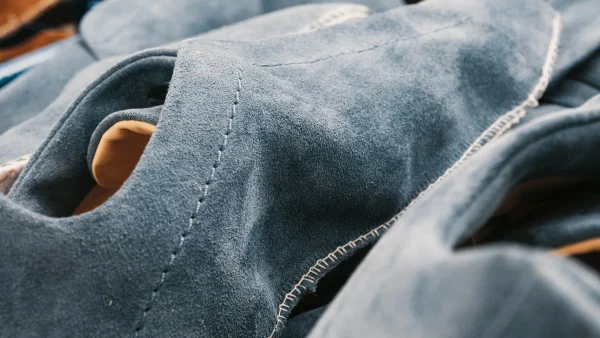
Skilled technicians assemble the upper by stitching together:
- leather panels
- linings
- reinforcements
- decorative elements
- functional components such as straps or eyelets
The quality of stitching directly influences durability, comfort and aesthetics.
Precision stitching ensures that the shoe maintains structural integrity while achieving the intended design.
Many Portuguese footwear manufacturers are recognised for their expertise in leather stitching techniques and handcrafted finishing details, which remain important differentiators in the global footwear industry.
5. Lasting and structural shoe assembly
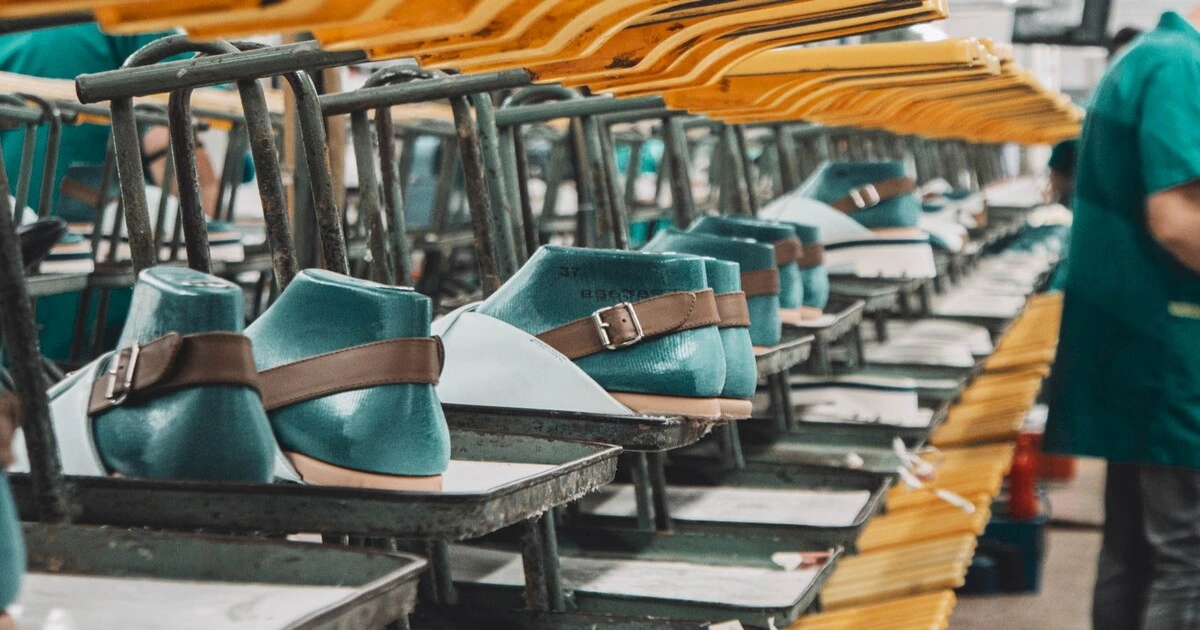
Once the upper is assembled, the shoe moves to the lasting stage, one of the most critical steps in the manufacturing process.
During lasting, the upper is shaped around a last, a mould that defines the final shape and fit of the shoe.
This stage determines:
- shoe structure
- volume and proportions
- fit consistency
- overall comfort
The upper is stretched and fixed onto the last before the sole is attached. Proper lasting ensures that the final product maintains the intended design while providing the correct ergonomic fit.
Manufacturers with strong lasting expertise are often better equipped to produce complex designs and maintain consistency across large production runs.
6. Sole attachment and construction methods
After lasting, the sole is attached to complete the structural assembly of the shoe.
Different construction methods determine how the upper and sole are connected. Portuguese manufacturers typically work with several techniques depending on product type and design requirements.
Common methods include:
- Blake construction
- Strobel construction
- San Crispino construction
- Sacchetto construction
- Mocassin construction
- Montado construction
- Waterproof construction systems
Each method offers different advantages related to flexibility, durability, weight and comfort.
Selecting the appropriate construction technique is a key decision during product development and directly affects the final characteristics of the shoe.
7. Finishing and quality control
The final stage of footwear production focuses on finishing operations and quality control.
Finishing may include:
- cleaning and polishing
- trimming excess materials
- inserting insoles and accessories
- final visual inspection
- packaging preparation
Quality control teams verify that each pair meets the required standards before shipment.
Checks typically include:
- stitching accuracy
- sole adhesion
- symmetry and shape consistency
- surface finishing quality
- packaging compliance
Strong quality control procedures are essential for manufacturers working with international brands, particularly when producing private label collections distributed across multiple markets.
8. Why production structure matters for footwear brands
For footwear brands, the production process is not only a technical workflow but also a key factor in evaluating manufacturing partners.
A well-structured production system allows manufacturers to support:
- prototype development
- medium and high production volumes
- consistent quality standards
- efficient communication with brand design teams
Brands evaluating a Portuguese shoe manufacturer often consider how well the factory manages each stage of production, from technical development to final inspection.
This evaluation process is explained in detail in our article about how brands evaluate a Portuguese shoe manufacturer before committing to long-term production partnerships.
Manufacturers capable of maintaining high standards across all production stages are more likely to build stable, long-term collaborations with international footwear brands.
Perguntas frequentes
How long does footwear production take?
Production timelines depend on product complexity, materials and order volume. Once prototypes are approved, manufacturing typically takes several weeks to complete.
What types of shoes can Portuguese manufacturers produce?
Portuguese manufacturers produce a wide range of footwear including leather shoes, sneakers, boots, sandals and private label collections for international brands.
What is the most important stage in footwear manufacturing?
Every stage is important, but pattern engineering, lasting and quality control are particularly critical for ensuring durability, comfort and production consistency.
Why do brands choose Portuguese shoe manufacturers?
Portugal offers a strong combination of skilled labour, advanced production technology and reliable supplier networks, making it one of Europe’s most respected footwear manufacturing regions.
About LG Shoes
LG Shoes is a Portuguese fabricante de calçado supporting international brands across Europe and the United States. The company collaborates with fashion and lifestyle brands looking for reliable European production partners capable of transforming design concepts into high-quality finished footwear.
With experience in prototype development, private label footwear production and leather footwear manufacturing, LG Shoes combines traditional craftsmanship with modern manufacturing processes to support long-term partnerships and consistent product quality.
Connect with LG Shoes:
Nota editorial
This article reflects common footwear manufacturing practices within the European footwear industry and aims to help brands understand how production processes typically work when collaborating with a Portuguese shoe manufacturer.


 Portuguese

