
TLDR
Private label footwear production in Portugal gives brands more than a manufacturing solution. It offers flexibilidade in development, material selection, production planning, and technical decision-making. For brands that need a responsive partner, Portuguese private label manufacturing can support stronger product differentiation, clearer communication, and more reliable long-term growth. The real advantage is not only where produção happens, but how closely the manufacturing partner can adapt to the brand’s needs.
Why flexibility has become a key factor in private label footwear production
Private label calçado production in Portugal has become increasingly relevant for brands that want more than standard manufacturing. In a competitive market, many companies need products that reflect a clear identity, fit specific commercial goals, and respond quickly to changing market conditions. That requires flexibility not only in production, but also in development, communication, and technical support.
For many brands, private label is no longer just a practical sourcing model. It has become a strategic way to create differentiated collections without building a full internal production structure. The value comes from working with a manufacturing partner that can translate ideas into viable products, adapt to project requirements, and help reduce friction across the development and production process.
This is one reason why Portugal remains a relevant choice for brands seeking flexible and quality-focused footwear manufacturing. The country combines long-standing know-how, export experience, and a strong B2B manufacturing culture, making it particularly relevant for brands looking for a more responsive private label partner. As highlighted by APICCAPS, the Portuguese footwear sector remains highly export-oriented and internationally focused, which reinforces Portugal’s role as a serious production hub for brands working in global markets.
Índice de Conteúdos
- What private label footwear production really means for brands
- Why Portugal stands out in private label footwear production
- Flexibility in development, materials and production planning
- The advantages of working with a responsive manufacturing partner
- How private label production supports brand differentiation
- Why communication and technical support matter in private label projects
- What brands should look for in a private label footwear partner
- About LG Shoes
- Perguntas frequentes
1. What private label footwear production really means for brands
Private label footwear production in Portugal is often misunderstood as a simple model where a brand adds its identity to a ready-made product. In reality, the process is usually much more involved. For many B2B brands, private label means working with a manufacturer to develop footwear that reflects a specific positioning, material direction, construction approach, and quality expectation.
That can include adapting an existing concept, refining a reference product, adjusting materials, changing components, defining fit requirements, and aligning finishing details with the brand’s market segment. In this sense, private label is not only about branding. It is about product translation. The manufacturer becomes part of the process that turns a commercial idea into a manufacturable product.
For brands, this model offers a practical balance between control and efficiency. It allows them to shape the product without managing every industrial detail internally. When the partnership is strong, private label footwear production in Portugal becomes a structured collaboration where development, manufacturing expertise, and brand direction work together to produce a more distinctive and commercially relevant result.
2. Why Portugal stands out in private label footwear production
Portugal has developed a strong reputation in footwear because it combines craftsmanship, technical manufacturing knowledge, and export maturity. For brands looking at private label footwear production in Portugal, that combination matters because the production partner needs to offer more than execution. It needs to support development, understand positioning, and operate with the reliability expected in international B2B relationships.
One of Portugal’s strengths is the way development and manufacturing are often closely connected. Brands do not only need a factory that can produce. They often need a partner that can advise on materials, help refine prototypes, support technical adjustments, and communicate clearly throughout the process. This is especially valuable in private label projects, where the difference between a generic outcome and a brand-aligned product often depends on how responsive the manufacturer is during development.
Portugal also benefits from a strong footwear ecosystem, where suppliers, manufacturers, technical know-how, and export orientation are part of the same industrial culture. That ecosystem supports better responsiveness, stronger material sourcing possibilities, and more effective collaboration with international brands. For companies that want private label footwear production in Portugal with a serious long-term partner, this environment creates a meaningful operational advantage.
3. Flexibility in development, materials and production planning
One of the main advantages of private label footwear production in Portugal is flexibility during the stages that matter most before bulk manufacturing begins. This includes development, sampling, material selection, component adjustments, and production planning. For brands, these stages often determine whether the final collection will feel aligned with its intended positioning or compromised by technical limitations and rushed decisions.
Flexibility in development means more than accepting changes. It means being able to evaluate ideas realistically, refine product details, and support the evolution of the concept without losing control over feasibility. This may involve suggesting more suitable materials, adjusting constructions, improving component choices, or refining the product so that the brand gets a stronger final result. In private label projects, these decisions are central because even small refinements can significantly affect comfort, appearance, cost structure, and market perception.
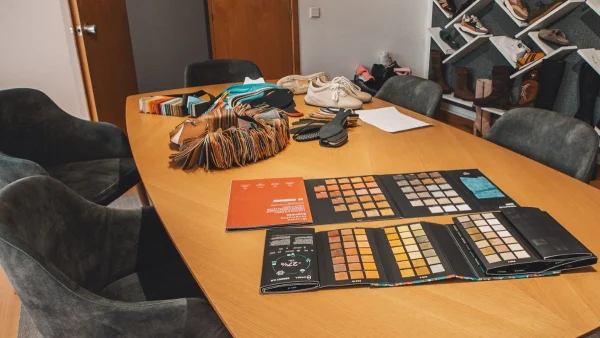
Material selection is another area where flexibility matters. Brands do not all work with the same priorities. Some need premium leathers, others focus on lighter constructions, casual products, or more commercial positioning. A responsive manufacturing partner should be able to guide those choices according to the project brief, not force every product into the same production logic. This is also where understanding different construction methods can support better private label results, especially for brands that want product identity and technical consistency to work together.
Production planning also benefits from flexibility when it is managed professionally. Rather than making unrealistic promises, a strong partner helps define what is possible, what depends on supplier timing, what can be adjusted, and how to align product ambitions with lead times, MOQ, and internal factory workflow. That kind of flexibility is what makes private label footwear production in Portugal especially valuable for brands that need product adaptation without losing technical control.
4. The advantages of working with a responsive manufacturing partner
A responsive manufacturing partner creates value long before production starts. In private label footwear production in Portugal, responsiveness often determines whether a brand moves through development with confidence or loses time in avoidable friction. When communication is clear, feedback is timely, and technical questions are handled properly, decision-making becomes more efficient and the whole project becomes easier to manage.
Responsiveness is not only about answering quickly. It is also about being able to interpret the brief correctly, identify risks early, and give practical guidance. A brand may ask for a specific material, a certain sole, or a particular aesthetic result, but the manufacturer’s role is not just to confirm everything automatically. A strong private label partner helps evaluate whether those choices make sense from a technical, commercial, and production point of view.
For brands, the value of this kind of responsiveness grows throughout the project. It improves development flow, reduces misunderstandings, supports more realistic planning, and makes it easier to protect both quality and timing. Over time, that creates a more stable and efficient working relationship. In private label footwear production in Portugal, responsiveness is one of the clearest signs that a manufacturer is acting as a partner rather than as a simple order processor.
5. How private label production supports brand differentiation
Private label footwear production in Portugal can help brands differentiate in ways that go well beyond logo placement or basic customisation. Real differentiation comes from how the product is built, how it feels, which materials it uses, how it fits the brand’s category, and how consistently it reflects the intended market position. This is where private label becomes strategically valuable.
Brands in premium, casual, fashion, or niche segments often need more than a standard product with minor changes. They need adjustments in silhouette, materials, components, comfort, fit, finishing, and sometimes construction. A flexible private label partner can support these areas in a way that helps the product feel more specific to the brand. That creates stronger product identity and makes it easier for the brand to stand apart in a competitive market.
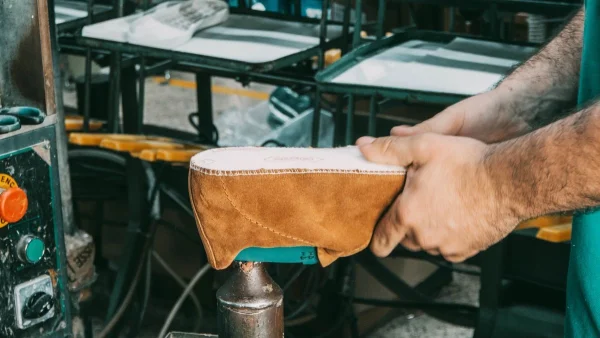
Differentiation also benefits from better alignment between development and manufacturing. When the factory understands the product direction and the commercial goal behind it, decisions become more coherent. Materials, construction, and finishing no longer operate as isolated choices. They become part of a single product strategy. This is one of the reasons private label footwear production in Portugal can be especially attractive for brands that want to create distinctive collections without sacrificing production control or technical support.
6. Why communication and technical support matter in private label projects
Private label projects depend heavily on communication because so many important decisions happen before production begins. A brand may have a strong vision, but if that vision is not translated clearly into technical choices, the product can quickly lose direction. This is why communication and technical support are so important in private label footwear production in Portugal.
Technical support helps turn references into workable prototypes. It clarifies what is feasible, what needs adjustment, and what may affect timing or consistency. Good communication helps structure approvals, define changes precisely, and reduce uncertainty across the sampling phase. Together, these two elements improve project control and make the collaboration far more efficient.
For brands that are still refining their sourcing process, it is often useful to understand what to expect from a Portuguese shoe manufacturer before entering a private label project. That context can help teams prepare more effectively, communicate more clearly, and approach development with more realistic expectations. In practice, strong technical support often makes the difference between a project that drifts and one that stays aligned.
7. What brands should look for in a private label footwear partner
When evaluating a private label footwear partner, brands should look beyond general statements about quality or capacity. The more useful questions are practical. Can the manufacturer support development properly? Does it communicate clearly? Is it flexible in the right ways? Does it understand the product category and the positioning of the brand? These factors usually tell much more than a quotation on its own.
Brands should also assess whether the partner has the right technical and operational fit. That includes material knowledge, sampling discipline, construction familiarity, consistency in execution, and the ability to align MOQ and lead times with the project reality. A strong partner is one that can help move the product from concept to production without creating unnecessary friction. A useful reference point here is understanding how the footwear production process works in practice, because that helps brands evaluate where flexibility is most valuable and where structure is essential.
Long-term mindset matters too. The strongest private label relationships are usually built with partners that value continuity, transparency, and product improvement over time. Brands that choose carefully at the start often gain better communication, stronger development support, and more reliable results as the relationship matures. In private label footwear production in Portugal, the right partner is rarely the one that promises everything. It is the one that can support growth with clarity and consistency.
8. About LG Shoes
LG Shoes is a Portuguese fabricante de calçado focused on B2B partnerships with international brands, agents, and buyers. The company works in private label and custom footwear production, combining technical development, manufacturing flexibility, and a quality-oriented approach tailored to long-term collaboration. This positioning is consistent with the broader strategic context defined for the brand, which highlights private label expertise, responsiveness, and partnership-led manufacturing in Portugal.
For brands exploring private label footwear production in Portugal, that approach matters because the value of the partnership depends not only on what can be produced, but also on how the manufacturer supports development and decision-making. Brands that want to understand the company’s positioning in more detail can explore the LG Shoes website or use the contact page to start a conversation.
9. Frequently asked questions
What is private label footwear production in Portugal?
Private label footwear production in Portugal is a B2B manufacturing model in which a brand works with a Portuguese manufacturer to develop and produce footwear aligned with its own identity, specifications, and market positioning. It often includes technical development, material selection, sampling, and production support.
Why do brands choose Portugal for private label footwear production?
Brands often choose Portugal because of its footwear know-how, export experience, quality standards, and ability to support development in a more responsive and collaborative way. Portugal is especially attractive for brands that value communication, flexibility, and a strong manufacturing ecosystem.
How does flexibility benefit private label footwear brands?
Flexibility helps brands adapt materials, refine prototypes, respond to technical challenges, and align product decisions with commercial goals. In private label projects, that flexibility often improves both product quality and operational efficiency.
What should brands look for in a private label footwear manufacturer?
Brands should look for technical support, clear communication, quality consistency, realistic planning, and a strong fit with their product category and positioning. The best partner is one that can support both development and long-term growth.
Private label flexibility creates stronger brand opportunities
Private label footwear production in Portugal is most valuable when it combines flexibility with structure. Brands benefit when the manufacturing partner can adapt to product needs, support development, communicate clearly, and maintain reliable execution across the process. That is what turns private label from a sourcing model into a more strategic tool for long-term growth.
For brands looking to create stronger collections and more consistent manufacturing relationships, flexibility matters because it improves decision-making where it counts most. In the right partnership, private label does not reduce control. It gives brands a more effective way to turn product ideas into market-ready footwear with greater confidence.
Nota editorial
This article is based on common operational and strategic factors involved in private label footwear development and manufacturing for B2B projects in Portugal. It is intended to help brands understand how flexibility, technical support, and partner fit affect the success of private label footwear production in Portugal.


 Portuguese

