
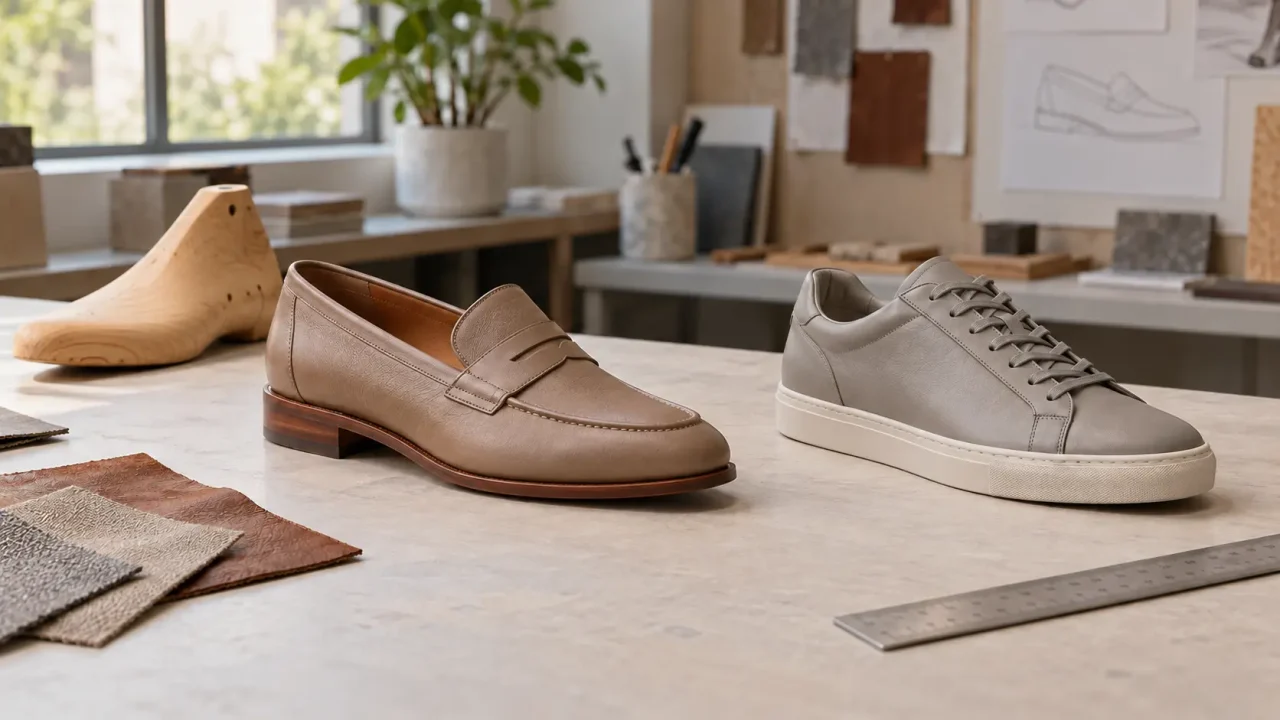
Sacchetto vs Strobel construction is a comparison of two approaches that can support flexible footwear, but achieve their internal structure differently. Sacchetto centres on a soft, bag-like lining assembly; Strobel connects the upper to a flexible bottom material with a perimeter seam before sole attachment.
For footwear brands, the useful question is how that difference affects the product being developed. A soft interior, controlled fit, cushioning and a lightweight feel depend on the complete specification, rather than the construction name alone.
This guide compares the two approaches for product managers, designers, agents and sourcing teams working with a Portuguese footwear manufacturer. It focuses on decisions to discuss before sampling, without assuming that one method is universally more comfortable, more durable or less expensive.
TL;DR
Use the intended product experience to guide the comparison.
- Sacchetto uses a soft, bag-like lining structure.
- Strobel joins the upper to a flexible bottom material.
- Both can support flexible footwear.
- Neither guarantees cushioning, fit or durability.
- Review the last, lining, footbed and sole together.
- Confirm the factory’s proposed construction variant.
- Compare quotations against equivalent specifications.
- Approve performance through complete samples.
Table of contents
- Sacchetto vs Strobel construction: the structural difference
- Comparison table: what brands should evaluate
- How to compare comfort, fit and flexibility
- Which material and component decisions matter?
- Which footwear projects suit each approach?
- How to discuss cost, quantities and timing
- What should brands check before approving samples?
- Questions to send your footwear manufacturer
- People also ask
- Final thoughts
- Frequently asked questions
Sacchetto vs Strobel construction: the structural difference
What defines Sacchetto construction?
Sacchetto construction creates a soft internal pouch from the lining assembly. It can reduce reliance on a conventional rigid lasting insole in the forepart. The exact pattern, stitching sequence and supporting components vary with the design.
A brand developing a supple leather loafer should ask how this internal assembly is incorporated into the proposed shoe. Request clarification of the forepart structure, heel support and sole attachment rather than treating “bag construction” as a complete specification. LG Shoes’ Sacchetto construction service page introduces its approach and relevant applications.
What defines Strobel construction?
In Strobel construction, a perimeter seam joins the upper to a flexible bottom material, often a textile or nonwoven Strobel insole. This closes the upper assembly before the sole unit is attached. The bottom material is distinct from the removable footbed that the wearer may touch.
The machinery manufacturer’s Strobel 443-1 machine description confirms the operation of sewing insoles to shoe uppers. It supports this structural distinction, rather than proving a particular finished shoe’s comfort.
For the LG Shoes service overview, consult its Strobel shoe construction page. Ask which bottom material and seam arrangement are proposed for your project.
Comparison table: what brands should evaluate
Use this table to frame development questions, rather than to rank overall product quality.
On mobile, swipe horizontally to view the full comparison.
| Evaluation area | Sacchetto | Strobel |
|---|---|---|
| Defining structure | Soft, bag-like lining assembly. | Upper joined to a flexible bottom material by a perimeter seam. |
| Typical design discussion | Supple interior and refined flexible footwear. | Flexible upper assembly for sneakers and casual footwear. |
| Material questions | Lining suppleness, seam bulk and upper behaviour. | Bottom material properties and upper-to-bottom seam compatibility. |
| Fit review | Internal volume, lining folds and foot retention. | Assembly dimensions, seam bulk and footbed allowance. |
| Comfort review | Assess the finished interior and complete bottom assembly. | Assess the footbed, cushioning and complete bottom assembly. |
| Commercial checks | Confirm operations, materials, quantities and factory capacity. | Confirm operations, materials, quantities and factory capacity. |
| Approval basis | Complete samples and agreed validation criteria. | Complete samples and agreed validation criteria. |
A soft leather slip-on and a lightweight sneaker may both need flexibility, yet require different internal arrangements. Document those arrangements before comparing quotations. Otherwise, a price difference may reflect different components rather than a meaningful comparison of construction methods.
How to compare comfort, fit and flexibility
Flexibility, cushioning and support are separate characteristics. Flexibility describes how the shoe bends; cushioning concerns its response under load; support concerns how the structure helps control and retain the foot. A shoe can be flexible without offering the cushioning or retention the intended wearer needs.
For a Sacchetto sample, examine whether the lining lies smoothly and whether the interior remains comfortable during movement. For a Strobel sample, examine the finished underfoot experience, including the footbed and any detectable seam transitions. These are review priorities, not defects inherent to either method.
For a more informative comparison, agree which variables can remain equivalent. These may include the intended wearer profile, sample size, upper material reference and wearing task. Where the factory needs to change a component for technical reasons, record that change alongside the feedback. A comparison sheet should make those differences visible to everyone approving the product.
Separate an initial fitting observation from a later wear-trial finding. Record when the comment was made and which sample version was used. This helps prevent feedback on an early prototype from being treated as evidence about an updated version. It also gives the manufacturer a clearer problem to investigate when two reviewers describe the same sample differently.
Use the same evaluation conditions when comparing prototypes. Record the sample size, sock type, footbed, walking conditions and comments. “Softer” is less useful than a specific observation about forefoot bending or pressure at the instep.
If two samples use different lasts and sole units, explain that the comparison concerns two complete products. It does not isolate construction alone. The broader LG Shoes guide to footwear fit consistency explains why last shape and components also need control.
Which material and component decisions matter?
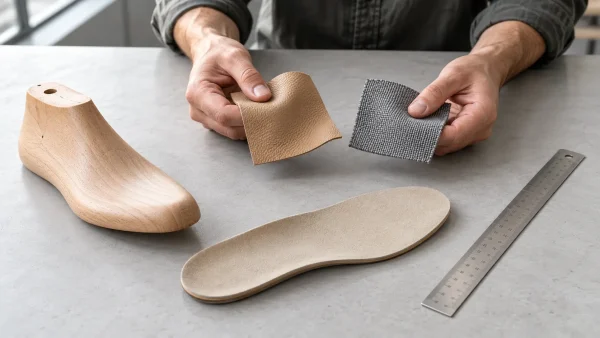
Ask for a clear component breakdown covering the upper, lining, internal base, footbed, reinforcements and sole attachment. The words “leather shoe” or “flexible sneaker” leave too many variables open to interpretation.
For a proposed Sacchetto shoe, discuss lining thickness, suppleness and the bulk created where pieces meet. A different lining can change usable internal space even when the exterior silhouette remains similar. Avoid prescribing a particular leather solely because it sounds premium; assess the sample and material specification together.
For a proposed Strobel shoe, identify the bottom material and how its properties suit the upper assembly. Confirm the seam specification and the intended footbed arrangement. A thicker footbed may alter volume and foot position, so it should be part of development rather than a late styling addition.
For example, replacing a soft textile upper with reinforced leather may change how a sneaker fits and bends. Keep the construction discussion tied to the revised material combination. A previous approval should not automatically cover the substitute.
Which footwear projects suit each approach?
Start with the intended wearing experience and silhouette. Then ask the manufacturer to assess feasibility. Product categories provide useful starting points, but should not become absolute rules.
A leather loafer or ballerina project prioritising a supple interior may justify investigating Sacchetto. A casual sneaker project combining a flexible upper assembly with a developed sole unit may justify investigating Strobel. Neither example establishes a mandatory construction for every shoe in that category.
A realistic development comparison might involve two proposed routes for a flexible slip-on. Ask what changes between the routes: lining assembly, pattern, internal volume, footbed and sole attachment. Review the implications before commissioning additional prototypes.
Do not identify internal construction from a lifestyle photograph alone. Loafers describe a style; Sacchetto describes a construction approach. Visible decorative stitching also does not prove how the bottom is assembled.
If the product requires a wider comparison, use LG Shoes’ existing guide to choosing footwear construction methods. That resource covers the broader choice; this article addresses the specific Sacchetto and Strobel comparison.
How to discuss cost, quantities and timing
Request quotations against a defined product specification. Neither construction name establishes a universal price, minimum order quantity or production lead time. Those depend on materials, operations, quantities, suppliers and the manufacturing partner’s available capacity.
Separate development costs from repeat production costs. Ask whether the quotation includes pattern work, sample revisions, component sourcing or additional tooling. This prevents an apparently lower unit price from hiding a different project scope.
Where both construction routes are feasible, ask the factory to explain which operations and components change. If one proposal uses a different lining or footbed, record that difference before interpreting the price gap.
Provide quantities by style and colour, the intended size range and the required delivery window. Ask what is confirmed and what depends on component availability. Avoid publishing assumed MOQs or fixed percentage cost differences based only on a generic construction comparison.
What should brands check before approving samples?
Evaluate the complete shoe sample, including the approved footbed and sole unit. A flexible unfinished upper cannot demonstrate the final wearing experience after all components have been added.
- Confirm construction: ask the factory to explain the actual internal arrangement.
- Review the interior: check lining position, folds, seam transitions and finishing.
- Assess fit: record retention, toe space and any local pressure.
- Assess movement: observe bending and foot movement during wear.
- Agree validation: define relevant seam, flexing and sole-attachment checks with technical specialists.
- Control changes: record the approved components and identify substitutions requiring review.
For instance, a sample may feel supple but allow excessive heel movement. The next action is to investigate fit and retention, not simply to request a softer material. Another sample may fit well but feel too rigid after sole attachment; review the complete assembly before blaming the upper construction.
Agree methods and acceptance criteria for the intended use. Do not infer a laboratory pass, waterproof performance or long-term durability from a short fitting session. Keep observations, test evidence and approval decisions distinguishable in the development record.
Questions to send your footwear manufacturer
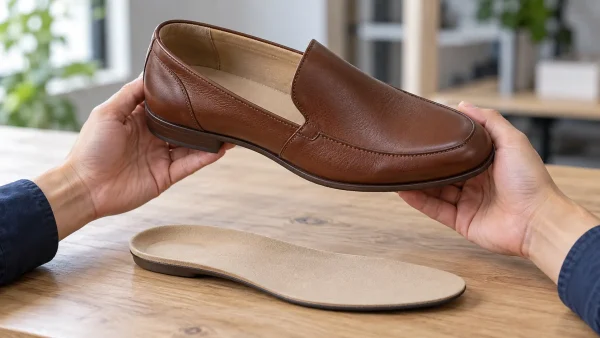
A concise comparison brief is more useful than asking which method is “best”. Give the manufacturer enough information to evaluate the two routes without prescribing an unverified solution.
- What wearing experience and appearance must the product deliver?
- Which construction variant do you recommend, and why?
- How will the lining, internal base and footbed be assembled?
- What changes would the alternative route require?
- Which materials and components are included in the quotation?
- How will we assess fit, flexibility and relevant performance requirements?
- Which development costs, quantities and dates need confirmation?
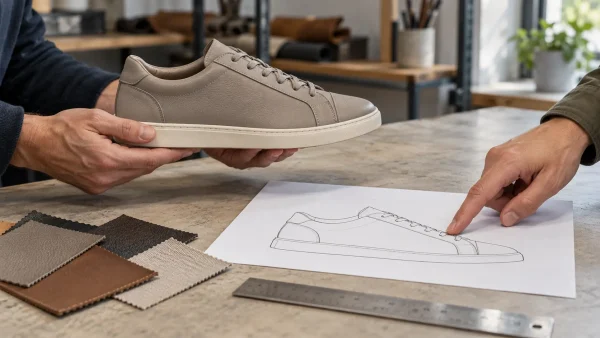
Include reference images, but explain what each image illustrates. A photograph may communicate colour or silhouette without documenting internal engineering. Mark assumptions explicitly so the factory can resolve them before sampling.
Once a route is agreed, record the approved details in the footwear tech pack. That article covers documentation more fully; here, the priority is preserving the decisions made during the comparison.
People also ask
What is the main difference between Sacchetto and Strobel?
Sacchetto centres on a soft lining pouch, whereas Strobel joins the upper to a flexible bottom material with a perimeter seam. Ask the manufacturer to confirm the specific arrangement, because variants and supporting components can differ.
Is Sacchetto more comfortable than Strobel?
There is no universal winner. Last shape, lining, footbed, sole flexibility and fit influence comfort. Compare complete samples against a defined wearing brief instead of treating construction as a comfort guarantee.
Does Strobel construction mean the outsole is stitched on?
No. The defining Strobel seam connects the upper to its flexible bottom material. Sole attachment is a separate part of the specification and should be confirmed independently.
Can a loafer use Sacchetto construction?
Yes, where the design and component combination are suitable. “Loafer” identifies a shoe style, not its internal construction. A photograph of a loafer therefore cannot confirm that Sacchetto has been used.
Final thoughts
The practical value of comparing Sacchetto vs Strobel construction is understanding what each proposal changes inside the shoe. Begin with the intended product, examine the proposed assembly, and validate the complete sample.
Brands should retain a clear record of materials, fit comments and agreed revisions. This creates a more useful basis for manufacturing discussions than broad claims about luxury, comfort or production speed.
LG Shoes works with international brands, agents and professional buyers on footwear manufacturing in Portugal. To discuss a project, share your silhouette references, intended wearing experience and initial requirements through the contact form on the LG Shoes construction methods page. The technical discussion should establish which route deserves development.
Frequently asked questions
Can both methods be considered for the same project?
Sometimes. Ask the factory to assess the intended silhouette, materials and performance requirements. Comparing routes may require changes to patterns or components, so confirm feasibility before ordering prototypes.
Should we keep the same last when comparing prototypes?
A shared last can help control one variable, but the manufacturer must confirm suitability for both proposals. Record any last or pattern changes so their influence on fit is not confused with construction alone.
Does changing the footbed require another fit review?
It can. Thickness and shape affect internal space and foot position. Review the replacement in the complete sample, especially when the original approval depended on a particular footbed.
Are Sacchetto shoes always fully seamless inside?
No. A soft lining pouch does not mean every internal seam or component disappears. Ask where joins and transitions occur, then assess their finish and feel in the actual sample.
Can either construction support a waterproof product claim?
The construction name alone cannot establish waterproof performance. Any such claim requires an appropriate complete system and relevant validation for the intended product and use.
What should accompany a request for a construction recommendation?
Send product references, intended use, material preferences, size range, quantities and timing. Identify which requirements are fixed and which remain open to technical advice.


 English


