
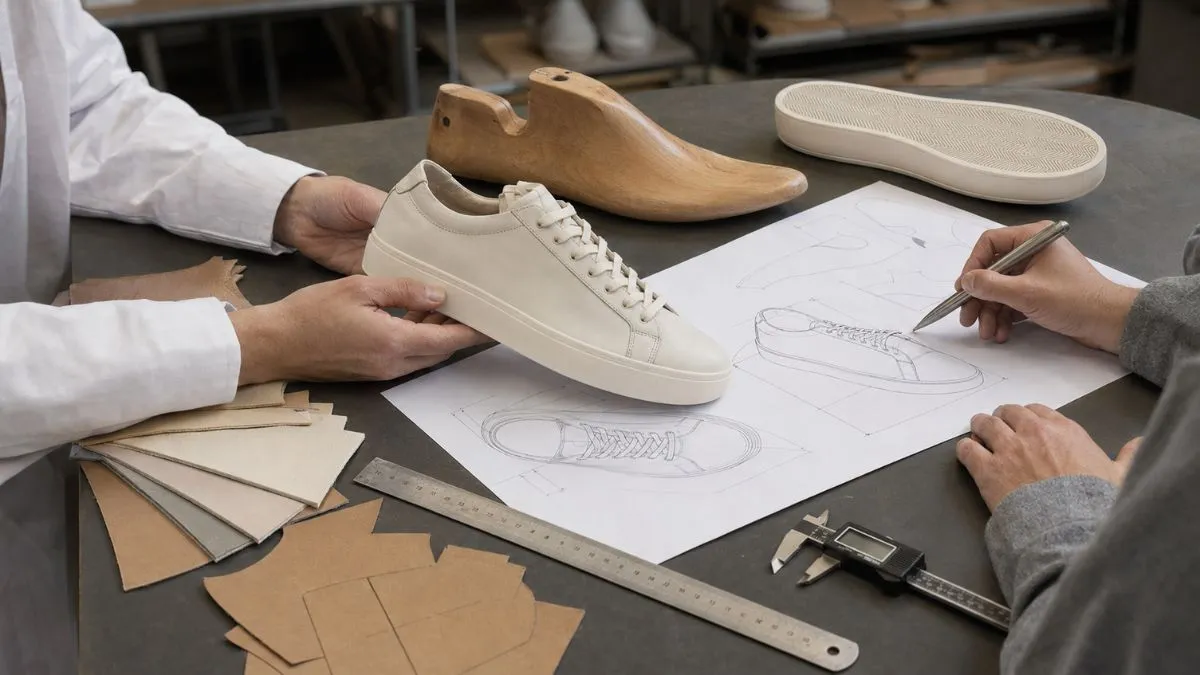
The footwear tech pack is one of the most important working documents in footwear development because it translates a product idea into information that a manufacturer can interpret, develop and verify.
For brands, the purpose is not to create paperwork for its own sake. A useful tech pack reduces ambiguity around the product, makes sample feedback easier to control and creates a clearer reference as decisions move from concept to development.
It also does not need to be completely finalized before the first conversation with a manufacturer. Some specifications may still depend on material sourcing, construction advice, last availability or component feasibility. What matters is knowing what has already been defined, what still needs development and who is responsible for resolving each open point.
A strong shoe tech pack therefore evolves with the product. It should become more precise as sampling progresses and ultimately support a shared understanding of what has been approved for production.
TL;DR
- A footwear tech pack translates product direction into structured technical information.
- It is different from an initial manufacturer brief.
- Drawings, materials, construction, fit, sizing and branding should be documented clearly.
- Open specifications should be identified rather than guessed.
- Sample comments need version control.
- The document should become more precise through sampling.
- Production should begin only when the relevant specifications and approvals are aligned.
Table of contents
- What is a footwear tech pack?
- What is the difference between a footwear brief and a tech pack?
- Why does a footwear tech pack matter before sampling?
- What product identification should a footwear tech pack include?
- What technical drawings should be included?
- How should materials and components be specified?
- What construction information should the manufacturer receive?
- What last, fit and sizing information should be included?
- How should colorways and branding be documented?
- What should remain open during early development?
- How should sample comments and revisions be controlled?
- When is a footwear tech pack ready for production?
- Common footwear tech pack mistakes brands should avoid
- People Also Ask
- Final thoughts
- Frequently asked questions
What is a footwear tech pack?
A footwear tech pack is a controlled set of technical information used to communicate how a footwear style should be developed and, progressively, manufactured.
It can include product identification, technical drawings, materials, components, construction requirements, last information, size range, colorways, branding details, measurements and revision notes. The exact content depends on the product and the stage of development.
The document should give the manufacturer enough information to understand the intended product without having to interpret important requirements from mood boards or isolated reference images.
That does not mean every detail must be locked from the first version. During early development, some choices may still require technical input. A good footwear specification sheet makes that status visible instead of presenting assumptions as approvals.
The tech pack should therefore be treated as a living technical reference. As samples are reviewed, information is corrected, added or approved until the document reflects the product that both brand and manufacturer intend to produce.
What is the difference between a footwear brief and a tech pack?
A footwear brief explains the project. A tech pack defines the product in greater technical detail.
The initial brief may cover the brand, product category, intended use, market positioning, estimated quantities, target timing, visual direction, development stage and the type of support expected from the manufacturer.
The tech pack goes further. It translates that direction into specifications that can guide pattern development, material sourcing, sampling and technical review.
A brand can therefore contact a manufacturer before having a fully developed tech pack. In many projects, the factory or development partner contributes to decisions involving construction, available components, material alternatives or manufacturability.
Brands at this earlier stage can first review the LG Shoes guide on how to brief a shoe manufacturer, which explains what information is useful during the first contact.
The distinction prevents two common problems: expecting a broad creative brief to function as a production document, or delaying manufacturer involvement until every technical detail has been defined without feasibility input.
Why does a footwear tech pack matter before sampling?
Sampling is most useful when the manufacturer knows what the sample is expected to validate.
Without structured specifications, a first prototype can become an exercise in interpretation. The upper proportions may follow one reference, the outsole another and the material choice a third, while the brand assumes that all details were already understood.
A clear tech pack reduces this uncertainty by identifying the current product requirements and separating approved information from open development questions.
Before sampling begins, brands should aim to communicate enough information for the manufacturer to understand:
- what the product is intended to be;
- which design elements are essential;
- which materials and components are specified or preferred;
- which construction and fit expectations already exist;
- which details are still open to technical recommendation.
The LG Shoes guide to the footwear sampling process explains why different sample rounds should answer different development questions. A structured tech pack helps make those questions explicit.
What product identification should a footwear tech pack include?
Every technical document should make it immediately clear which style and version it refers to.
At minimum, brands should consider a style name or code, product category, season or collection reference, version number, date and responsible contact. When several colorways or constructions exist, those variants should also be identifiable.
This sounds administrative, but it prevents serious development errors. A manufacturer may be working on several similar sneakers at the same time. If a revised page is sent without a clear version reference, an outdated detail can easily remain in circulation.
Version control becomes even more important when design, buying, product development and external agents are all involved.
A practical rule is that every revision should allow someone outside the original conversation to answer three questions: which product is this, which version is current and what changed since the previous version?
What technical drawings should be included?
Technical drawings should communicate the product clearly enough for the manufacturer to understand proportions, panel relationships and construction details that cannot be defined through text alone.
Depending on the style, useful views can include lateral, medial, top, heel and outsole perspectives. Enlarged detail drawings may be needed for closures, seams, hardware, branding or unusual pattern features.
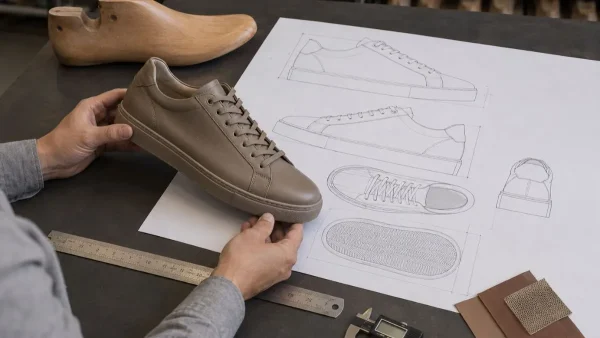
Drawings should identify important dimensions or positions where precision matters. However, adding measurements simply to make the document look technical can create contradictions. Only specify dimensions that the brand genuinely intends to control.
Footwear drawings also need to remain consistent with the selected last and outsole. A visually attractive side view that cannot fit the proposed bottom unit or last geometry will create unnecessary redevelopment.
Digital product creation is increasingly used to support earlier visualization and technical communication in footwear. Brands interested in how these tools complement physical development can review World Footwear’s overview of digital prototyping tools for footwear.
Whether the source is a 2D drawing or a digital model, the manufacturer still needs clear, controlled specifications for the physical product.
How should materials and components be specified?
Material information should go beyond generic descriptions such as “premium leather” or “soft lining.”
Where known, the footwear technical specifications should identify the material type, supplier reference, article or quality reference, color, thickness or relevant performance requirements. The same principle applies to linings, reinforcements, insoles, laces, zippers, eyelets, hardware and other components.
For a leather sneaker, for example, the upper may combine several materials with different thicknesses and functions. A soft lining leather cannot simply be substituted for an upper leather because both happen to have a similar color.
The outsole should also be documented clearly. If the brand has selected an existing unit, the supplier or mold reference, color and relevant finish should be identified. If the outsole is still under evaluation, the tech pack should state the required direction rather than pretending a final choice exists.
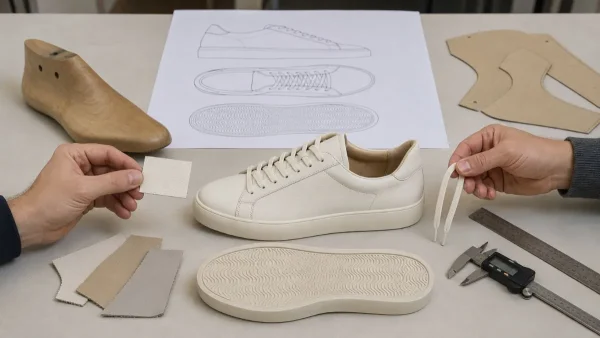
The LG Shoes guide to footwear outsole selection explains how intended use, construction, weight, flexibility and product positioning influence this decision.
A bill of materials can help organize these references, but the objective remains the same: every component should be identifiable and its status should be clear.
What construction information should the manufacturer receive?
Construction affects how the upper, last, bottom unit and internal components work together. It should not be left as an unspoken assumption.
If the brand has a required construction method, that requirement should be documented. Where the construction is still open, the tech pack should describe the intended product characteristics so that the manufacturer can recommend an appropriate route.
The document may also need to define seam positions, visible stitching, folded or raw edges, padding, reinforcements, attachment details and other construction features that materially affect the product.
This is especially important when a visual reference has been created without production engineering. Two shoes can have a similar appearance while requiring different pattern structures or manufacturing operations.
Brands should allow technical discussion where the proposed detail conflicts with durability, fit, material behavior or manufacturability. A tech pack is a specification tool, not a reason to ignore production expertise.
What last, fit and sizing information should be included?
Fit cannot be communicated through an upper drawing alone.
Where available, the tech pack should identify the last reference, base sample size, commercial size range, width or fit requirement and any brand-specific fitting standard. If the brand is using an existing reference shoe, it should explain what aspects of that fit should be retained.
The base size also needs to be distinguished from the full size range. Approving one sample does not automatically prove that every graded size will maintain the intended proportions and internal volume.
Changes to materials, padding or construction can also affect fit even when the last remains unchanged. This is why fit information should stay connected to sample approval rather than being treated as an isolated specification.
The LG Shoes article on footwear fit consistency provides additional guidance on lasts, grading and maintaining fit across a commercial size range.
How should colorways and branding be documented?
Colorways should be documented as controlled combinations, not simply as lists of colors.
For each variation, identify which upper materials, linings, laces, outsoles, hardware and finishing details change. A brown version of a sneaker may use more than a different upper color if the outsole, lining or trim is also adjusted.
Physical swatches or approved supplier references are particularly important because screen colors cannot reliably communicate material appearance.
Branding also needs precise instructions. The tech pack should define location, scale, technique and color where relevant, whether the application is embossed, printed, stitched, molded, woven or applied through hardware.
Avoid instructions such as “logo on the side” without dimensions or placement references. Small differences in positioning can be highly visible on a finished shoe.
Packaging and labels can be included when they are part of the manufacturer’s scope, but they should not distract from unresolved product specifications during early sampling.
What should remain open during early development?
A good tech pack is precise without pretending that development has already finished.
Some information may reasonably remain open before the first sample. This can include final material references, exact component suppliers, outsole alternatives, construction details, fit corrections or finishing options.
The important point is to label these areas clearly.
For example, if a brand wants a lightweight rubber outsole but has not selected a specific unit, the document can define the intended profile, color, flexibility, weight direction and visual references while marking the final outsole as pending manufacturer evaluation.
This gives the development team something useful to work with without creating a false approval.
Open specifications should become fewer as the project progresses. If major decisions are still unresolved close to production, the risk shifts from creative flexibility to manufacturing uncertainty.
How should sample comments and revisions be controlled?
Sample comments should update the technical record, not exist as a separate stream of disconnected messages.
Each sample round should have a clear reference, and feedback should distinguish:
- approved details that should remain unchanged;
- specific corrections required for the next sample;
- open questions that still need a decision;
- new specifications introduced during development.
Comments should be measurable or visually referenced whenever possible. “Lower the collar by 4 mm at the marked point” gives the manufacturer a clearer instruction than “the collar feels too high.”
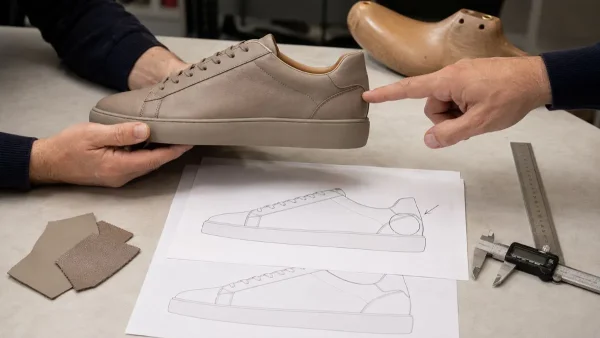
Once a correction is approved, the relevant tech pack page should be updated so that the current document reflects the current product.
This avoids one of the most common development risks: the latest sample following one set of comments while the technical document still contains an older instruction.
When is a footwear tech pack ready for production?
A shoe manufacturing tech pack becomes production-ready when the specifications required to manufacture the approved product are aligned with the final sample and no critical technical decisions remain unresolved.
Before production, brands and manufacturers should confirm:
- current style and version references;
- approved drawings and pattern-related details;
- materials, colors and component references;
- last, fit and size range;
- outsole and construction requirements;
- branding and finishing details;
- applicable testing or compliance requirements;
- packaging and labeling where included in scope;
- the approved sample used as the physical reference.
The document does not replace the approved physical sample, and the sample does not replace the technical documentation. They should support each other.
Timing also matters. Late specification changes can affect material ordering, tooling, sampling and factory planning. The LG Shoes guide to footwear production lead times explains why approvals need to be aligned with the wider production calendar.
Common footwear tech pack mistakes brands should avoid
The most damaging tech pack problems usually come from ambiguity or poor document control rather than lack of pages.
Common mistakes include:
- using visual references without explaining which features should be followed;
- mixing approved specifications with ideas that are still under discussion;
- sending conflicting material or color references;
- forgetting to identify the current version;
- changing specifications through email without updating the document;
- defining an upper without considering last and outsole compatibility;
- specifying construction details that have not been technically reviewed;
- treating the first tech pack as a fixed production document.
Another mistake is adding excessive detail that does not improve manufacturing accuracy. A useful tech pack should be detailed where detail controls the product and simple where additional information would only create noise.
The best document is not necessarily the longest. It is the one that helps the brand and manufacturer make the same shoe.
People Also Ask
What should be included in a footwear tech pack?
A footwear tech pack typically includes product identification, technical drawings, materials, components, construction details, last and fit information, size range, colorways, branding specifications and revision records. The exact content depends on the product and development stage.
Do I need a footwear tech pack before contacting a manufacturer?
No. A brand can contact a footwear manufacturer with a structured brief, references and available technical information. A complete tech pack can be developed or refined as technical decisions are made.
What is the difference between a tech pack and a shoe sample?
The tech pack documents the product requirements and specifications. The physical sample shows how those specifications have been interpreted and allows the brand and manufacturer to evaluate fit, materials, construction and finishing in real footwear.
Who should update the footwear tech pack during development?
Responsibility should be clearly assigned. Depending on the project, updates may be managed by the brand, product developer, designer, agent or manufacturer. What matters is maintaining one controlled current version.
Final thoughts
A footwear tech pack should make footwear development clearer, not more bureaucratic.
Its role is to translate design intent into information that can be discussed, sampled, corrected and ultimately approved. Technical drawings, materials, components, construction, fit, sizing, colorways and branding all become more useful when their status is explicit and their revisions are controlled.
Brands do not need to solve every manufacturing question before engaging a development partner. In many cases, leaving the right questions open allows the manufacturer to contribute valuable technical knowledge.
What should be avoided is ambiguity. When approved details, open decisions and sample corrections are clearly documented, development becomes easier to manage and the route to production becomes more predictable.
At LG Shoes, product development combines technical collaboration, sampling, material and component evaluation and manufacturing expertise in Portugal. Brands developing a new footwear project can contact LG Shoes to discuss the appropriate development route.
Frequently asked questions
Can a tech pack change after footwear sampling begins?
Yes. It should be updated when development produces approved changes to materials, patterns, fit, construction, components or finishing. The current version should always reflect the latest agreed product information.
Should a footwear tech pack include a bill of materials?
A bill of materials can be useful for organizing upper materials, linings, reinforcements, outsoles, hardware and other components. The level of detail should match the development stage and available supplier information.
Should measurements be included in footwear technical drawings?
Include dimensions when they control an important product feature or placement. Avoid unnecessary measurements that may conflict with the last, pattern engineering or manufacturing tolerances unless they have been technically validated.
Can reference shoes be used instead of technical drawings?
Reference shoes can communicate shape, fit, material or construction preferences, but they rarely define every requirement of a new product. Annotated drawings and written specifications help clarify which aspects should be retained, changed or ignored.
How should unresolved specifications be shown in a tech pack?
Mark them clearly as open, pending review or awaiting approval and state what requirement is already known. This allows development to continue without treating an unconfirmed decision as final.
Does the final tech pack replace a pre-production sample?
No. The technical documentation and approved physical sample serve different purposes. The tech pack records specifications, while the pre-production sample provides a physical reference for the approved product. They should be consistent before bulk production begins.


 English

