
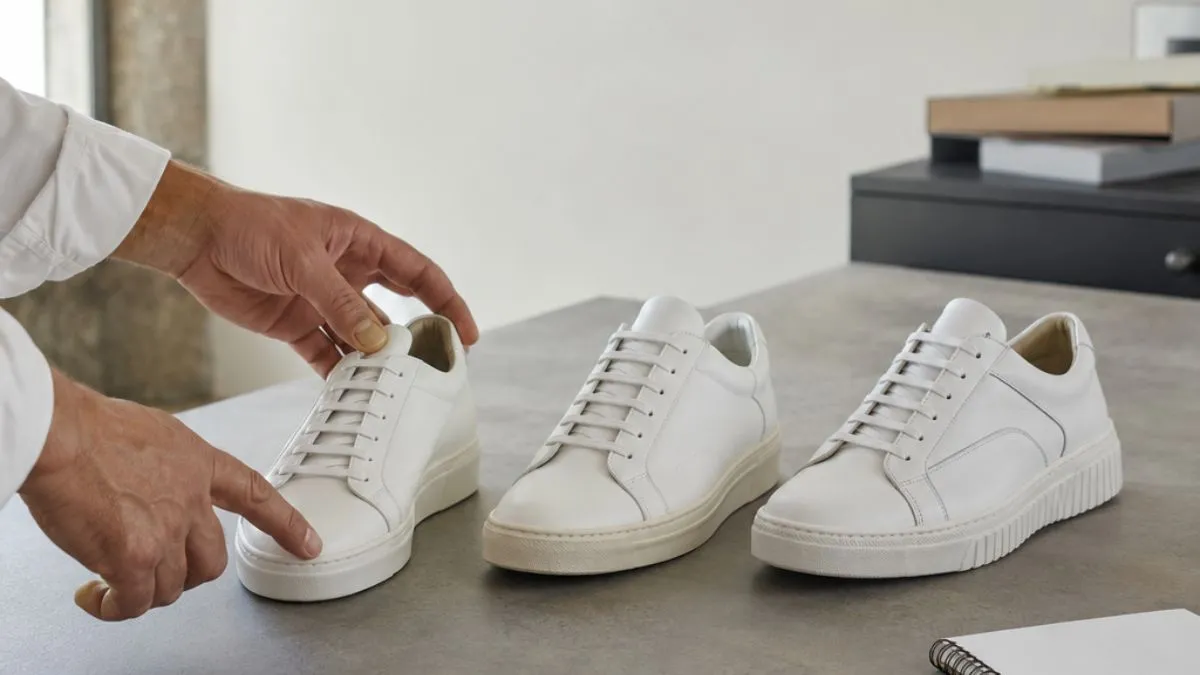
Footwear sampling is where a product idea starts to meet manufacturing reality. The footwear sampling process turns a brief, technical references, materials, lasts, components and construction decisions into footwear that can be evaluated before production begins.
For brands, one common mistake is treating every sample as if it should validate everything at once. A shoe can look visually correct while fit, material behavior, outsole compatibility, finishing or production details still need work.
Sample names vary between manufacturers and brands. The label matters less than the question each sample is expected to answer.
A structured footwear sample development process does not mean unnecessary rounds. It means giving every round a clear purpose, documenting decisions and closing technical questions before bulk production.
TL;DR
- Different footwear samples should validate different product decisions.
- The first sample usually focuses on product direction and feasibility.
- Fit should be checked early enough to allow corrections.
- Revised samples should respond to documented changes.
- Sales samples support commercial activity but are not automatically production approval.
- A pre-production footwear sample should closely reflect the approved specification.
- Clear feedback and version control reduce unnecessary repetition.
- Digital tools can support development, but physical validation remains important.
Table of contents
- What is the footwear sampling process?
- Why does footwear development require more than one sample?
- What should the first development sample validate?
- When should fit be evaluated during sampling?
- What is the purpose of revised and confirmation samples?
- When are sales samples useful?
- What should a pre-production footwear sample confirm?
- How should brands give feedback between sample rounds?
- How many footwear sampling rounds should a brand expect?
- Can digital prototypes replace physical footwear samples?
- What should be approved before footwear production begins?
- People Also Ask
- Final thoughts
- Frequently asked questions
What is the footwear sampling process?
The footwear sampling process is the sequence of development and approval steps used to turn a footwear concept into a product that can be manufactured.
Sampling is not simply about producing a good-looking shoe. It allows the brand and manufacturer to evaluate whether the design can become a technically coherent product with the intended fit, materials, construction, components and finishing.
The process usually begins once the manufacturer has enough information to interpret the product direction. This may include sketches, technical drawings, reference shoes, target materials, intended use, size range and construction expectations. Brands preparing this information can use the LG Shoes guide on how to brief a shoe manufacturer before development progresses.
There is no universal naming system for sample stages. One factory may use development sample where another uses prototype. For this reason, brands should define the purpose and approval criteria for each sample rather than relying only on its label.
Why does footwear development require more than one sample?
Footwear combines interdependent elements. The upper pattern, last, material thickness, lining, reinforcements, outsole, insole, construction and finishing can all influence the result.
Trying to approve every variable in the first footwear prototype sample creates risk. Early samples may be made before final colors, production materials or custom components are available. Their purpose may be to confirm silhouette, proportions or construction rather than the full production specification.
A sneaker may look correct but still need changes to heel hold or outsole flexibility. A loafer may require a different material thickness because the leather behaves differently during lasting.
Multiple rounds allow these decisions to be validated in a logical sequence. The objective is not more samples. It is to prevent unresolved decisions from reaching production.
What should the first development sample validate?
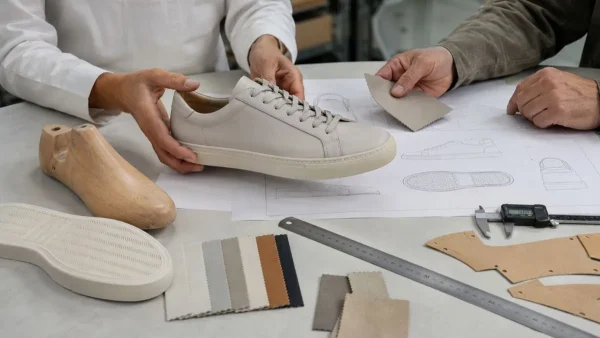
The first development sample should establish whether the product direction can work as real footwear. Brands should focus on the largest decisions before minor cosmetic details.
Overall silhouette and proportions
Review toe shape, topline, panel proportions, heel height, outsole profile and the visual relationship between upper and bottom unit. If the fundamental shape is wrong, correct it before focusing on finishing.
Technical feasibility
The manufacturer should assess whether the design, construction and components can be combined reliably. Pattern engineering, seam placement, reinforcement requirements and outsole attachment can reveal constraints that were not visible in a drawing.
Major materials and components
The first sample can confirm material direction, outsole family and component scale. If substitute sample materials are used, they should be identified clearly and not treated as final approval.
A useful first sample should end with a clear decision: what is approved, what must change and what still needs validation.
When should fit be evaluated during sampling?
Fit should be evaluated as soon as a representative sample is available on the intended last and with a construction sufficiently close to the planned product.
Waiting until the final sample to identify a fit problem can force changes to patterns, lasts or grading after other decisions have already been approved.
Fit is influenced by more than the last. Upper geometry, material thickness, lining, toe puff, counter, padding and construction can all affect internal volume and foot hold.
Brands should evaluate:
- overall length and internal volume;
- forefoot width and pressure;
- heel hold and heel slip;
- instep pressure and fastening;
- toe room;
- flex point and walking behavior;
- consistency with the approved fit standard.
Once the base size is corrected, the size range still needs appropriate grading control. The LG Shoes article on footwear fit consistency explains how lasts, grading and sample approval work together across a commercial size range.
What is the purpose of revised and confirmation samples?
A revised sample verifies specific corrections from an earlier round. A confirmation sample should demonstrate that agreed changes were implemented correctly and that the product can move to the next stage.
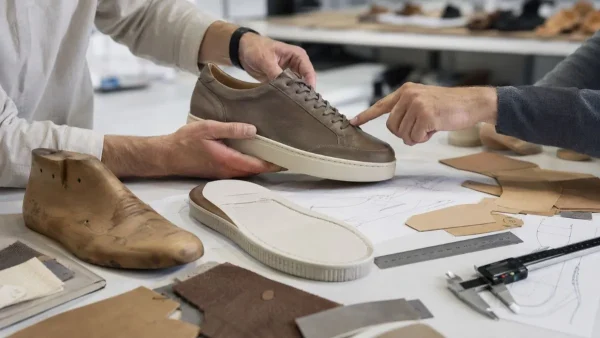
An effective shoe sampling process uses controlled feedback. Each round should have a version reference and a defined list of changes.
For example, a revision may require lower collar height, a different eyestay position, more forefoot volume and a new outsole finish. The next sample should first be checked against those instructions.
This prevents teams from reopening previously approved areas every time a new sample arrives.
Brands should also consider interaction between corrections. Changing material thickness can affect fit. Changing the last can affect pattern balance. Replacing an outsole can alter toe spring, weight or proportions.
When are sales samples useful?
Sales or commercial samples can support buyer meetings, showrooms, photography or internal commercial review before bulk production.
They are not required for every project, and their role should be agreed in advance.
A sales sample may prioritize accurate appearance, color and material presentation, but it should not automatically be treated as the final production reference. Depending on timing, testing, packaging or technical approvals may still be open.
For collections with several styles and colorways, brands should also decide which combinations genuinely need physical samples. Sampling every variation can increase development time and cost without always adding useful information.
What should a pre-production footwear sample confirm?
A pre-production footwear sample should represent the approved product as closely as practical before bulk manufacturing begins.
Terminology varies, but the principle is consistent: this is not the stage for broad design exploration. It is a controlled reference used to confirm that the specification has been translated correctly into a production-ready shoe.
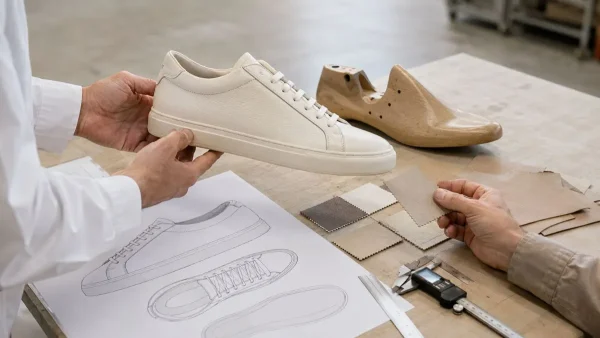
Brands and manufacturers should verify:
- approved upper, lining and reinforcement materials;
- correct colors, finishes and combinations;
- approved last and fit;
- upper pattern and seam positions;
- outsole, insole and bottom components;
- construction and attachment details;
- hardware and functional components;
- branding position and execution;
- stitching, edge finishing and workmanship;
- symmetry and overall proportions;
- required performance or compliance criteria;
- packaging and labeling when included in scope.
If a sample will be used for technical testing, its materials and construction should be representative of the intended production product. The pre-production stage should close remaining questions, not create a new design direction.
How should brands give feedback between sample rounds?
The quality of sample feedback directly affects development efficiency.
Comments should be consolidated into one controlled document or approval channel rather than scattered across emails, messages and several team members.
Each round should distinguish between:
- approved elements that should remain unchanged;
- required corrections for the next sample;
- points to verify that still need information, testing or material confirmation.
Use specific language. “Make the toe cleaner” is open to interpretation. A marked photograph, measurement or reference gives the manufacturer a clearer instruction.
Brands should identify the sample version, style code, colorway and date on every comment set. One person or coordinated team should consolidate internal feedback before sending it to the manufacturer.
Clear feedback is part of technical product development.
How many footwear sampling rounds should a brand expect?
There is no reliable universal number.
A style based on an existing last, available outsole and familiar construction may need fewer iterations than a boot with custom tooling, a new last, technical materials or specific performance requirements.
The number of rounds can depend on:
- clarity of the original brief;
- product complexity;
- new or existing lasts;
- custom outsole or component development;
- material availability;
- fit and testing requirements;
- construction complexity;
- number of colorways;
- speed and clarity of approvals.
More samples do not automatically mean a better product. Every new round should answer a defined development question.
Sampling also needs to fit the launch calendar. The LG Shoes guide to footwear production lead times explains how development, sourcing, approvals and factory planning affect timing. Brands managing several styles can also use footwear collection planning to understand how complexity increases development workload.
Can digital prototypes replace physical footwear samples?
Digital tools can reduce some physical iterations and improve communication, particularly when teams are evaluating proportions, colorways, material placement or design alternatives.
They can help identify visual issues before materials are cut and support faster discussion between brands, designers and manufacturers. Brands exploring this area can consult the World Footwear resource on digital prototyping in footwear product development.
However, a digital model cannot fully reproduce every physical property that matters before manufacturing. Physical validation remains important for:
- fit and internal volume;
- material hand and thickness;
- flexibility and weight;
- lasting behavior;
- component compatibility;
- construction execution;
- finishing quality;
- wear or performance testing.
The practical approach is to use digital tools where they can remove unnecessary iterations while preserving physical checkpoints for decisions that require a real shoe.
What should be approved before footwear production begins?
Before bulk production, the brand and manufacturer should be working from the same approved product reference and technical information.
A final approval checklist should confirm:
- style code and current approved version;
- upper design and pattern details;
- last and approved fit;
- size range and grading requirements;
- materials, colors, finishes and supplier references;
- outsole, insole and component specifications;
- construction method;
- stitching and finishing standards;
- hardware and functional details;
- branding application and placement;
- testing or compliance requirements where applicable;
- labels and packaging when included;
- final approved sample reference;
- closed comments with no unresolved technical decisions.
If a material, component or manufacturing detail changes after approval, its impact should be evaluated before the substitution reaches bulk production.
Production readiness is not defined by the fact that a sample exists. It is defined by whether the sample and supporting specifications represent an agreed, manufacturable product.
People Also Ask
What is a footwear sample?
A footwear sample is a development or approval shoe produced before bulk manufacturing. Depending on the stage, it may be used to evaluate design, fit, materials, construction, commercial appearance or production readiness.
How many samples are needed before shoe production?
There is no fixed number. Required rounds depend on product complexity, fit, materials, custom components, testing requirements and the quality of the approval process.
What is the difference between a prototype and a pre-production sample?
A prototype is generally used earlier to develop and evaluate the product, while a pre-production sample should be much closer to the final approved manufacturing specification. Exact terminology can vary.
When should footwear fit be approved?
Fit should be evaluated during development as soon as a representative sample is available and confirmed after relevant changes. It should be resolved before bulk production starts.
Final thoughts
The footwear sampling process works best when every sample has a defined purpose.
The first round may validate silhouette and feasibility. Later rounds can focus on fit, materials, construction or corrections. Commercial samples may support market activity, while the pre-production stage should confirm that the approved product can move into manufacturing with its main decisions closed.
For brands, the key is to avoid treating sampling as a sequence of subjective reactions. Clear approval criteria, structured feedback, version control and realistic timelines reduce the risk of late-stage changes.
A strong manufacturing partner should help identify what needs to be validated at each stage rather than simply producing another sample.
LG Shoes supports international footwear brands through product development, sampling and manufacturing in Portugal. Brands preparing a new project can contact LG Shoes to discuss the appropriate development route.
Frequently asked questions
Can a footwear brand start sampling without a finalized tech pack?
Yes, some projects can begin with a sufficiently clear brief, technical drawings and references. However, unresolved specifications should be identified, and the documentation should become more precise as the product moves toward approval.
Should every footwear colorway be physically sampled?
Not necessarily. The decision depends on material changes, color behavior, component differences, commercial needs and risk. A colorway introducing a different leather, finish or outsole may still require physical validation.
What happens if a material changes after sample approval?
The manufacturer and brand should assess whether the substitution affects appearance, fit, thickness, flexibility, durability, construction or testing. A new sample or targeted validation may be necessary.
Can the same sample be used for fit, testing and sales purposes?
Sometimes, but only when it is suitable for each purpose. A visually accurate sales sample may not represent production materials closely enough for technical testing, while a fit sample may not have the final commercial finish.
Who should consolidate comments on footwear samples?
The brand should define one responsible person or coordinated team to issue the official comment set. Design, product, buying and management feedback should be aligned before instructions are sent to the manufacturer.
When is a footwear sample ready to move into production planning?
A sample is ready when the required design, fit, materials, components, construction and finishing decisions have been approved and supporting specifications are aligned. Any remaining exceptions should be documented before bulk production is authorized.


 English

