
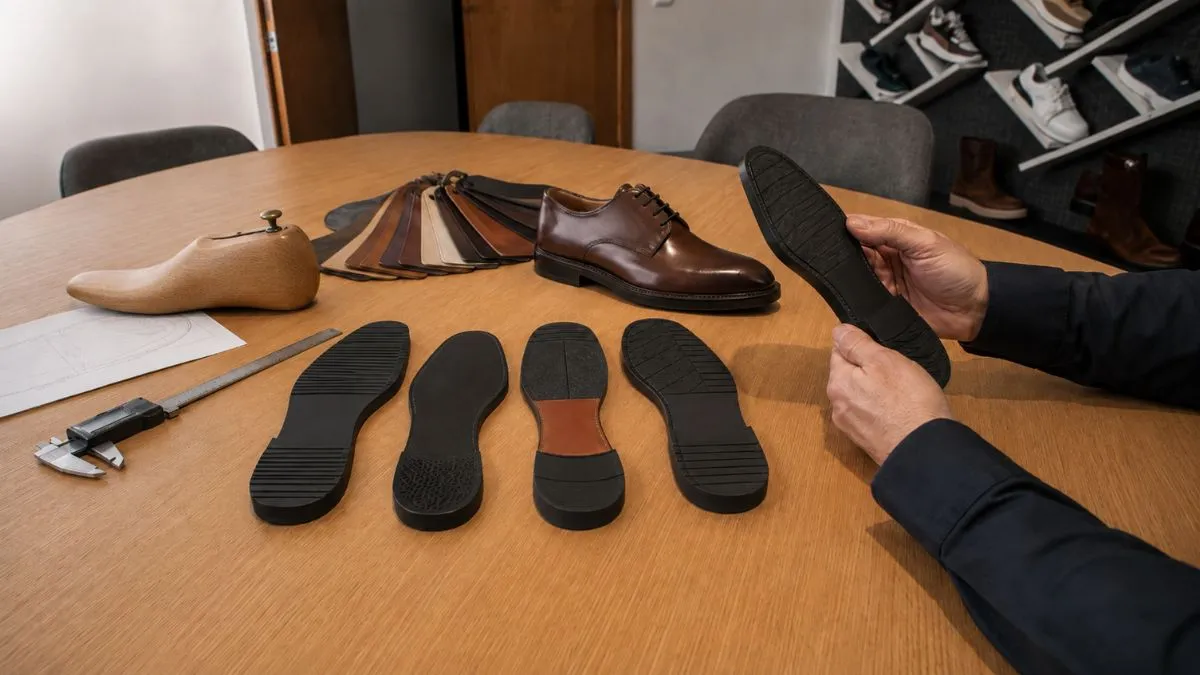
The outsole is the first point of contact between a shoe and the ground. It is also one of the most technically important decisions a brand makes during footwear product development.
Despite its structural role, footwear outsole selection is sometimes postponed until the upper design is already advanced. Treating the sole as a finishing detail can create compatibility problems, increase sampling time, and compromise the performance of the final product.
The outsole influences durability, flexibility, grip, weight, comfort, manufacturing feasibility, and commercial positioning. It must therefore be evaluated alongside the last, upper materials, product category, and construction method.
At LG Shoes, a Portuguese footwear manufacturer working with international brands, agents, sourcing teams, and buying offices, outsole decisions are considered from the early stages of development. This guide explains how brands can approach those decisions more strategically.
TL;DR
The right outsole depends on the product, target market, construction method, and expected performance.
- Footwear outsole selection should begin during the initial product development phase.
- Rubber, TPR, EVA, PU, leather, and TPU offer different performance characteristics.
- Weight, flexibility, grip, durability, and visual appearance must be evaluated together.
- The outsole must be compatible with the intended footwear construction.
- Standard sole references can reduce development complexity and tooling investment.
- Custom outsole molds can provide differentiation but require additional planning.
- Sustainable compounds require technical validation and reliable documentation.
- Supplier MOQs and delivery times should be confirmed before production planning.
Table of contents
- Why footwear outsole selection should begin early
- What should brands define before choosing an outsole?
- The main outsole materials and what they offer
- How outsole selection interacts with construction methods
- Should a brand use a standard sole or develop a custom outsole?
- Sustainable outsole options and material documentation
- MOQ, supplier lead times, and production planning
- Outsole materials comparison table
- People also ask
- Final thoughts
- Frequently asked questions
Why footwear outsole selection should begin early
The outsole is not simply the bottom layer of a shoe. It is a functional component that affects how the product behaves throughout its expected lifespan.
Choosing an unsuitable outsole material can make a shoe heavier than intended, reduce flexibility, create insufficient traction, or cause premature wear. These problems can affect consumer satisfaction and weaken the positioning of the finished collection.
Outsole selection also has a direct impact on development feasibility. The material, thickness, shape, and flexibility of the sole unit must work with the selected last, upper design, and construction method.
A highly flexible upper construction paired with an excessively rigid sole may prevent the shoe from delivering the expected comfort. A thick sole profile may also change the proportions of a design originally developed around a lighter and lower unit.
At LG Shoes, outsole evaluation is integrated into the broader footwear design and development process. This helps the development team assess the complete product rather than treating each component as an isolated decision.
Common outsole selection mistakes
Brands can reduce development risks by avoiding several recurring mistakes:
- Selecting a sole based only on photographs or visual references.
- Leaving the outsole decision until the upper prototype is already developed.
- Evaluating appearance without considering weight or flexibility.
- Assuming that one outsole can work with every footwear construction.
- Ignoring the effect of the tread design on traction and appearance.
- Failing to confirm supplier availability before approving the design.
- Requesting a custom sole without considering tooling, size range, and production volume.
A technically suitable outsole should support the product concept, not force the rest of the shoe to compensate for an unsuitable component.
What should brands define before choosing an outsole?
Before selecting a material or sole profile, brands should prepare a clear set of product requirements. These requirements allow the manufacturer to evaluate appropriate materials, supplier references, tooling options, and construction compatibility.
Intended use and target environment
The first question is where and how the shoe will be worn.
An urban lifestyle shoe, a premium leather dress shoe, a lightweight sneaker, and a technical outdoor product require different levels of grip, flexibility, abrasion resistance, and protection.
Brands should define whether the product is intended primarily for indoor use, city surfaces, wet conditions, uneven terrain, occupational environments, or prolonged everyday wear.
The intended market also matters. Climate, consumer expectations, and regional product requirements can influence the most appropriate compound and tread design.
Required weight and flexibility
Outsole weight has a direct impact on how the shoe feels during wear. Even when the upper is lightweight, a heavy sole unit can make the complete product feel dense or tiring.
Flexible constructions generally require an outsole that supports natural foot movement. However, maximum flexibility is not always the objective. Some footwear categories need additional structure, stability, or protection.
The manufacturer should therefore assess the balance between flexibility and support rather than evaluating either characteristic in isolation.
Grip and slip resistance
Grip depends on more than the outsole material. Compound formulation, tread depth, contact area, surface texture, and hardness all influence traction.
Deep tread patterns may be appropriate for outdoor use but visually unsuitable for a refined lifestyle shoe. A flatter tread can support a cleaner design but may require careful compound selection to achieve the expected performance.
For occupational or safety-related products, brands must also identify the applicable testing and certification requirements in the target market before development begins.
Durability and abrasion resistance
The expected product lifespan should reflect the brand’s price point and market positioning.
A premium product is generally expected to maintain its structural and visual quality for longer than a short-lifecycle fashion product. The outsole compound should support that expectation.
Harder compounds may offer increased abrasion resistance but can reduce flexibility or grip in some conditions. Softer compounds may improve traction and comfort but wear more quickly.
The right specification is therefore a balance between competing performance requirements.
Visual identity and sole profile
The outsole is also a visible design element.
Its thickness, sidewall geometry, color, edge finish, tread pattern, and relationship with the upper all contribute to the identity of the shoe.
Brands may choose a discreet sole that supports the upper design or use a more distinctive unit as a central element of the product.
Color matching, surface finish, logo placement, and separation between outsole and midsole areas should be defined before the final sample is approved.
The main outsole materials and what they offer
The most appropriate outsole material depends on the product category, required performance, design direction, and selected construction.
Material properties can also vary according to formulation, density, thickness, and supplier specifications. Brands should therefore evaluate physical samples and technical data rather than relying only on generic material descriptions.
For broader guidance on selecting upper, lining, insole, and sole components, brands can consult the LG Shoes guide to footwear material selection.
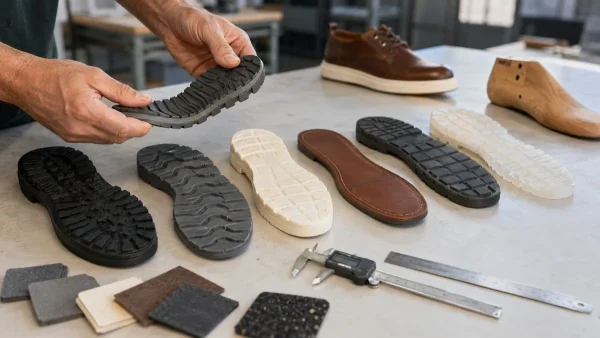
Rubber outsoles
Rubber is one of the most widely used outsole materials because it can provide strong grip, flexibility, abrasion resistance, and durability.
It is commonly considered for outdoor footwear, work-related products, casual shoes, sneakers, and performance-oriented collections.
The final performance depends on the rubber compound and tread design. A soft rubber formulation may provide good traction but wear more quickly, while a harder compound may improve durability but feel less flexible.
Brands should also consider the weight of the complete sole unit, as some rubber outsoles can be heavier than alternative materials.
Technical organizations such as SATRA footwear testing resources provide additional information about sole materials, testing methods, and performance evaluation.
TPR outsoles
TPR, or thermoplastic rubber, combines rubber-like flexibility with the production consistency of a thermoplastic material.
It is frequently used in casual, lifestyle, and everyday footwear. TPR can support detailed sole shapes, varied surface finishes, and a broad range of colors.
Its durability and grip depend on the specific formulation. It may be suitable for moderate everyday use but should not automatically be treated as equivalent to every rubber compound.
TPR can be an effective option when brands need a balance between appearance, performance, and commercial feasibility.
EVA outsoles
EVA, or ethylene vinyl acetate, is valued for its low weight, cushioning, and flexibility.
It is widely associated with athletic, comfort, leisure, and lightweight lifestyle footwear. It can be used within a sole unit or as the main material in products where weight reduction is a priority.
EVA can compress with prolonged use, depending on its density and formulation. Brands should therefore evaluate whether the selected material provides the required balance between cushioning and long-term resilience.
Grip may also need additional consideration, particularly when EVA forms the ground-contact surface.
PU outsoles
PU, or polyurethane, can provide durability, cushioning, abrasion resistance, and design flexibility.
It is used across comfort, work, and lifestyle footwear, depending on the formulation and sole structure.
One technical consideration is the potential for hydrolysis under unsuitable storage conditions or prolonged exposure to humidity. Compound quality, storage environment, and expected product lifecycle should therefore be evaluated during sourcing.
Brands should request relevant technical information from the outsole supplier before production approval.
Leather outsoles
Leather outsoles are strongly associated with premium dress footwear, heritage products, and traditional shoemaking.
They offer a refined appearance, natural material character, and a close connection with classic footwear construction.
However, leather generally provides less grip on wet surfaces than textured rubber or synthetic compounds. It also requires appropriate care and may not suit every climate or use case.
Some brands combine leather with discreet rubber elements to improve traction while preserving the visual character of a traditional leather sole.
TPU outsoles
TPU, or thermoplastic polyurethane, is commonly considered when brands need abrasion resistance, structural definition, and technical performance.
It can support detailed geometries and stable components within more complex sole designs.
TPU is generally denser than EVA and may increase the weight or rigidity of the product. Its role should therefore be evaluated in relation to the complete sole structure.
It is particularly relevant to technical, performance, and design-led footwear where durability and precise component definition are important.
How outsole selection interacts with construction methods
The outsole and construction method must be specified together.
Each construction creates a different relationship between the upper, insole, last, and sole unit. Thickness, flexibility, bonding area, stitching requirements, and edge geometry can all affect compatibility.
LG Shoes works with several footwear construction methods, including Blake, Strobel, Montado, Sacchetto, Mocassin, and San Crispino, as well as waterproof footwear development solutions.
The complete overview of these processes is available in the LG Shoes guide to footwear construction methods.
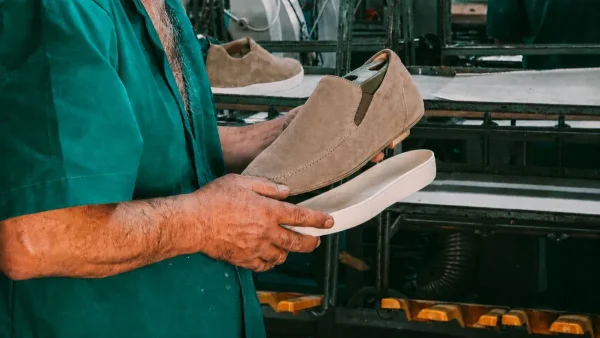
Blake construction
Blake construction uses stitching that passes through the insole and outsole structure.
The sole must therefore be suitable for the stitching process and compatible with the intended thickness and flexibility of the product.
Leather and selected rubber sole solutions may be considered, depending on the design and technical specification.
An excessively thick or rigid unit can make the stitching process unsuitable or alter the expected flexibility of the shoe.
Strobel construction
Strobel construction is frequently associated with lightweight, flexible sneakers and casual footwear.
The upper is connected to a flexible textile base before the sole assembly is completed. The outsole must support the natural flex behavior created by this construction.
Lightweight sole units and flexible compounds are often relevant, but the final choice depends on the product category, required support, and outsole design.
Montado, Sacchetto, and Mocassin constructions
Montado, Sacchetto, and Mocassin constructions are often selected for products where flexibility, comfort, and natural foot movement are important.
A heavy or excessively rigid sole can reduce the benefits these constructions are intended to provide.
The outsole should therefore support the design’s comfort objectives while maintaining sufficient durability and stability.
The manufacturer must assess the complete combination of upper material, last, internal structure, and sole unit before approving the specification.
San Crispino construction
San Crispino construction creates a distinctive relationship between the upper, stitching, and sole structure.
The outsole must accommodate the construction details and preserve the characteristic appearance of the finished shoe.
Material thickness, perimeter geometry, and the position of the stitching area must be considered during development.
This makes early coordination between the design team and manufacturer particularly important.
Waterproof footwear development
In waterproof footwear, the outsole cannot be evaluated independently from the complete waterproofing system.
The sole design, attachment area, upper materials, internal membrane solution, seams, and construction details must work together to reduce water penetration risks.
Brands should define the intended level of water resistance and the conditions in which the product will be used.
The manufacturer can then evaluate the outsole as one component within the full technical solution.
Should a brand use a standard sole or develop a custom outsole?
One of the most important commercial decisions is whether to use an existing sole reference or invest in a proprietary outsole.
Neither option is automatically better. The right decision depends on the brand’s product strategy, expected volume, differentiation needs, budget, and launch timeline.
Using an existing sole reference
Available supplier references can reduce development complexity because the tooling already exists.
This can make it easier to evaluate physical samples, confirm size availability, and progress into prototyping without beginning a complete mold development process.
Existing soles can be particularly useful for emerging brands, smaller production runs, market testing, or collections where differentiation is primarily created through the upper design and materials.
However, the brand must still confirm that the sole profile, size range, color options, and performance characteristics support the intended product.
Developing a proprietary outsole mold
A custom outsole allows the brand to create an exclusive side profile, tread pattern, volume, surface texture, and visual identity.
It can also integrate specific design details when technically appropriate.
Custom development requires additional engineering, prototyping, testing, tooling, and supplier coordination. The design must work across the required size range and maintain the correct proportions after grading.
Tooling costs and development times vary according to material, mold construction, sole complexity, number of components, and size range.
When custom tooling makes commercial sense
Custom tooling is most appropriate when the outsole is central to the product identity or when an existing reference cannot meet the technical requirements.
Before investing, brands should evaluate:
- Expected production volume.
- Number of seasons in which the sole may be reused.
- Potential use across multiple product variations.
- Required size range.
- Technical complexity of the sole design.
- Testing and approval requirements.
- Impact on development and launch schedules.
A proprietary outsole should support a long-term product strategy rather than function only as an isolated design feature.
Sustainable outsole options and material documentation
Sustainability requirements are increasingly included in sourcing briefs from European and international footwear brands.
However, a material should not be considered sustainable based only on a supplier label or commercial description. Its composition, origin, recycled content, performance, and documentation must be evaluated.
Recycled rubber compounds
Recycled rubber compounds can incorporate post-industrial or post-consumer material into a new outsole formulation.
The percentage and source of recycled content can vary considerably. Visual appearance and compound consistency may also differ from virgin rubber.
Brands should request documentation supporting the recycled content and evaluate whether the compound meets the required performance standards.
Bio-based EVA
Bio-based EVA alternatives replace part of the fossil-based feedstock with renewable sources.
These materials can provide weight and cushioning characteristics similar to conventional EVA, depending on the formulation.
Brands should verify the percentage of bio-based content and avoid making environmental claims that exceed the available supplier documentation.
Natural rubber
Natural rubber can be relevant to brands seeking materials with a renewable origin.
Its suitability depends on sourcing, compound formulation, performance requirements, and supply-chain documentation.
Certification and traceability can strengthen the credibility of environmental claims, especially for brands selling in markets where buyers closely examine material origins.
Recyclability and material traceability
A sole described as recyclable is not necessarily recycled in practice.
The complete product structure, material separation, available recycling infrastructure, and end-of-life system all affect actual recyclability.
Brands should request technical data sheets, composition declarations, restricted-substance information, and relevant certifications before approving environmental claims.
LG Shoes integrates responsible production principles through its environmental management practices. Brands preparing documentation for international buyers can also consult the guide to footwear traceability and product transparency.
MOQ, supplier lead times, and production planning
Outsole sourcing creates specific production constraints that should be identified before final sample approval.
The availability of the selected sole, supplier production calendar, color requirements, tooling status, and minimum quantities can all affect the final schedule.
Minimum order quantities
Outsole MOQs vary according to the supplier, material, color, sole reference, production process, and whether existing tooling is available.
Standard colors and frequently produced sole references may offer greater MOQ flexibility, while custom colors, exclusive compounds, or less common sizes can require higher quantities.
Small-batch brands should discuss outsole sourcing early so that the sole choice remains commercially viable for the planned production volume.
Tooling and size ranges
A custom outsole generally requires tooling for multiple sizes.
The required investment depends on the size range, mold complexity, number of sole components, material, and supplier production system.
Brands should confirm whether the quoted tooling covers the complete size range and whether future modifications would require additional molds.
Supplier lead times
Outsole delivery times vary according to supplier capacity, raw material availability, color development, mold status, testing, and order volume.
The production plan should include sufficient time for sole approval, supplier manufacturing, delivery to the factory, and incoming quality control.
Assuming that an outsole can be sourced immediately after sample approval can create unnecessary production delays.
How outsole delays affect footwear production
The outsole is required before several final production and quality-control operations can be completed.
If the supplier delivers late, the factory may be unable to maintain the planned production sequence, even when the uppers are ready.
For this reason, outsole confirmation should be included in the complete production schedule.
Brands planning upcoming launches can consult the LG Shoes guide to footwear production lead times for a broader explanation of development, material sourcing, sampling, and manufacturing timelines.
Outsole materials comparison table
Footwear outsole selection requires brands to balance weight, durability, grip, and product positioning. The values below are relative and may vary according to compound formulation, density, thickness, and tread design.
| Material | Relative weight | Durability | Grip | Typical applications |
|---|---|---|---|---|
| Rubber | Medium to high | High | High | Outdoor, work, casual, and performance footwear |
| TPR | Medium | Moderate to high | Moderate to high | Casual and everyday footwear |
| EVA | Low | Moderate | Moderate | Lightweight, comfort, athletic, and lifestyle footwear |
| PU | Low to medium | High | Moderate to high | Comfort, work, and lifestyle footwear |
| Leather | Medium | Moderate | Low on wet surfaces | Dress, heritage, and premium footwear |
| TPU | Medium | High | High | Technical and performance footwear |
People also ask
What is the best outsole material for everyday footwear?
There is no single best material for every everyday shoe. Rubber and TPR are frequently considered for casual footwear because they can provide a practical balance of durability, grip, design flexibility, and cost. The correct choice depends on the intended weight, flexibility, construction, and price positioning.
When should a brand choose the outsole during shoe development?
The outsole should be discussed during the initial product brief, together with the last, construction method, upper materials, and intended use. Early selection allows the manufacturer to identify compatibility issues before the upper prototype is fully developed.
Does outsole material affect shoe flexibility?
Yes. Material type, compound hardness, thickness, tread geometry, and sole structure all influence flexibility. The flex point of the sole must also align with the natural flex area of the last and upper construction.
Can one outsole be used across an entire footwear collection?
One outsole may be used across several models when the last, construction, product category, and technical requirements are compatible. However, using the same sole across substantially different products can create proportion, fit, or performance problems.
Final thoughts
Footwear outsole selection is one of the most consequential decisions in product development.
The outsole determines how the shoe interacts with the ground, how it flexes, how much it weighs, how long it lasts, and how the complete design is perceived.
Brands should avoid selecting a sole based only on appearance or cost. The decision must consider intended use, target market, construction method, last geometry, material performance, supplier availability, and production volume.
At LG Shoes, outsole evaluation is integrated into the development process so that each component supports the intended product rather than creating technical limitations later.
As a Portuguese footwear manufacturer working exclusively with international B2B clients, LG Shoes supports brands through material selection, prototyping, construction evaluation, and production planning.
Brands preparing a new footwear collection can contact LG Shoes to discuss their product requirements with the development team.
Frequently asked questions
What is the difference between a midsole and an outsole?
The outsole is the bottom layer of the shoe and makes direct contact with the ground. The midsole is positioned above the outsole and is primarily responsible for cushioning, shock absorption, and structural support. Some footwear designs use a combined sole unit in which these functions are integrated.
How does outsole thickness affect shoe performance?
Outsole thickness affects weight, flexibility, ground feel, protection, and visual proportions. A thicker sole may provide additional protection or durability but can also increase weight and alter the natural flex point. The correct thickness depends on the construction and intended use.
What outsole material is suitable for premium leather dress shoes?
Leather outsoles are traditionally associated with premium dress footwear. Thin rubber or combined leather and rubber solutions may also be considered when improved traction and durability are required. The decision should reflect the brand’s positioning, climate, construction method, and consumer expectations.
How does outsole design affect the upper and last?
The sole profile must align with the last shape, toe spring, heel height, waist, and overall proportions of the upper. Changing the outsole after the upper has been developed can create visual imbalance or require adjustments to patterns, lasting allowances, and construction details.
Do outsole materials need to comply with European regulations?
Yes. Materials used in footwear intended for the European market must comply with applicable chemical and product regulations, including relevant REACH restrictions. Brands should request technical documentation and restricted-substance information from their manufacturing and material partners.
Can a new footwear brand develop a custom outsole mold?
Yes. A custom mold allows a brand to create an exclusive outsole profile, tread, and design language. However, the brand must consider tooling investment, size range, testing, production volume, supplier capacity, and development time. Existing sole references may be more practical during an initial market-testing phase.


 English

