
TLDR – footwear quality control checklist: A structured footwear quality control checklist helps brands validate materials, construction, fit and finishing before mass production. It reduces risk, prevents costly errors and ensures consistent product standards at scale.
Footwear quality control checklist: why pre-production validation is critical
Footwear quality control checklist is essential for brands preparing to scale production. Before moving into mass produção, brands must ensure that every aspect of their product meets defined quality standards.
Skipping or rushing this stage often leads to:
- Inconsistent product quality
- High return rates
- Production delays
- Increased costs
Working with the right manufacturing partner helps brands structure this validation process effectively and avoid critical mistakes.
Índice de Conteúdos
- What is footwear quality control?
- Why quality control matters before production
- Material quality checks
- Construction and assembly validation
- Fit and sizing consistency
- Finishing and visual inspection
- Performance and durability testing
- Quality control process before production
- Common footwear quality issues
- Complete footwear quality checklist
- Perguntas Frequentes
What is footwear quality control?
Calçado quality control refers to the process of verifying that a product meets defined standards before production and distribution.
A structured footwear quality control checklist ensures consistency and reduces risk at every stage.
It includes evaluating:
- Material quality
- Construction accuracy
- Fit consistency
- Finishing details
This process is closely linked to footwear construction methods, as different techniques require different validation criteria.
Why quality control matters before production
Validating quality before production reduces operational risk and ensures scalability.
Key benefits include:
- Early detection of defects
- Reduced production errors
- Better cost control
- Improved brand reputation
Without proper pre-production validation, even small issues can scale into large problems during manufacturing.
In practical terms, a footwear quality control checklist allows brands to standardise decision-making and reduce dependency on subjective evaluation. Instead of relying only on visual inspection or isolated feedback, brands can follow structured criteria that ensure repeatability and consistency across collections.
This is particularly important for growing brands, where scaling production without a clearly defined footwear quality control process often leads to inconsistencies between samples and final production batches.
Manufacturers operating under recognised standards such as ISO 14001 certification follow structured processes that support consistent quality and controlled production environments.
Brands that implement a structured footwear quality control checklist at this stage gain better visibility over production risks and can make informed decisions before committing to full-scale manufacturing.
Material quality checks
Material inspection is the first critical step in any footwear quality control checklist.
Brands should evaluate:
- Leather consistency or fabric quality
- Colour uniformity
- Thickness and resistance
- Flexibility and behaviour under stress
Material decisions directly impact durability, comfort and production feasibility. This is why footwear material selection must be validated early.
Material validation should also consider:
- Supplier reliability and consistency
- Batch variation risks
- Compliance with environmental and safety standards
Brands working with certified manufacturers benefit from structured sourcing processes and better control over material quality.
Construction and assembly validation
Footwear construction quality determines product durability and structural integrity.
Key elements to check:
- Stitching consistency
- Bonding strength
- Sole attachment
- Symmetry between left and right shoe
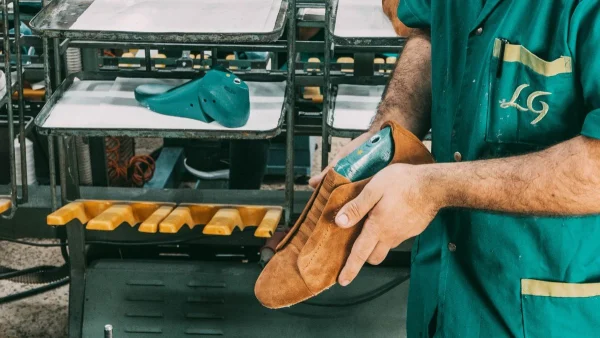
Different construction methods require specific quality validation criteria. For example:
- Strobel construction focuses on flexibility and lightweight assembly
- Blake stitching requires precision and durability validation
- Cemented construction depends heavily on bonding quality
A detailed footwear quality control checklist helps identify construction issues before scaling production.
Fit and sizing consistency
Footwear fit testing ensures the product meets comfort and sizing expectations.
Brands should validate:
- Size grading accuracy
- Comfort during wear
- Pressure points
- Last shape consistency
Poor fit is one of the main reasons for returns, making this stage essential.
Fit validation is closely connected to development accuracy. Brands that prioritise footwear prototyping accuracy significantly reduce sizing issues and improve consistency in production.
Finishing and visual inspection
Footwear finishing quality directly affects perceived value.
Inspection should include:
- Surface imperfections
- Glue marks
- Edge finishing
- Branding placement
This is where quality assurance in footwear meets customer perception.
Performance and durability testing
Beyond visual inspection, footwear testing ensures long-term performance.
Common tests include:
- Flex testing
- Abrasion resistance
- Water resistance
- Sole durability
Testing protocols may vary depending on the product category, intended use and market requirements.
For example, outdoor footwear requires more rigorous testing compared to casual products, especially in terms of water resistance and abrasion durability.
For footwear durability testing, you can refer to ISO footwear flexing durability test methods.
Footwear quality control process before mass production
A structured footwear quality control checklist is most effective when integrated into a clear validation process before production.
Typical stages include:
- Sample approval – verifying design, materials and construction
- Pre-production meeting – aligning expectations between brand and manufacturer
- Material validation – confirming consistency and availability
- Pilot run testing – producing a small batch to identify issues
- Final approval – validating all technical and visual aspects
This structured approach ensures that the footwear quality control checklist is applied consistently and reduces risk before scaling production.
Common footwear quality issues
Even well-designed products can fail if quality is not properly validated.
Common issues detected through a footwear quality control checklist include:
- Weak bonding between upper and sole
- Inconsistent stitching
- Material defects or variations
- Incorrect size grading
- Visible finishing flaws
Identifying these issues early prevents costly corrections during production.
Complete footwear quality control checklist
Esta footwear quality control checklist helps brands validate every critical stage before mass production:
- Material consistency
- Colour accuracy
- Construction integrity
- Stitching quality
- Bonding strength
- Fit and comfort
- Size grading
- Visual finishing
- Logo and branding placement
- Durability performance
A structured footwear quality control checklist ensures consistency, reduces risk and supports scalable production.
Perguntas Frequentes
What is footwear quality control?
It is the process of verifying that footwear meets defined standards before production and distribution.
When should quality control be done?
Before mass production, during sampling and development stages.
Why is pre-production validation important?
It prevents costly errors, reduces risk and ensures consistency at scale.
What are the most common quality issues?
Poor stitching, weak bonding, inconsistent sizing and finishing defects.
Can manufacturers support quality control?
Yes, experienced manufacturers provide guidance and structured validation processes.
Conclusão
Footwear quality control checklist is essential for brands aiming to scale production without compromising product standards.
A structured validation process, combined with the right manufacturing partner, ensures consistency, reduces risk and supports long-term product success.
Como um fabricante de calçado em Portugal, LG Shoes supports brands through every stage of development, ensuring products are ready for production with confidence.


 Portuguese

