
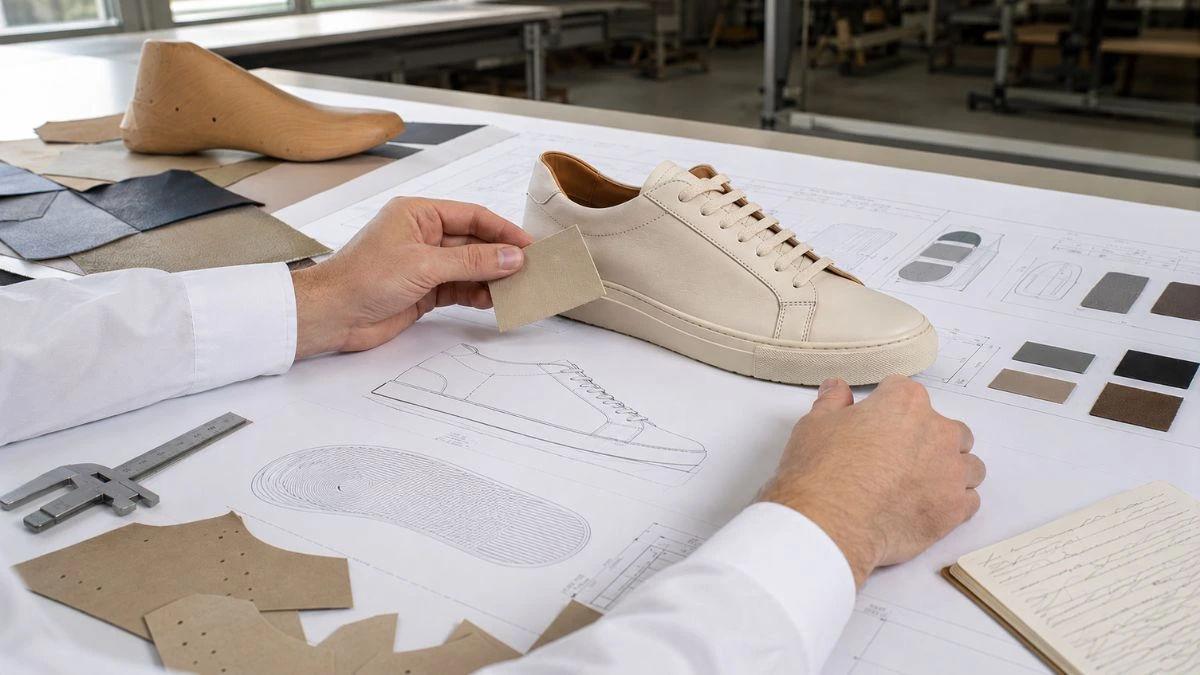
Choosing a high-quality footwear manufacturer is not only about finding a factory that can produce shoes. For international footwear brands, the right manufacturer must combine technical expertise, consistent quality control, strong communication, reliable sampling and a clear understanding of commercial product development.
Many brands compare manufacturers mainly through price, capacity or location. These factors matter, but they do not reveal whether a factory can support product development, solve technical challenges, maintain consistency across produção runs or help a brand build stronger collections over time.
A truly reliable manufacturing partner contributes long before production begins. The best factories help brands refine materials, improve construction, validate prototypes, manage lead times and reduce risks before they become expensive production problems.
This article explains the key characteristics that distinguish a high-quality fabricante de calçado and helps brands evaluate potential partners with a more technical, strategic and long-term perspective.
Characteristics of a high-quality footwear manufacturer
The comparison below highlights the key characteristics that distinguish a high-quality calçado manufacturer from one that may create unnecessary development and production risks.
| Evaluation area | High-quality manufacturer | Lower-quality manufacturer |
|---|---|---|
| Product development | Provides technical recommendations and engineering support throughout development. | Waits for customer instructions without offering technical guidance. |
| Sampling | Uses structured prototype validation with documented improvements. | Produces basic samples with limited technical evaluation. |
| Comunicação | Maintains proactive, transparent and solution-oriented communication. | Communicates reactively and only after problems arise. |
| Controlo de qualidade | Implements quality checks throughout development and production. | Relies mainly on final product inspection. |
| Material expertise | Recommends suitable materials based on performance and manufacturability. | Offers limited technical advice on material selection. |
| Production planning | Builds realistic timelines with clear production milestones. | Promises unrealistic delivery dates without proper planning. |
| Partnership approach | Acts as a long-term development partner. | Acts only as a production supplier. |
TL;DR
A high-quality footwear manufacturer combines technical development expertise, reliable quality control, transparent communication, sampling capability, material knowledge and responsible production practices.
- Technical expertise matters as much as production capacity.
- Strong sampling processes reduce production risks.
- Quality control must be present throughout development and production.
- Product category experience improves efficiency and accuracy.
- Material knowledge helps prevent costly design and production issues.
- Transparent communication supports better decision-making.
- Production planning and flexibility influence delivery reliability.
- Responsible manufacturing strengthens long-term brand credibility.
Índice de Conteúdos
- Technical expertise and product development
- Consistent quality control
- Experience with your product category
- Transparent communication
- Reliable sampling and prototype development
- Material knowledge and sourcing capability
- Production planning and flexibility
- Sustainability and responsible manufacturing
- Long-term partnership mindset
- People Also Ask
- Final thoughts
- Perguntas frequentes
Technical expertise and product development
The first sign of a high-quality footwear manufacturer is the ability to support product development with genuine technical expertise. A factory should not simply wait for final instructions. It should be able to evaluate design concepts, identify manufacturing risks and recommend practical improvements before production begins.
Strong footwear product development requires experienced pattern makers, developers, technicians and engineers working together. Their role is to transform a creative idea into a commercially viable product while protecting the intended design, quality level and brand positioning.
- Evaluate whether the factory provides technical feedback during development.
- Ask how patterns, prototypes and construction details are reviewed.
- Check if the team can identify manufacturability issues early.
- Assess whether recommendations are practical and product-specific.
- Look for evidence of structured development processes.
For example, a premium sneaker may look simple from the outside, but small decisions around upper pattern, reinforcement, lining, outsole flexibility and fit can affect the final product significantly. A strong manufacturer helps brands solve these issues before they become production delays.
Understanding how a factory manages development is essential when evaluating long-term capability. For brands that want to understand this process in more detail, Footwear Design and Development explains how structured technical support contributes to stronger footwear collections.
Consistent quality control
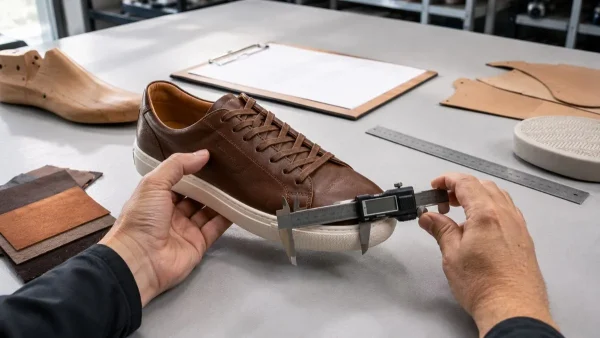
A high-quality manufacturer does not treat footwear quality control as a final inspection only. Quality must be built into the entire process, from material inspection and sample approval to in-process checks and final product validation.
Brands often discover quality issues too late because they only evaluate finished samples. A more reliable approach is to understand how the factory controls consistency at every stage. This includes material behaviour, stitching accuracy, fit validation, outsole attachment, finishing quality and packaging standards.
- Ask how incoming materials are inspected.
- Review how prototypes are approved before production.
- Understand in-process quality checks.
- Confirm how final inspections are documented.
- Ask how corrective actions are handled.
- Evaluate consistency across sample rounds.
For instance, a slight variation in leather thickness can affect pattern behaviour, stitching tension and lasting results. A manufacturer with strong quality systems will identify these variations early and adjust the process before they affect an entire production run.
Consistent quality control is one of the clearest indicators of a manufacturer committed to long-term reliability rather than short-term production output. Before selecting a manufacturing partner, brands should understand how quality is managed throughout development, sampling and production, not only during the final inspection.
Experience with your product category
Not every factory is suitable for every type of footwear. A manufacturer may be highly skilled in one category and less experienced in another. This is why product category experience is an essential criterion when choosing a fabricante de calçado.
Experience affects material choices, pattern development, construction decisions, finishing standards and quality expectations. A factory that understands your product category can anticipate technical issues faster and propose better solutions during sampling.
- Check whether the manufacturer has experience with similar footwear types.
- Ask about previous work in your quality segment.
- Review whether the factory understands your target market.
- Discuss suitable construction methods for your product.
- Evaluate whether the manufacturer can support future collection growth.
For example, developing leather loafers, premium sneakers, boots or moccasins requires different expertise. Construction method, last selection, lining structure, outsole choice and finishing all change according to the product category.
Construction knowledge is especially important when evaluating technical fit between brand and factory. To understand how different methods support different product objectives, explore Métodos de construção, including Montado, Strobel, Waterproof, Moccasin, Blake, Sacchetto and San Crispino.
Choosing a manufacturer with proven experience in your product category significantly reduces development risks and increases the likelihood of achieving consistent quality from prototype to production.
Transparent communication
Transparent communication is one of the clearest indicators of a high-quality footwear manufacturer. A factory may have strong production capacity, but if communication is unclear, slow or inconsistent, development becomes harder to manage and production risks increase.
Good communication means more than replying quickly. It includes explaining technical constraints, clarifying decisions, documenting changes and informing the brand when a material, construction or timeline may create problems. This level of transparency helps brands make better decisions before costs escalate.
- Assess how clearly the manufacturer answers technical questions.
- Check whether recommendations are specific or generic.
- Confirm who manages development communication.
- Ask how changes are documented during sampling.
- Evaluate whether the factory communicates problems early.
- Look for proactive guidance, not just reactive replies.
For example, if a selected material may affect fit, production efficiency or durability, a reliable manufacturer should explain the risk before sampling continues. Silence during development often becomes an expensive problem during production.
Manufacturers that communicate openly throughout development help brands make faster decisions, reduce misunderstandings and build stronger long-term partnerships.
Reliable sampling and prototype development
A manufacturer’s sampling process reveals how seriously it approaches development. Footwear sampling and shoe prototyping should not be treated as quick visual exercises. They are technical validation stages where fit, construction, materials, proportions and production feasibility are tested before larger commitments are made.
Reliable sample development helps brands avoid costly revisions after production has started. A strong prototype should reflect the intended product as closely as possible, while still allowing room for technical improvement and brand feedback.
- Review sample consistency between development rounds.
- Evaluate finishing, stitching and material behaviour.
- Check whether the prototype reflects the agreed specifications.
- Assess how the manufacturer explains required changes.
- Confirm how sample approval is documented.
- Allow time for technical refinement before production.
A premium leather sneaker, for example, may require adjustments to pattern balance, tongue position, outsole flexibility or heel structure before approval. These refinements are not delays when handled correctly. They are part of building a commercially viable product.
Material knowledge and sourcing capability
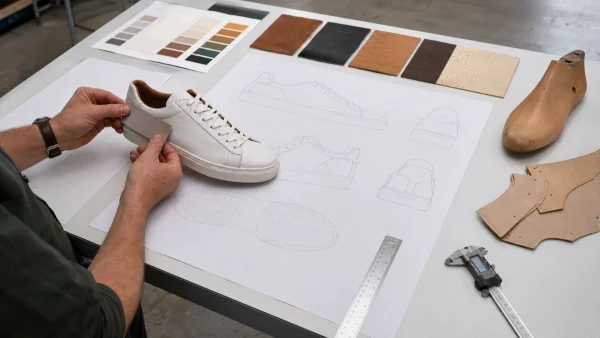
A high-quality footwear manufacturer should understand how materials behave during development, production and use. Material selection affects appearance, comfort, durability, sustainability, costing and manufacturing feasibility. A factory with strong material knowledge can help brands avoid choices that look good on paper but create problems during production.
Material expertise is especially important for private label footwear, OEM footwear production and custom shoe manufacturing, where brands often need guidance on leather, suede, textiles, linings, reinforcements and outsole compounds.
- Ask how materials are sourced and evaluated.
- Review available leather, suede, textile and outsole options.
- Discuss how material thickness affects pattern making.
- Confirm whether alternatives can be suggested when needed.
- Evaluate sustainability and performance requirements.
- Check how material consistency is controlled before production.
For instance, two leathers with similar colour can behave very differently during cutting, stitching and lasting. One may stretch more, mark more easily or require additional reinforcement. A capable manufacturer helps brands identify these issues before sample approval.
Material selection is closely linked to performance and manufacturability. For a deeper look at how material decisions influence product development, Footwear Material Selection explains what brands should consider before moving into production.
Production planning and flexibility
A strong manufacturer must combine planning discipline with practical flexibility. Reliable production planning ensures that development, material sourcing, sample approvals and manufacturing capacity are aligned before production starts. Without this structure, even good products can face avoidable delays.
Flexibility matters because footwear brands rarely operate in perfectly predictable conditions. Launch dates shift, forecasts change, materials may require alternatives and product ranges often evolve after sampling. A high-quality manufacturer can adapt while still protecting quality standards.
- Discuss lead times before confirming launch plans.
- Understand how production capacity is scheduled.
- Ask how material delays are managed.
- Clarify minimum order quantity expectations.
- Review how phased collections are handled.
- Confirm how timeline changes are communicated.
Brands should be cautious of manufacturers that promise unrealistic delivery dates without evaluating sampling, material availability and production workload. A reliable factory will prefer a realistic schedule over a promise that creates pressure later.
Production timelines depend on several factors, including development complexity, materials, sample approvals and capacity planning. To understand these variables more clearly, Footwear Production Lead Times explains how brands can plan more realistic schedules.
Sustainability and responsible manufacturing
A high-quality footwear manufacturer understands that responsible manufacturing is no longer an optional extra. International footwear brands increasingly expect suppliers to demonstrate environmental responsibility, ethical working practices and transparent supply chain management alongside technical excellence.
Responsible manufacturing extends beyond certifications alone. It includes careful material sourcing, efficient resource management, waste reduction initiatives, safe working conditions and continuous improvement across the entire production process. These practices strengthen long-term partnerships while reducing operational and reputational risks.
- Ask about recognised third-party certifications.
- Review environmental management practices.
- Understand how suppliers and materials are selected.
- Discuss traceability throughout the supply chain.
- Evaluate waste reduction and resource efficiency initiatives.
- Look for continuous improvement rather than isolated projects.
Many international footwear brands now include sustainability as part of their supplier evaluation process alongside quality, technical expertise and production capability. For broader insights into sustainability trends and global footwear manufacturing, World Footwear regularly publishes valuable industry research and market analysis.
Long-term partnership mindset
The strongest manufacturing relationships are built on collaboration rather than transactions. A high-quality footwear manufacturer acts as an extension of the brand’s product development team, contributing technical expertise, continuous improvement and practical recommendations throughout every stage of the project.
Long-term partnerships create efficiencies that are difficult to achieve through short-term supplier relationships. As manufacturers become more familiar with a brand’s quality expectations, preferred materials, construction methods and commercial objectives, communication becomes smoother, development becomes faster and production consistency improves over time.
- Share long-term collection objectives.
- Encourage technical collaboration during development.
- Review performance after every production cycle.
- Maintain transparent communication.
- Value continuous improvement over short-term savings.
- Treat the manufacturer as a strategic development partner.
The best footwear collections rarely result from isolated production orders. They are developed through ongoing collaboration between brands and manufacturers that share the same commitment to quality, innovation and continuous improvement. If you are looking for a manufacturing partner that supports every stage of footwear product development, discover how LG Shoes collaborates with international footwear brands from concept to production.
People Also Ask
What makes a footwear manufacturer high quality?
A high-quality footwear manufacturer combines technical expertise, structured product development, reliable quality control, transparent communication, strong sampling capabilities and responsible manufacturing practices.
How can footwear brands evaluate a manufacturer before production?
Brands should review technical development capabilities, prototype quality, communication, quality assurance systems, product category experience, production planning and sustainability practices before selecting a manufacturing partner.
Why is product development important when choosing a footwear manufacturer?
Strong product development helps identify technical issues before production begins, improving fit, construction, material selection and overall manufacturing efficiency while reducing costly revisions.
What should brands ask during the first meeting with a footwear manufacturer?
Questions should focus on product development processes, sampling, quality control, production planning, minimum order quantities, lead times, material sourcing and previous experience with similar footwear projects.
Final thoughts
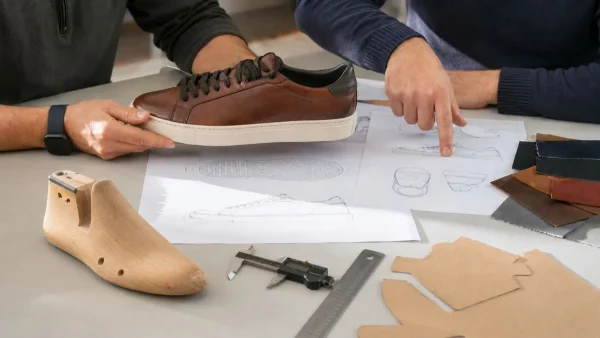
Selecting a high-quality footwear manufacturer involves far more than comparing quotations or production capacity. The most successful footwear brands evaluate technical expertise, communication, quality systems, sampling capabilities, material knowledge and long-term collaboration before making a decision.
A manufacturer that contributes throughout product development becomes much more than a production supplier. By supporting engineering decisions, improving manufacturability and maintaining consistent quality standards, the right partner helps brands develop stronger collections while reducing sourcing risks and improving long-term commercial performance.
Perguntas frequentes
What should I look for in a high-quality footwear manufacturer?
Look for technical expertise, structured product development, reliable quality control, transparent communication, sampling capability, responsible manufacturing practices and experience with your product category.
Why is technical product development important?
Technical development transforms design concepts into commercially manufacturable footwear while improving fit, construction, durability and production efficiency.
How important is sampling before production?
Sampling validates materials, construction, fit and manufacturing feasibility before production begins, reducing the likelihood of costly revisions later.
Should sustainability influence supplier selection?
Yes. Responsible manufacturing practices, recognised certifications and transparent supply chains help reduce operational risk while supporting long-term brand credibility.
Can a manufacturer improve my footwear designs?
Experienced manufacturers frequently recommend improvements to construction, materials, fit and manufacturability without compromising the original design concept.
Why are long-term manufacturing partnerships beneficial?
Long-term partnerships improve communication, product consistency, technical collaboration and production efficiency while helping manufacturers better understand your brand and future collections.


 Portuguese

