
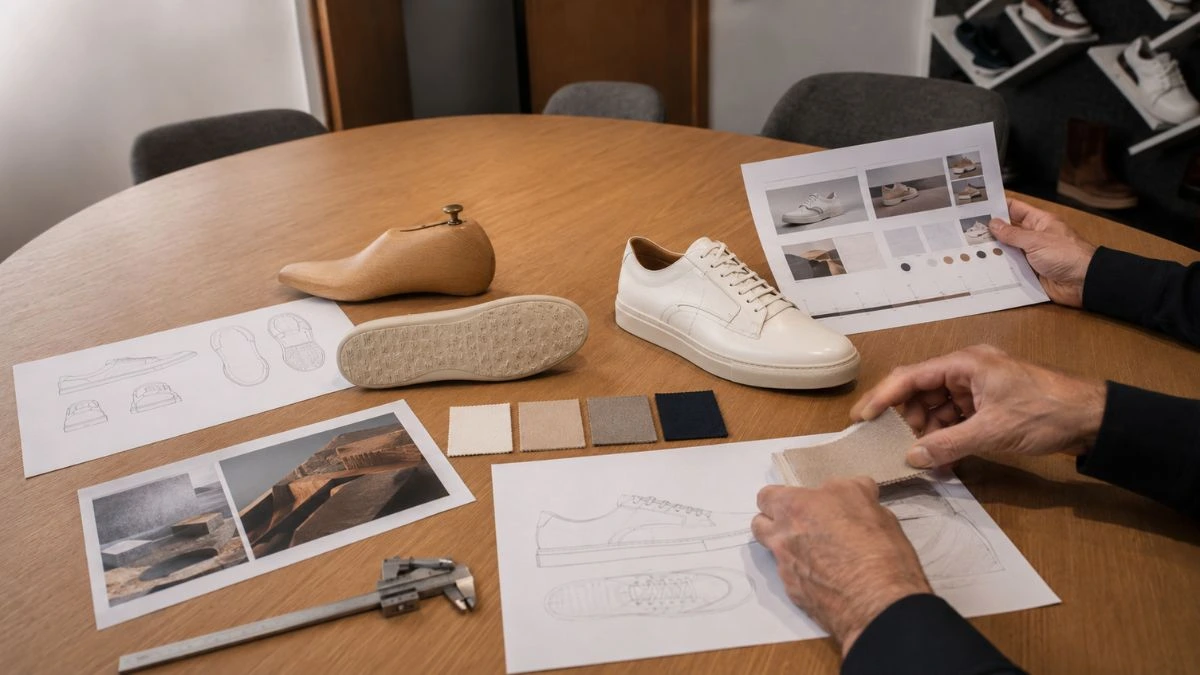
Choosing the right footwear manufacturer begins before the first sample, quotation, or technical meeting. The quality of the initial brief influences how quickly a manufacturer can understand the project, evaluate whether it fits its capabilities, and identify the next development steps.
Many brands make first contact with only a short message, a reference image, or a general request for pricing. This rarely provides enough information for a meaningful assessment. At the same time, a first approach does not require a complete tech pack or a production-ready specification.
Learning how to brief a shoe manufacturer means preparing the right level of information for the current stage of the project. The objective is not to answer every technical question in advance. It is to communicate the brand, product concept, development status, commercial direction, and support required clearly enough for the manufacturer to respond constructively.
Na LG Shoes, a Portuguese fabricante de calçado working exclusively with international B2B clients, the first evaluation focuses on project fit, development needs, expected volumes, timing, and the information already available. This guide explains what brands should prepare before making that initial contact.
TL;DR
This guide on how to brief a shoe manufacturer summarizes what brands should prepare before first contact.
- Introduce the brand, target market, and sales channels.
- Define the product category, intended use, and positioning.
- Explain the current development stage and available assets.
- Share consistent visual and technical references.
- Provide estimated quantities, size range, and target timeline.
- Clarify customization needs and the support expected from the manufacturer.
- Ask for the next evaluation step rather than an immediate final quotation.
Índice de Conteúdos
- Why does the first footwear manufacturing brief matter?
- What should brands explain about their business and project?
- How should a brand describe its footwear concept?
- What development stage is the project currently in?
- Which visual and technical materials should brands prepare?
- Why should brands define the target market and price positioning?
- What should brands communicate about volumes, sizes, and timelines?
- What customization and development support will the brand need?
- How to brief a shoe manufacturer: first contact checklist
- Common mistakes brands make when contacting a shoe manufacturer
- What happens after the first contact with a shoe manufacturer?
- People also ask
- Final thoughts
- Perguntas frequentes
Why does the first footwear manufacturing brief matter?
Understanding how to brief a shoe manufacturer matters because the supplier must evaluate more than the appearance of a shoe. Before deciding whether a project is suitable, the manufacturer needs context about the product category, development stage, expected volumes, market, timing, quality level, and degree of customization.
A structured first brief helps the manufacturer determine:
- Whether the requested product fits its technical capabilities and produção profile.
- Whether the project requires design support, engineering, sourcing, prototyping, or industrialization.
- Which questions must be answered before sampling can begin.
- Whether the proposed quantities may be compatible with factory and supplier MOQs.
- Whether the target timeline is realistic for the current development stage.
- Which team members or suppliers may need to be involved.
A weak brief can lead to repeated emails, broad estimates, and unclear next steps. A strong brief should be concise, consistent, and transparent about what has already been decided and what remains open.
What should brands explain about their business and project?
Before evaluating the calçado concept, the manufacturer needs to understand who the brand is, where the product will be sold, and how the project fits the company’s commercial objectives.
A clear explanation of the brand and project is an essential part of how to brief a shoe manufacturer. It helps the supplier assess whether its capabilities, production profile, and development approach are suitable for the proposed project.
The first contact should explain:
- Whether the business is an established footwear brand, start-up, retailer, agency, buying office, or company entering a new category.
- The countries or regions where the product will be sold.
- The main sales channels, such as wholesale, e-commerce, department stores, marketplaces, or own retail.
- The intended customer and general product positioning.
- Whether this is a first collection, an extension of an existing range, or a replacement for a current supplier.
- Why the brand is contacting that particular manufacturer.
This information helps the supplier understand the project’s scale and expectations. A premium wholesale collection for Germany may require different materials, compliance documentation, margins, and delivery planning from a direct-to-consumer test launch in the United States.
The introduction should remain factual. Brands do not need to send a long company presentation, but they should provide enough background to demonstrate that the request is connected to a defined business objective.
How should a brand describe its footwear concept?
When learning how to brief a shoe manufacturer, brands should describe more than the footwear category. Saying that the project is a sneaker, loafer, boot, sandal, or derby is only the starting point.
The brief should explain:
- The product category and intended use.
- The customer profile and expected wearing context.
- The desired silhouette, proportions, and general design direction.
- The preferred materials, colors, finishes, and comfort level.
- Any important construction or performance requirements.
- Whether the brand wants one style, a product family, or a complete collection.
For example, a premium leather sneaker may be minimalist, fashion-led, lightweight, or technical. Each direction can require different lasts, soles, materials, and development decisions. Brands should therefore annotate references and explain whether each one is relevant for its toe shape, sole profile, materials, fit, or finishing.
Brands planning several related products can review the LG Shoes guide to footwear collection planning to understand how product families, shared components, and launch priorities can be organized before development begins.
What development stage is the project currently in?
One of the most important parts of learning how to brief a shoe manufacturer is stating the current development stage accurately.
A project may begin with:
- A general business idea.
- Mood boards and market references.
- Hand sketches or digital illustrations.
- Technical drawings.
- A physical reference sample.
- A first prototype developed elsewhere.
- A complete tech pack.
- Existing lasts, patterns, molds, or outsole tooling.
Each starting point creates different responsibilities. A brand with only a concept may need support with product definition, materials, construction, and component selection. A brand with technical drawings may need pattern engineering and feasibility review. A brand with a developed sample may need fit correction, industrialization, sourcing, or production transfer.
The manufacturer should not have to guess what is final. Brands should identify which elements are approved, which are preferred, and which remain open to technical recommendations.
This also helps avoid a common misunderstanding: a visual design is not automatically a production specification. Dimensions, fit, grading, material behavior, construction, component compatibility, tolerances, and quality standards still need to be developed and approved.
The LG Shoes overview of footwear design and development explains how a concept progresses through technical evaluation, sampling, fitting, and preparation for production.
Which visual and technical materials should brands prepare?
The first brief should include the most useful materials already available, but brands should not create artificial technical documentation simply to make the project appear more advanced.
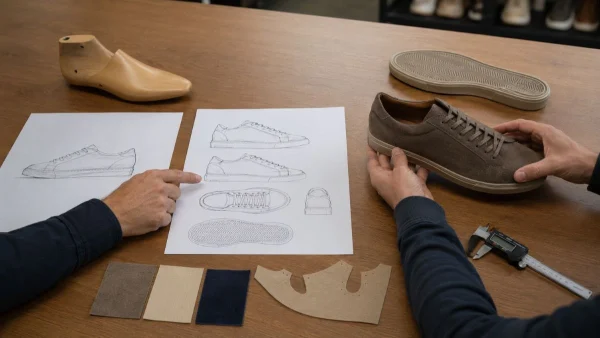
When considering how to brief a shoe manufacturer, brands should select the visual and technical materials that communicate the project most clearly at its current stage.
Useful materials may include:
- Mood boards with a clear and consistent design direction.
- Reference images annotated with the relevant features.
- Original sketches or rendered product views.
- Technical drawings showing lateral, medial, top, heel, and outsole views.
- Reference samples or photographs of existing products.
- Material, color, trim, sole, or packaging references.
- Preliminary specifications, measurements, or fit expectations.
- Existing tech packs, patterns, lasts, or tooling information.
Digital product creation can support footwear visualization and evaluation. As described by World Footwear, these tools are increasingly influencing footwear development. However, brands only need to provide files that communicate the concept and current stage clearly.
A small set of annotated, consistent references is more useful than a large folder of conflicting products. Sensitive designs or proprietary files should be shared through an appropriate method, with confidentiality requirements clarified before disclosure.
Why should brands define the target market and price positioning?
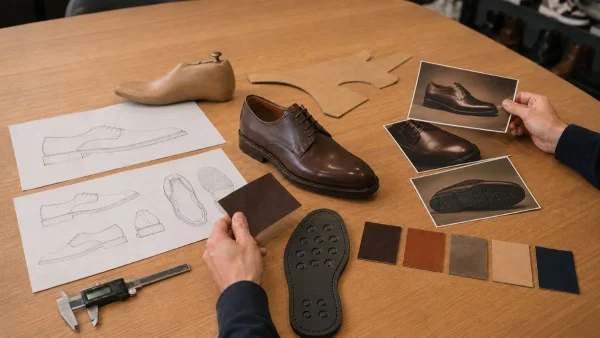
A complete approach to how to brief a shoe manufacturer should include a clear explanation of the target market, commercial positioning, and expected price level.
Materials, construction, finishing, testing, packaging, sourcing, and production complexity must support a commercial position. A manufacturer cannot evaluate the suitability of a concept without understanding the market level the product is expected to reach.
Brands should communicate:
- The intended retail positioning, such as accessible, mid-market, premium, or luxury.
- The target countries and sales channels.
- The expected quality and durability level.
- The target ex-factory range, when a realistic range has already been defined.
- Which product features are essential and which may be adjusted.
A retail price and a manufacturing cost are not the same. The commercial model may include wholesale margins, logistics, duties, marketing, and retailer markups, so brands should explain both their positioning and any realistic target ex-factory range.
Cost expectations must also match the product. Premium materials, custom tooling, low quantities, complex construction, and extensive development create trade-offs. Sharing the commercial position helps the manufacturer recommend a coherent route, not confirm a final price during the first exchange.
What should brands communicate about volumes, sizes, and timelines?
Another practical part of how to brief a shoe manufacturer is providing realistic estimates for quantities, size ranges, and project timing.
Estimated quantities are essential even when the final order has not been confirmed. The manufacturer needs an initial volume range to evaluate production fit, component sourcing, material minimums, and the level of development investment.
The brief should indicate:
- Estimated pairs per style.
- Number of colors or material variations.
- Expected size range.
- Target market sizing system.
- Whether quantities refer to a test order, seasonal order, or annual forecast.
- Potential repeat orders or growth expectations.
Brands should avoid stating only the total collection volume. An order of 1,000 pairs divided across ten styles, four colors, and a wide size range creates a very different production structure from 1,000 pairs of one style in two colors.
Size information matters early because it affects lasts, grading, outsole availability, molds, fit approval, and material consumption. Brands with specific fit standards should mention whether they already have approved lasts, measurements, or reference products. The LG Shoes article on footwear fit consistency explains why lasts, grading, sample approval, and production control must be aligned.
The timeline should include the intended launch, delivery window, or market presentation date. It should not be presented as a confirmed factory deadline before feasibility has been assessed.
Development, sourcing, prototyping, fitting, testing, approvals, material production, and factory planning all influence delivery. Brands can consult the LG Shoes guide to footwear production lead times before setting a realistic launch calendar.
What customization and development support will the brand need?
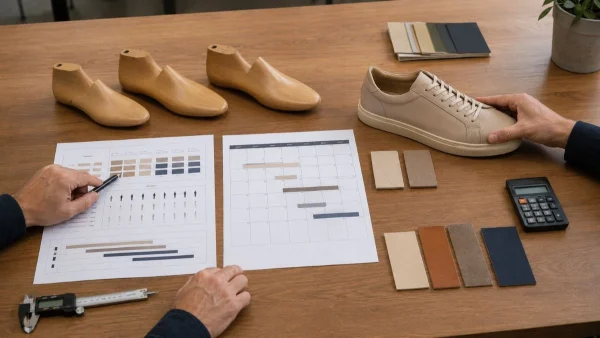
The manufacturer should understand which parts of the project the brand expects to control and where it needs technical support.
The brief should clarify whether the brand requires help with:
- Design refinement or product definition.
- Pattern engineering and grading.
- Last development or fit adaptation.
- Material and component sourcing.
- Outsole selection or custom tooling.
- Construction recommendations.
- Prototype development and fit correction.
- Testing, compliance, labeling, or packaging.
Brands should also state whether they expect an OEM, private label, or collaborative development route. These terms may overlap, so the scope matters more than the label. The LG Shoes comparison of OEM vs private label footwear explains how starting points, responsibilities, customization, and ownership may differ.
A start-up does not need to know every technical solution. It should, however, identify the desired outcome and be transparent about the capabilities it does not have internally.
The manufacturer can then explain which services are available, what information is still required, and whether the project can proceed within the expected commercial parameters.
How to brief a shoe manufacturer: first contact checklist
This checklist explains how to brief a shoe manufacturer by organizing the information required for an effective first evaluation.
| Briefing area | Information to prepare | Why the manufacturer needs it |
|---|---|---|
| Brand background | Business model, markets, sales channels, and current stage. | Helps evaluate project fit and commercial expectations. |
| Product concept | Category, intended use, customer, silhouette, and key features. | Clarifies the technical and design direction. |
| Development stage | Idea, references, sketches, sample, technical drawings, or tech pack. | Defines the development and engineering support required. |
| Visual materials | Focused references, drawings, samples, materials, and component ideas. | Makes the intended product direction easier to interpret. |
| Market positioning | Target customer, countries, retail level, quality, and cost direction. | Guides material, construction, and sourcing recommendations. |
| Estimated quantities | Pairs per style and color, forecast, and repeat-order potential. | Supports MOQ, supplier, and production feasibility checks. |
| Size range | Planned sizes, sizing system, fit requirements, and target market. | Affects lasts, grading, outsoles, fit, and component availability. |
| Timeline | Target launch, presentation, or delivery window. | Allows the manufacturer to assess development and capacity timing. |
| Customization | Materials, soles, branding, packaging, construction, and exclusivity needs. | Shows the likely complexity, investment, and ownership questions. |
| Expected support | Design, engineering, sourcing, sampling, testing, or production support. | Defines responsibilities and the appropriate next step. |
Common mistakes brands make when contacting a shoe manufacturer
Knowing how to brief a shoe manufacturer also means avoiding incomplete, contradictory, or commercially unrealistic requests.
Even promising projects can be difficult to evaluate when the first approach lacks essential information.
Sending one image and asking for a final price
A reference image does not define materials, construction, fit, sole, quantities, size range, testing, packaging, or quality standards. The manufacturer may provide only a broad indication until the specification is clearer.
Providing too many conflicting references
A folder that combines luxury leather shoes, low-cost sneakers, technical outdoor products, and unrelated silhouettes does not communicate a focused product direction. References should support one coherent concept.
Hiding the expected quantities
Brands sometimes avoid discussing volume because they fear rejection. However, the manufacturer cannot assess factory fit, supplier MOQs, or development viability without at least an estimated range.
Requesting speed without explaining the launch plan
A statement such as “we need production in six weeks” does not show whether design, sampling, fit, materials, testing, or approvals have been completed. The timeline must be connected to the actual development stage.
Confusing inspiration with ownership
A reference from another brand can communicate a design direction, but it should not be presented as a product to copy. Brands should identify the functional or visual elements they want to interpret in an original and commercially appropriate way.
Expecting the manufacturer to define the entire business
A development partner can support technical decisions, materials, construction, and feasibility. The brand must still define its customer, market, positioning, commercial objectives, and approval criteria.
What happens after the first contact with a shoe manufacturer?
Learning how to brief a shoe manufacturer does not mean expecting an immediate final quotation or production date. A strong first brief creates the basis for a structured evaluation.
The next steps may include:
- Initial review of the brand, product, quantities, and timing.
- Clarification questions from the manufacturer.
- A meeting to discuss the concept and development route.
- Evaluation of references, materials, constructions, lasts, and soles.
- Definition of the documents or samples still required.
- Preliminary development, sampling, tooling, or sourcing estimates.
- Confidentiality, ownership, and commercial discussions.
- Agreement on the next development phase.
If the project is still broad, the next step may be concept refinement. A more developed project may proceed to feasibility review, costing inputs, pattern work, or prototyping.
As specifications become clearer, the initial brief should evolve into detailed development and production documentation covering approved materials, colors, sizes, quantities, packaging, quality criteria, and delivery requirements.
People also ask
What should I send to a shoe manufacturer?
Send a concise brand introduction, product description, development stage, selected visual references, estimated quantities, size range, target market, positioning, timeline, and the support you expect. Include sketches, samples, drawings, or a tech pack when available.
Do I need a tech pack before contacting a shoe manufacturer?
No. A tech pack can make evaluation more precise, but brands can make first contact with a clear concept and structured information. They should explain which technical documents exist and which areas still require development support.
Can a shoe manufacturer help develop my design?
Some manufacturers provide technical development, pattern engineering, material sourcing, prototyping, fit, and construction guidance. The available support varies, so brands should clarify their needs and ask what the manufacturer includes.
How early should I contact a footwear manufacturer?
Contact should begin early enough to allow for project review, development, sourcing, samples, fit corrections, testing, approvals, and production planning. The required time depends on how developed and complex the product is.
Final thoughts
Understanding how to brief a shoe manufacturer helps brands replace vague first enquiries with structured and productive conversations.
The first brief does not need to solve every technical question. It should explain the brand, product concept, current development stage, visual direction, market position, estimated quantities, size range, timeline, customization needs, and expected manufacturer support.
Clear information allows the manufacturer to evaluate project fit, identify risks, ask better questions, and recommend an appropriate development route. It also helps the brand compare potential partners on the basis of capability and process rather than a premature price estimate.
Na LG Shoes, each project is reviewed according to its actual product, commercial, and development requirements. As a fabricantes Portugueses de calçado, LG Shoes supports international B2B clients through technical development, material and component sourcing, prototyping, private label production, OEM manufacturing, and long-term collaboration.
Brands preparing a new footwear project can contact LG Shoes with an initial brief to discuss project fit and the next appropriate development steps.
Perguntas frequentes
Can I contact a shoe manufacturer without a physical sample?
Yes. A physical sample can help communicate proportions, fit, materials, or construction, but it is not always required for the first contact. Clear sketches, annotated references, technical drawings, or digital files may provide an effective starting point.
What quantity information should a footwear brand provide?
Provide an estimated number of pairs per style and color, the planned size range, whether the order is a test or seasonal launch, and any annual or repeat-order forecast. Estimates can be revised later, but the manufacturer needs an initial range for feasibility.
Should a brand share its target price in the first brief?
A realistic target ex-factory range can help guide materials, construction, and development decisions. The brand should also explain its retail positioning and quality expectations, because the consumer price alone does not define the manufacturing target.
How can a brand protect a footwear concept during the first contact?
Share only the information needed for the initial evaluation and request an appropriate confidentiality agreement before disclosing sensitive designs, technical files, or proprietary assets. Ownership and usage rights should be documented as development progresses.
What if the brand is unsure whether it needs OEM or private label footwear?
Explain the product idea, available assets, desired customization, and internal development capabilities. The manufacturer can then clarify whether the project is closer to OEM, private label, or a collaborative development model.
What happens if the project is not ready for sampling?
The manufacturer may identify the missing decisions, drawings, references, quantities, cost parameters, or technical inputs required before sampling. The next step may be concept refinement, product development, material selection, or preparation of a more detailed brief.


 Portuguese

