
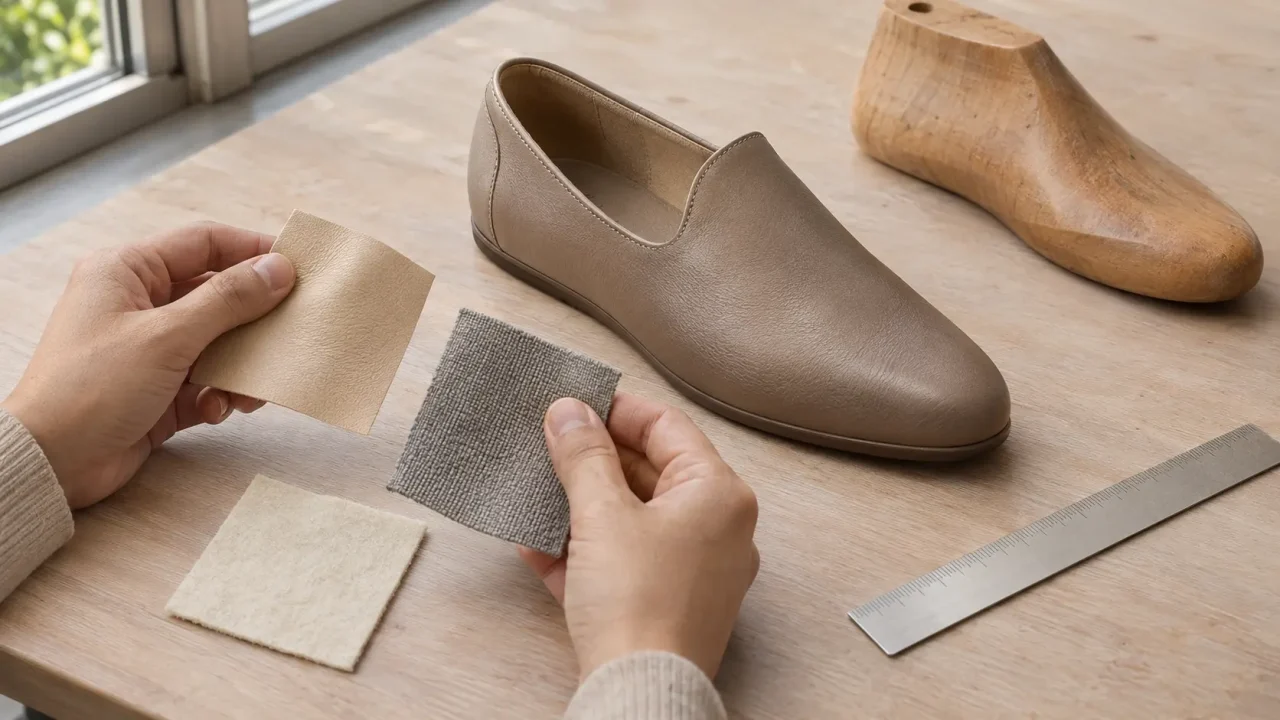
Footwear lining materials deserve attention before the first sample is made. Although the exterior usually defines a collection’s visual direction, the lining helps shape the experience inside the shoe.
A swatch that feels soft on a desk may behave differently when stitched, shaped around a last and combined with reinforcements. Thickness, surface finish, seam placement and the surrounding components all need consideration.
For footwear brands, the aim is to select a lining that supports the intended product and can be evaluated consistently during development. That requires a clearer brief than simply requesting a leather lining or a breathable textile.
This guide explains what to define, compare and document before sampling, so material discussions lead to useful product decisions.
TL;DR
Evaluate the lining as part of the complete shoe:
- Start with intended use and wearing conditions.
- Identify the exact material, finish and backing.
- Distinguish the upper lining from the insock and structural insole.
- Check thickness, seams and internal volume together.
- Assess moisture behaviour beyond touch or appearance.
- Agree appropriate wear and colour fastness checks.
- Identify substitute materials in development samples.
- Record the approved reference and assess later substitutions.
Table of contents
- What does a footwear lining do?
- What should brands define before choosing a lining?
- How should brands compare footwear lining materials?
- How do thickness, seams and construction affect fit?
- What should brands check about moisture and comfort?
- Which wear and colour fastness questions matter?
- Comparison table: questions for lining selection
- What should the sample and approval record confirm?
- People Also Ask
- Final thoughts
- Frequently asked questions
What does a footwear lining do?
A shoe lining forms part of the interior around the foot. Depending on the design, it may cover the forefoot, quarters, tongue or heel area, with different materials used in different zones.
The lining is not the same component as the insock, which covers the surface beneath the foot. Nor is it interchangeable with the structural insole used in many constructions. Clarifying terminology prevents a supplier reference being applied to the wrong component.
Its contribution depends on the assembly. A smooth heel lining, a padded textile collar and an unpadded forefoot lining perform different roles, even within one trainer.
Brands should therefore discuss the interior by location. Asking which component touches the heel, where padding begins and how edges are finished provides more useful information than approving the shoe as fully lined.
What should brands define before choosing a lining?
Begin with the intended use. A dress shoe worn occasionally, an everyday trainer and a boot developed for wetter conditions may require different interior priorities.
The brief should describe likely wearing duration, climate, sock use, fastening and the intended fit. These inputs help the development team identify which material properties need closer attention.
For example, a slip-on expected to be worn with thin socks needs an explicit heel-retention review. Adding a softer or thicker lining without checking the complete sample could change how securely it holds the foot.
Agree the commercial constraints too: target quantities, colourways, sourcing availability and the price assumptions used for comparison. A proposed lining is only useful if it can be sourced in the required specification.
Where the wider material brief is still open, the LG Shoes guide to footwear material selection explains how component decisions connect with manufacturing and product development.
How should brands compare footwear lining materials?
Compare identifiable specifications rather than broad material families. Leather, textiles and synthetic alternatives each include products with substantially different surfaces, thicknesses and constructions.
Leather linings
For leather lining, request the supplier reference, leather type, thickness range, finish and colour. Review flexibility, surface feel and consistency in representative pieces. The word leather alone does not establish suitability for a particular interior.
A brand comparing two pale leather linings should check whether they have different finishes or thicknesses before assuming they will create the same sample.
Textile linings
For textile lining, identify fibre composition, fabric construction, weight, stretch direction and any backing or lamination. A mesh surface can look open while the complete material includes additional layers that need assessment.
Also inspect the cut edges and proposed seam treatment. A fabric that feels agreeable as a swatch may need different handling when incorporated into a tongue or heel panel.
Synthetic and composite linings
For a synthetic lining or microfibre-based option, establish the actual composition, coating and backing. Terms such as microfibre or leather alternative are not a complete performance specification.
Ask what evidence supports the proposed application, then compare representative samples under the same agreed conditions. Avoid choosing solely because one option is described as premium, technical or natural.
Keep cost comparisons like for like. If one quotation includes a backed material and another covers only the face layer, the two figures describe different supplies. Confirm whether the price covers the same finish, colour preparation and quantity assumptions before using it to select a candidate.
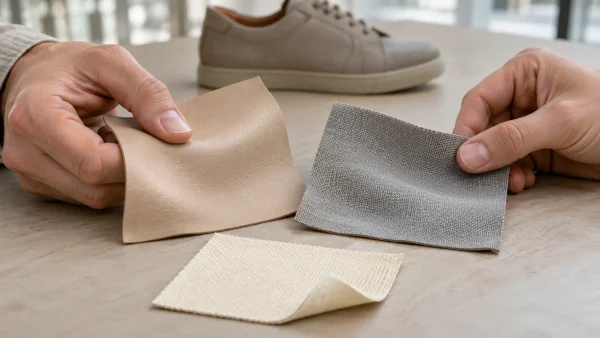
Retain the swatches used in the discussion and give each a reference. A photograph can help identify them, but it cannot communicate thickness or surface feel reliably. Keeping the physical reference available makes later sample review more precise.
How do thickness, seams and construction affect fit?
The lining occupies space inside a shoe. Changing its thickness, padding or stiffness can alter internal volume, local pressure and the way the foot is retained.
Evaluate these changes with the upper, last and reinforcements. A thicker heel package may affect the opening, while an additional seam in the forefoot can create a local difference that is not obvious from external measurements.
Seam bulk, folded edges, overlaps and lining tension also deserve attention. Ask the manufacturer to identify likely contact areas and review them in a representative sample, rather than judging only the visible finish.
For a soft slip-on, record whether the proposed interior arrangement introduces folds or pressure during walking. Do not assume that a flexible exterior guarantees an equally suitable interior.
Because these decisions interact with the last and the rest of the build, the LG Shoes article on footwear fit consistency provides useful background for assessing the complete product.
What should brands check about moisture and comfort?
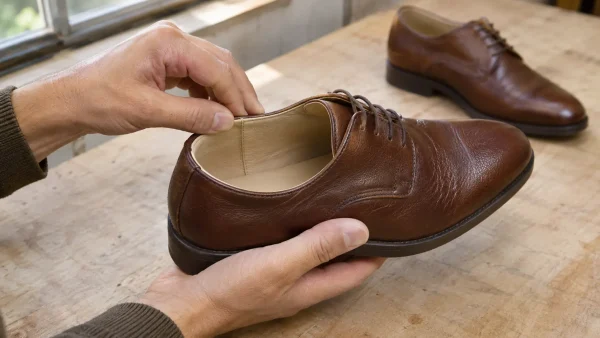
Softness, cushioning and moisture management are different properties. A lining can feel pleasant in a brief hand assessment without demonstrating how the interior will behave during extended wear.
Ask which properties are relevant to the intended use. Water vapour permeability concerns transmission through a material, while absorption concerns the moisture it takes up. Neither should be inferred from a photograph or a material name.
The surrounding assembly matters too. Backings, foam, adhesives and the upper can influence the behaviour of the interior combination. Evidence for an individual layer should be interpreted in relation to the construction being proposed.
For an everyday trainer, discuss whether the assessment covers only an unlaminated textile or the actual lining package. If those differ, record what still needs checking.
Use supplier data and appropriate testing alongside structured wear assessment. Ask the development team or laboratory which approach will answer the product question; a single material result cannot describe every aspect of whole-shoe comfort.
Which wear and colour fastness questions matter?
Lining selection should address the wear expected in the relevant zones. Heel areas, for instance, deserve attention where movement and repeated entry may create rubbing.
Discuss abrasion resistance, seam integrity and surface changes with the manufacturer. Define what will be evaluated and which evidence is required, rather than requesting a durable lining without an agreed basis for assessment.
Colour needs a separate review. A lining that matches the design visually still requires consideration of colour fastness, including potential transfer during rubbing or exposure to moisture. ISO 17700:2019 addresses testing for colour transfer during dry or wet rubbing and for bleeding.
As a broader reference, ISO/TS 20953:2024 on footwear linings and insocks establishes performance requirements and associated test methods for assessing component suitability for intended use. The appropriate requirements should be agreed for the actual product; mentioning a specification does not establish that a sample has passed it.
For a dark lining beside pale components, ask how transfer risk will be evaluated before approval. A satisfactory visual match does not answer that question.
Comparison table: questions for lining selection
Use the same questions for every candidate; this is an evaluation checklist, not a ranking of material types.
| Review area | Question | Evidence to agree |
|---|---|---|
| Material identity | What exactly is supplied? | Reference, composition and finish. |
| Fit | How does it affect volume? | Thickness and complete sample review. |
| Moisture | What is the assessment based on? | Relevant data for the proposed assembly. |
| Wear | Which areas face rubbing? | Agreed abrasion and seam checks. |
| Colour | Could colour transfer? | Relevant fastness assessment. |
| Supply | Can the specification be repeated? | Availability and approved reference. |
What should the sample and approval record confirm?
Before sampling, agree which lining the prototype will contain and what that round is meant to validate. If the final material is unavailable, identify the substitute explicitly.
A substitute may allow discussion of a silhouette, but it may not represent final fit, feel or moisture behaviour. Mark those conclusions as open until a sufficiently representative sample is reviewed.
During assessment, combine visual inspection with the agreed fitting procedure. Check folds, exposed edges, internal joins, heel hold and any reported pressure. Record observations against the sample version and intended wearing conditions.
When comparing two candidate linings, try to keep the other sample variables controlled. If the last, upper material and padding also change, a different fit cannot confidently be attributed to the lining alone. Ask the development team which comparison will isolate the question, and record any unavoidable differences.
Use a simple approval record:
- Style, colourway, sample version and date.
- Lining supplier, article reference, colour and finish.
- Thickness, backing and padding where relevant.
- Material locations and construction details.
- Required assessments, results and unresolved points.
- Approval status, responsible person and retained reference.
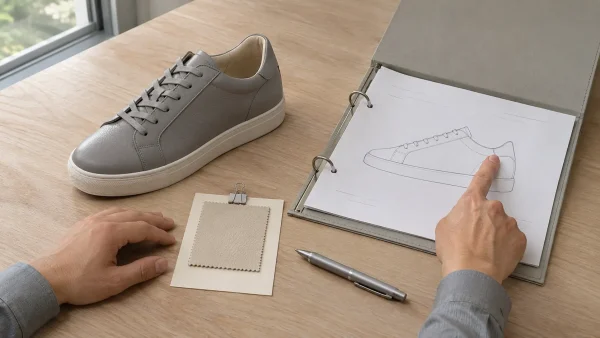
The LG Shoes guide to the footwear sampling process explains why different rounds should answer defined questions. Once decisions are approved, update the footwear tech pack so the document and sample describe the same product.
If the lining changes later, assess the impact before treating it as an equivalent replacement. A similar colour does not establish matching thickness, finish or performance.
People Also Ask
What materials are used for shoe linings?
Footwear linings can use leather, textiles, synthetic materials or composites. Different zones may use different specifications. Selection should follow intended use and evidence for the actual material.
Is leather lining better than textile lining?
Neither category is universally better. Compare the identified materials for the proposed design, including thickness, surface behaviour, moisture properties, wear requirements and manufacturing compatibility.
Does a breathable lining make the whole shoe breathable?
Not automatically. Other layers and the complete construction influence moisture transmission. Material data should be considered alongside the assembly and the intended wearing conditions.
Can lining thickness change shoe fit?
Yes. Thickness, padding and seam bulk can affect usable internal space and local pressure. Relevant changes should be checked in a representative sample on the intended last.
Final thoughts
The most useful lining decision connects a defined material with a defined product requirement. Start with intended use, compare identifiable specifications and confirm how the proposed interior works in the complete sample.
For brands, this creates a clearer conversation with the manufacturer: what is being selected, what evidence supports it and which points remain open before approval.
LG Shoes works with international brands on footwear development and manufacturing in Portugal. To discuss a project, share the intended product, interior priorities and current material references with LG Shoes, a footwear manufacturer in Portugal.
Frequently asked questions
Should the lining be specified before the first prototype?
Define the intended specification and any open decisions before sampling. If a substitute is used, record it and agree which conclusions need confirmation with the proposed production material.
Can different areas of a shoe use different linings?
Yes. The heel, forefoot, tongue or collar may use different materials or treatments. Document their locations and assess the joins so the complete interior remains coherent.
What information should a lining supplier provide?
Request the article reference, composition or leather description, finish, colour, thickness and backing details where relevant. Agree which technical data and representative samples are needed for the proposed application.
Can the same lining be used across several styles?
It may be possible, but each style’s last, pattern, construction and use need review. Approval in one model does not automatically establish suitability in another.
What should happen if the approved lining becomes unavailable?
Identify a proposed replacement and compare its specification and supporting evidence. Agree whether targeted testing, fitting or a revised sample is needed before authorising the substitution.
Is the insock included when discussing the lining?
Terminology can vary, so list it separately. Identify the lining around the foot, the insock under the foot and any other insole or footbed components to avoid incomplete specifications.


 English


