

Footwear colour approval turns a visual intention into a documented product decision. For brands developing a collection, that decision needs to remain clear as colour moves from a reference to material submissions, components and complete samples.
A material swatch, a colour code and a photograph can each communicate something useful. They do not necessarily define the same material, finish or stage of approval.
Confusion begins when one team approves a colour direction while another interprets the message as permission to proceed with every component. A clearer process identifies what has been reviewed, under which conditions and what remains open.
This guide explains how footwear brands can organise references, evaluate submissions and record approvals with their manufacturer before production.
TL;DR
Keep the colour reference and approval scope connected:
- Agree an identifiable colour target.
- Record the reference material and finish.
- Review each component’s intended colour relationship.
- Define suitable viewing conditions.
- Identify every material submission and sample version.
- Assess the proposed combination in the complete shoe.
- Separate appearance approval from performance assessment.
- Document decisions, exceptions and later changes.
Table of contents
- What does footwear colour approval actually confirm?
- Which colour reference should the brand and manufacturer use?
- Why should different materials be reviewed separately?
- How should lighting and viewing conditions be agreed?
- What should a material submission confirm?
- What should brands review in the complete sample?
- What belongs in the colour approval record?
- How should changes and repeat orders be handled?
- Comparison table: approval stages and their scope
- People Also Ask
- Final thoughts
- Frequently asked questions
What does footwear colour approval actually confirm?
An approval should identify a particular reference or submission and the decision attached to it. It may confirm a colour direction, the appearance of a proposed material or the combination shown in a finished sample.
Define those stages before sending the first submissions. For example, a brand might approve a navy textile for the upper while leaving the lace colour and outsole finish open. The record should make that scope explicit.
Use clear statuses such as reference only, approved, revise and resubmit, or pending information. If approval depends on a condition, state the condition and who must close it.
Avoid messages such as “colour looks good” without a submission reference. A precise reply identifies the style, colourway, component and version reviewed, then explains what may proceed. This helps suppliers work from the same decision rather than interpreting a general reaction.
Which colour reference should the brand and manufacturer use?
Start with an agreed colour reference. This could be a physical colour standard, a retained material sample or an identified component from an earlier development. Record which item acts as the target and which items provide background inspiration.
A commercial colour code can support communication, but specify its reference system and physical format. A code copied from a presentation should not silently become an exact manufacturing requirement for every material.
Where the original target uses a different substrate, agree how it will be interpreted. Matching a printed card to suede, for example, requires discussion of the proposed surface and the acceptable visual result.
Keep a reference register with identification, date and location. Where working copies are distributed, confirm that they represent the intended target and identify which retained reference governs disagreements.
Handle physical references carefully and replace damaged or visibly altered copies through an agreed process. An old swatch with an uncertain history is a weak basis for a new decision.
The reference should remain accessible to the people evaluating submissions. Having a colour name in the brief is less useful if the supplier and brand cannot identify the actual target behind it.
Why should different materials be reviewed separately?
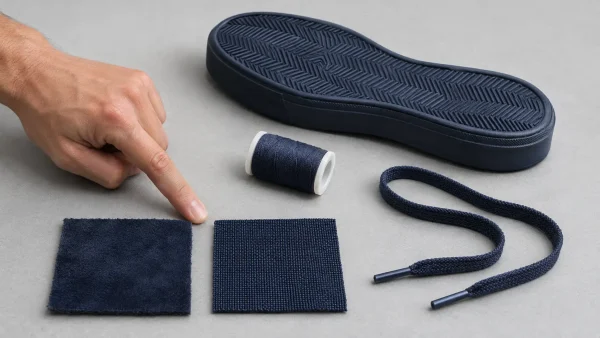
One colourway can contain leather, textile, thread, laces, coated hardware and sole materials. Define the intended relationship between them instead of assuming that one code resolves the entire shoe.
Surface texture, gloss and orientation can affect perceived appearance. Suede viewed in different nap directions, for instance, can present different shades without representing a different colour specification.
First assess each candidate against its relevant reference. Then review adjacent components together. An upper and thread may be intended to coordinate closely, while the lining or outsole may deliberately contrast.
Make these relationships visible in the brief: match, coordinate, contrast or follow a separate reference. These are suggested communication labels; agree the terminology with the manufacturer.
If a sole colour is already fixed by an available component, establish whether it becomes the starting reference for adjacent materials. Otherwise, teams may develop an upper against a target that cannot be reproduced in the chosen sole.
For the wider sourcing discussion, the LG Shoes guide to footwear material selection explains how material choices connect with product development and manufacturing decisions.
How should lighting and viewing conditions be agreed?
Define the assessment conditions before comparing submissions. A desk beside a window and a meeting room under different lamps may produce inconsistent judgements.
Agree relevant light sources, sample positioning and a neutral viewing background. Where colour matching is critical, ask the manufacturer or colour specialist about controlled assessment facilities.
SATRA describes the use of multiple light sources for standardised visual evaluation in its overview of colour assessment cabinets. This illustrates why recording the viewing conditions matters; it does not establish which equipment a particular factory uses.
Metamerism describes a match that holds under one light source but changes under another. Where different materials must coordinate, agree which additional lighting conditions should be checked and how a disagreement will be resolved.
Photographs remain useful for identifying a submission, marking a component or communicating feedback. However, ordinary phone images and screens should not silently replace an agreed physical or controlled digital assessment process.
If instrumental measurement is proposed, agree its method, setup and acceptance criteria with competent technical support. A colour-difference number without that context is not a complete approval rule.
What should a material submission confirm?
Every material colour submission needs an identity. Include the supplier article, component, colour reference, submission version and date, together with any finish or backing that defines the proposed supply.
For dyed textiles, a small development submission may be described as a lab dip. Other suppliers may provide leather cuttings, thread cards or sample components. Agree the purpose of the item rather than relying only on its label.
Review the appearance of the material actually proposed. If a temporary finish or alternative substrate has been used, identify it and limit the conclusions accordingly.
Check whether the submission represents a development trial or the proposed production supply. Agree which later checks will connect approved development materials with incoming production materials.
Give feedback that can be acted on. Specify the reference and location of the issue, then request a revised submission where necessary. Keep previous versions identifiable so a later delivery is not compared against an obsolete candidate.
Build this exchange into the calendar. The LG Shoes article on footwear production lead times explains how material availability, revisions and approval timing influence project planning.
What should brands review in the complete sample?
The complete footwear sample brings the selected components together. Use it to assess the intended colour relationships across the upper, stitching, laces, lining, branding and sole.
Confirm which components use the proposed production specification. A prototype made with substitute laces or an available sole colour may help assess proportions while leaving those colour decisions unresolved.
Review the pair together and inspect adjacent panels and visible edges. Where a finish changes between the material submission and the assembled shoe, discuss the cause and agree what the production reference should represent.
The sample should also be assessed against the documented colourway, so that an attractive combination is not mistakenly approved for the wrong style or version.
Keep appearance and performance decisions distinct. A satisfactory visual match does not confirm colour fastness, resistance to staining or other use-related properties. Agree relevant assessments separately for the proposed materials and intended application.
The LG Shoes guide to the footwear sampling process provides context for deciding what each sample round can meaningfully validate.

What belongs in the colour approval record?
An approval record should connect the decision with the exact object assessed. A concise shared document can be more useful than a long email chain with unidentified attachments.
Include:
- Style code, colourway and component location.
- Target reference and proposed supplier article.
- Material, finish and relevant surface details.
- Submission or sample version and date.
- Agreed viewing conditions and assessment basis.
- Decision, conditions and remaining open points.
- Approver, approval date and retained reference location.
- Required next action and responsible person.
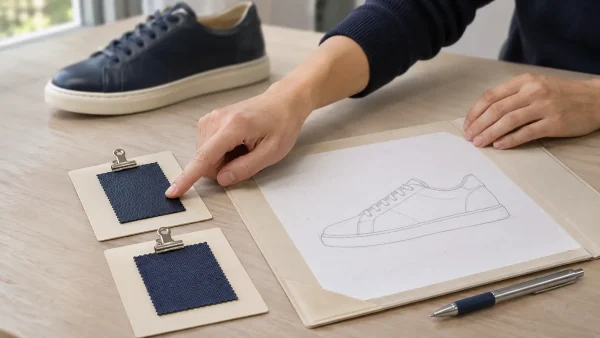
For example, record that the upper material is approved for the specified colourway, while the lace revision remains pending. Avoid describing the whole shoe as approved when the decision covers only one component.
Consolidate internal comments before sending the official response. Design, product and buying teams may contribute, but the manufacturer needs one coordinated decision and a named route for clarification.
Update the footwear tech pack once a decision changes the specification. The retained reference, sample and current document should identify the same approved direction.
Agree with the manufacturer which decisions authorise material ordering or progression to the next stage. Colour approval should have a defined scope rather than being treated as automatic permission for every remaining operation.
How should changes and repeat orders be handled?
A different supplier article, finish or material batch deserves assessment against the agreed reference. Establish the review route before substitutions reach production.
For repeat orders, identify the retained master and the previous approved specification. Do not rely solely on a photograph of the earlier delivery or an informal description such as last season’s brown.
Ask which incoming-material and production checks will address the relevant colour relationships. Define how exceptions are reported, who decides whether they are acceptable and which reference samples should be retained.
If the brand changes a colour after approval, document the new instruction and review its effect on materials already ordered, sample requirements and timing. This makes the commercial consequences visible before the revision proceeds.
The objective is a controlled comparison with an agreed target. It is not an unsupported promise that every material and production run will look identical under all possible conditions.
Comparison table: approval stages and their scope
Agree what each stage confirms before treating it as permission to proceed.
| Stage | Review | Record |
|---|---|---|
| Reference | Intended colour target. | Identity and scope. |
| Material | Proposed surface and finish. | Supplier article and version. |
| Complete sample | Component relationships. | Approved and open details. |
| Production supply | Materials against the agreed reference. | Checks and exceptions. |
People Also Ask
What is footwear colour approval?
It is the documented acceptance of an identified colour reference, material submission or sample for an agreed purpose. The record should state what was reviewed and what remains open.
Can one colour code cover every shoe component?
A code can communicate a target, but each component still needs an appropriate material reference and assessment. Define whether components should match, coordinate or contrast.
Why can matching materials look different under another light?
Some material combinations match under one light source but differ under another. This is called metamerism and should be considered when agreeing relevant assessment conditions.
Is swatch approval the same as finished shoe approval?
No. A swatch decision concerns the identified material and its agreed scope. The complete sample still needs review of component relationships and any unresolved specifications.
Final thoughts
Effective footwear colour approval depends on clear references, suitable assessment conditions and decisions that can be traced to the material or sample reviewed.
Start with the intended colour relationships, identify each submission and document the approval scope. Keep changes visible as the project moves towards production.
LG Shoes works with international footwear brands on development and manufacturing in Portugal. Share your collection direction, available references and open material questions with LG Shoes, a footwear manufacturer in Portugal to discuss the next development steps.
Frequently asked questions
Can development start before the final colours are approved?
Yes, provided the purpose of each sample is defined and temporary materials are identified. Record which colour decisions remain open and when representative submissions must be reviewed.
Who should give the final colour approval?
The brand should name an authorised approver or coordinated approval team. Agree who consolidates feedback and communicates the official decision to the manufacturer.
Should every colourway have a physical sample?
Agree the sampling plan according to material differences, component combinations and project risk. One approved colourway does not automatically validate every other combination.
What should happen if a submission is close to the target but not acceptable?
Identify the submission, describe the issue against the agreed reference and request a revision. Keep the current status explicit and record any exception separately if the brand decides to accept it.
Does visual colour approval confirm colour fastness?
No. Visual approval addresses appearance under agreed conditions. Colour fastness and potential transfer require separate assessment appropriate to the material and intended use.
How should an approved colour reference be retained?
Keep it identified, protected and accessible to the relevant teams. Record its relationship to the approved material and sample, and agree how damaged or altered references will be replaced.


 English


