
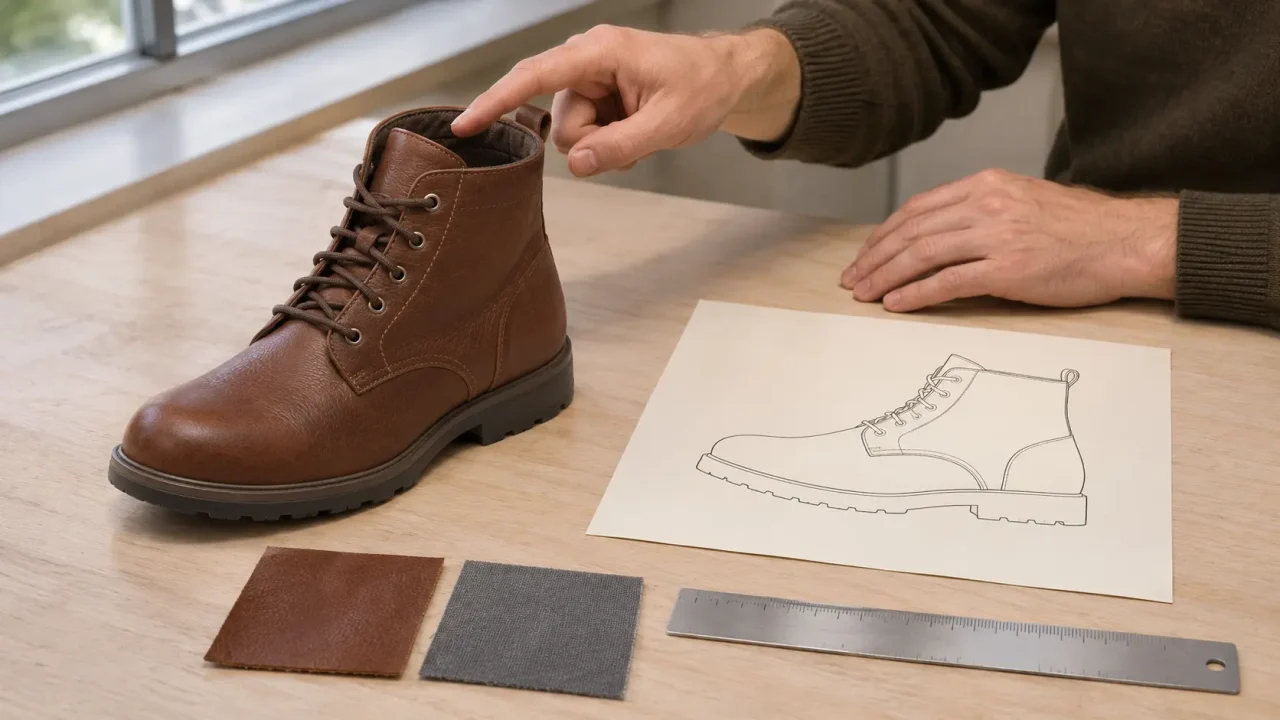
Waterproof footwear development starts with an agreed use requirement, before a material is selected or a prototype is approved. For footwear brands, the useful question is how the complete product should perform in the conditions it is being developed for.
A leather finish, a membrane reference and a photograph of boots on wet paving communicate different things. None replaces a defined assessment plan for the proposed shoe.
Problems arise when a visual development sample is treated as performance approval, or when material information is assumed to cover seams, openings and assembly. A clearer brief separates these decisions and identifies the evidence required.
This guide explains what brands should discuss with their manufacturer before sampling, from intended exposure and construction details to testing, approval records and production controls.
TL;DR
Define the requirement before approving the solution:
- Describe the intended use and water exposure.
- Agree what the proposed performance claim means.
- Review materials and construction together.
- Identify openings, seams and possible water paths.
- Separate water protection from moisture management.
- Choose representative samples for assessment.
- Agree the method, conditions and acceptance criteria.
- Record decisions and control later changes.
Table of contents
- What should a waterproof footwear development brief define?
- How should brands define the intended performance claim?
- Why should materials and construction be reviewed together?
- Which design details can create water entry paths?
- How should fit and moisture management enter the brief?
- What should the water resistance assessment plan include?
- Which samples should represent the proposed specification?
- What should approval and production records confirm?
- Comparison table: decisions to define before sampling
- People also ask
- Final thoughts
- Frequently asked questions
What should a waterproof footwear development brief define?
Start with the product category, wearer and intended environment. An urban ankle boot for intermittent rain presents a different development question from footwear intended for repeated contact with standing water.
Describe expected exposure: splashes, wet ground, rainfall or immersion, together with duration, movement and the relevant height on the shoe. Include foreseeable limits, such as water entering through the top opening. A mood board cannot communicate these conditions precisely.
For example, a brand may want a leather lace-up boot with a slim profile for everyday winter use. Before sampling, clarify whether its priority is occasional wet-weather use or a more demanding water exposure requirement. The answer can affect the tongue, internal layers and assessment plan.
Separate confirmed requirements from questions for technical review. The manufacturer needs a clear target, but the initial brief need not prescribe a solution before feasibility has been discussed. Record who will resolve each open decision.
Send a short written use scenario alongside the design references. State what the footwear is intended to do, what is outside the brief and which requirements take priority if the proposed silhouette creates a technical constraint.
How should brands define the intended performance claim?
Do not rely on the words waterproof, water-resistant or water-repellent as a complete specification. Agree the intended product statement and the conditions against which it must be supported.
A surface treatment that makes droplets bead demonstrates a surface effect. It does not establish how the assembled shoe will respond during movement or prolonged exposure. Equally, information about an internal barrier should not silently become an unrestricted promise about the finished product.
Draft the intended claim early and discuss the supporting evidence with the manufacturer and a competent testing partner. Keep any limits connected to the claim rather than adding them after the product has been developed.
If the claim changes, review the specification and assessment plan before continuing. A stronger marketing statement may require a different development approach. Avoid assigning universal exposure times or pass thresholds without an agreed technical basis for the particular footwear.
Why should materials and construction be reviewed together?
A waterproof footwear construction proposal needs review as an assembly. Upper materials, lining systems, barriers, joining methods and the sole connection each have a role in the proposed design.
Request identifiable supplier articles and relevant technical information for the actual materials being considered. Distinguish a material test result from evidence about the finished shoe. Check whether the available information concerns the proposed thickness, finish and backing rather than a related product.
If a membrane system is proposed, discuss its integration with the upper, lining and assembly sequence. Do not assume that every solution requires the same membrane arrangement or that one construction name fixes all the details.
The LG Shoes overview of waterproof shoe construction provides a starting point for discussing the proposed approach. Confirm the specification for the individual project.
For broader sourcing decisions, the guide to footwear material selection explains why materials must be considered alongside manufacturing requirements.
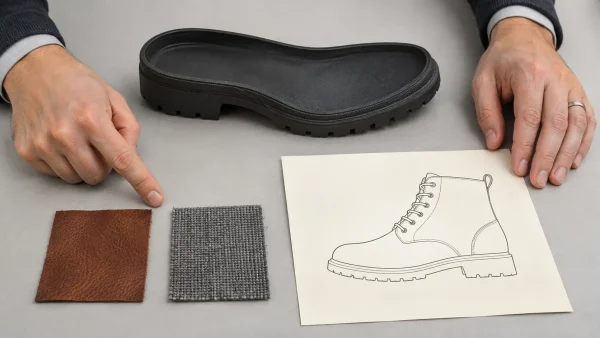
Which design details can create water entry paths?
Review where water could reach the foot space, not only the largest visible material panels. Ask the technical team to identify relevant seams, joins, openings and transitions in the proposed design.
Tongue construction and its connection to the quarters deserve particular attention. So do zips, elastic panels and decorative stitching where present. Check the position of any intended protective boundary against the exposure height in the brief.
A label or trim attachment can introduce a route through layers that were intended to remain protective. Threads and other absorbent components may also create wicking paths. Ask how such details will be addressed and checked in the assembly.
Consider a revised design with an added side zip. Even if the upper material stays unchanged, the new opening warrants technical review. The earlier sample should not automatically represent the altered version. Include these changes in the drawings and component list before the next sample round.
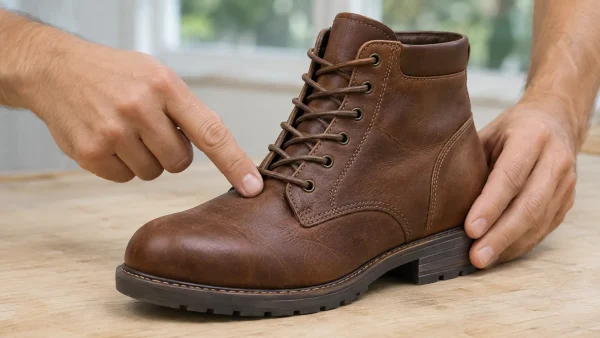
How should fit and moisture management enter the brief?
Keeping external water out is a different question from managing moisture generated inside the footwear. Discuss both requirements so that a water protection target does not become an unsupported comfort promise.
Define the intended wearer activity, likely wearing duration and proposed sock use. Ask which evidence is relevant to moisture management in the complete assembly. A supplier’s material description alone should not be presented as proof of the finished shoe’s wearing experience.
Include fit review when the proposed internal layers change. For example, substituting a lining system during development may affect internal volume and require another fit assessment. Review the complete sample rather than judging a loose swatch for softness alone.
Keep feedback specific: heel retention, forefoot space, tongue position and any pressure points noticed in the agreed fit review. These observations inform development, but they do not replace water resistance assessment. Record the two decisions separately so that neither is mistaken for approval of the other.
What should the water resistance assessment plan include?
Agree the whole-shoe water resistance assessment before ordering the samples intended for testing. The selected method must suit the footwear and the question the brand needs answered.
For example, SATRA TM230 evaluates water resistance by flexing suitable footwear in water at a defined level and monitoring penetration. Its published scope includes limitations, so it should not be prescribed indiscriminately for every design.
Ask the testing partner to confirm the method and edition, applicable sample preparation, exposure conditions, assessment endpoint and acceptance criteria. Clarify whether conditioning, ageing or other pre-treatment is needed for the intended requirement.
Define what will be recorded. Depending on the assessment, observations may concern penetration into the foot space, water uptake or other agreed outcomes. Do not treat these as interchangeable measurements.
Also agree who provides samples, pays for assessments, receives reports and authorises revisions. The brief should connect a result to a decision, not simply request a test certificate with no defined scope.
Request an explanation of any departure from the agreed plan. If a different sample preparation or assessment condition is used, establish what the result can support before approving the product or reusing the report.
Which samples should represent the proposed specification?
Identify what each sample round is expected to validate. An early appearance prototype may help review proportions while using temporary materials. It should not be presented as performance evidence for components it does not contain.
For assessment samples, record the upper, lining or membrane system, seams, joining materials and sole specification actually used. Note any substitution before testing and agree whether it limits the conclusions.
Discuss the sample selection with the manufacturer and testing partner, including quantities, sizes and variants where relevant. A result for one design is not automatic evidence for every size, colourway or material option. Assess which differences could affect performance and how they will be covered.
The LG Shoes guide to the footwear sampling process helps distinguish sample purposes. Build time for assessment, investigation and revision into the plan; the guide to footwear production lead times explains the wider scheduling dependencies.
What should approval and production records confirm?
Retain a waterproof footwear approval record that identifies the product and the evidence reviewed. It should make the approved scope understandable to someone outside the original email discussion.
Include:
- Style, version, size and relevant variant.
- Intended use, exposure and proposed claim.
- Material articles and construction specification.
- Assessed sample identity and any substitutions.
- Method, conditions, report reference and result.
- Approval status, open points and responsible approver.
- Required production checks and change review route.
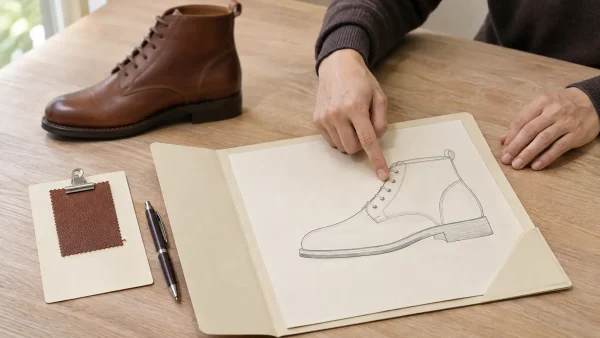
Update the footwear tech pack when an approved decision changes the product. The retained sample, report and current specification should describe the same version.
Before production, agree which material and process controls will help maintain that specification. Establish the review route for a changed supplier article, seam arrangement or joining process. Development assessment should inform production controls, not be treated as a guarantee for every later pair.
Comparison table: decisions to define before sampling
Use these questions to identify missing decisions before the first representative samples are made.
| Area | Question | Record |
|---|---|---|
| Use | Which exposure is intended? | Conditions and limits. |
| Build | Which assembly is proposed? | Materials and joins. |
| Sample | What does it represent? | Version and substitutions. |
| Assessment | How will it be evaluated? | Method and criteria. |
| Approval | What may proceed? | Decision and open points. |
People also ask
What is waterproof footwear development?
It is the process of defining a water protection requirement, developing the proposed footwear assembly and evaluating representative samples. The brief should connect intended use, construction, assessment and approval.
Does a waterproof membrane make the complete shoe waterproof?
A membrane can be part of the solution, but its integration and the surrounding construction still need review. Component information alone does not confirm the performance of the complete shoe.
Can water resistance be checked on materials alone?
Material assessments provide useful information about the specimens tested. They do not evaluate all the seams, openings and joins in an assembled shoe. Include appropriate complete-footwear assessment in the development plan.
When should a brand agree the testing plan?
Before representative assessment samples are commissioned. Early agreement helps the manufacturer prepare the required specification and allows time for testing, investigation and any revisions.
Final thoughts
Effective waterproof footwear development connects a clear use requirement with a proposed construction and a relevant assessment plan. It avoids treating a material name, surface demonstration or attractive prototype as complete performance approval.
Before sampling, identify the exposure, review the assembly and agree what evidence the next sample must provide. Keep the result, approval scope and production specification connected.
For brands preparing a collection, bring your intended use, design references and open technical questions to LG Shoes, a footwear manufacturer in Portugal to discuss the development approach and its feasibility.
Frequently asked questions
Can sampling start while the water protection requirement is still open?
Early visual development can proceed if its purpose and limitations are recorded. Define the performance requirement before making samples intended to validate water protection, and identify decisions that may need revisiting.
Should all sizes and material variants follow the same assessment plan?
Agree coverage with the manufacturer and testing partner. Differences in geometry, materials or construction may affect what a result represents. Document the basis for selecting sizes and variants rather than assuming one sample covers everything.
Who should select the test method and acceptance criteria?
The brand should define the intended use and performance requirement. The manufacturer and competent testing partner should help establish a suitable method, conditions and acceptance criteria before assessment.
What should happen if a sample does not meet the agreed criteria?
Keep the sample and report identifiable, investigate the relevant failure and document the proposed correction. Agree which assessments must be repeated before treating the revised version as approved.
Does changing the lining require another technical review?
Yes. Review how the proposed change affects the assembly, fit and previous evidence. The appropriate follow-up may include new samples or assessment, depending on the role of that lining and the agreed requirement.
What should be agreed about care instructions?
Discuss cleaning, drying and any maintenance required for the proposed materials and construction. Instructions should reflect the assessed product and supplier guidance, with relevant limits communicated consistently alongside the product claim.


 English

